How about an ON/OFF switch that is better fit for sawdust?
Lee
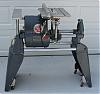
New ShopSmith 530
Moderator: admin
-
dusty

- Platinum Member
- Posts: 21530
- Joined: Wed Nov 22, 2006 6:52 am
- Location: Tucson (Wildcat Country), Arizona
lee33 wrote:How about an ON/OFF switch that is better fit for sawdust?
Lee
Unless you have a 500 with the old style toggle switch, I need some clarification. The switches on the 510 and 520 are not susceptible to dust contamination, at least I don't believe so.
If you have experienced switch failure that you believe was caused by dust - please say so.
I have had switch failures but it was due to contact arcing which I attribute to being switched during high current conditions. If you are running your Shopsmith on a 14ga/15amp circuit I would expect some premature contact failure. I now have my Shopsmith on a 12ga/20amp circuit and haven't had a problem since I switched over.
What I would like to see Shopsmith incorporate is some sort of "Safety Switch" with a flapper for quick and easy shut down. Several very effective examples have been posted here on the forum. Location seems to be the show stopper for a production switch.
"Making Sawdust Safely"
Dusty
Sent from my Dell XPS using Firefox.
Dusty
Sent from my Dell XPS using Firefox.
-
a1gutterman

- Platinum Member
- Posts: 3653
- Joined: Tue Jan 09, 2007 12:45 am
- Location: "close to" Seattle
I do knot hold anything against those people in support of the type of safety switch that dusty is talking about here, but I also do knot see an overwhelming need for such a switch. I am indifferent. But, if there was such a switch, an electric brake system used in conjunction with it, wood improve it's usefullness.dusty wrote:...What I would like to see Shopsmith incorporate is some sort of "Safety Switch" with a flapper for quick and easy shut down. Several very effective examples have been posted here on the forum. Location seems to be the show stopper for a production switch.
Tim
Buying US made products will help keep YOUR job or retirement funds safer.
Buying US made products will help keep YOUR job or retirement funds safer.
Shopsmith ON/OFF Switch
I find that the original toggle and locking toggle switches were under-rated for the Amps the motor may draw under heavy load. I have been replacing them with 20 Amp rated switches for many years with no failures. I disassemble all the bad switches I replace and have not found any sawdust inside. The switch points either welded together or arced/burned to where they can no longer make contact.
I believe the use of #14 panel to wall outlet wire or #14 extension cords lowers the voltage causing more current draw for the motor under heavy load and can cause the switch points to fail. I use #12 power cord wire and rewire the motor for #12 wire for my personal Shopsmiths. All my outlets are #12 wired.
I believe the use of #14 panel to wall outlet wire or #14 extension cords lowers the voltage causing more current draw for the motor under heavy load and can cause the switch points to fail. I use #12 power cord wire and rewire the motor for #12 wire for my personal Shopsmiths. All my outlets are #12 wired.
lee33 wrote:How about an ON/OFF switch that is better fit for sawdust?
Lee
Bill Mayo bill.mayo@verizon.net
Shopsmith owner since 73. Sell, repair and rebuild Shopsmith, Total Shop & Wood Master headstocks, SPTs, attachments, accessories and parts. US Navy 1955-1975 (FTCS/E-8)
Shopsmith owner since 73. Sell, repair and rebuild Shopsmith, Total Shop & Wood Master headstocks, SPTs, attachments, accessories and parts. US Navy 1955-1975 (FTCS/E-8)
Shopsmith On/Off Removable toggle
I have gone through a removable toggle switch on my 510 in 10 years. Granted I've flipped the switch many times. If I had to guess how many - it'd be 8 to 10 times daily times 250 days per year, times 10 years.
The switch started acting up by disconnecting when the red toggle was just barely touched. This lasted a month or so and then the switch burned up. I replaced it with the DC3300 switch.
My 510 has always been connected to 12 ga wire and 20 amp breakers, with no extension cord.
I really don't know if dust had any part in the switches demise, I just know that the toggle and the opening where the red toggle fits, has taken on quite a bit of sawdust. Turning is the operation that causes most sawdust getting onto the switch.
The switch started acting up by disconnecting when the red toggle was just barely touched. This lasted a month or so and then the switch burned up. I replaced it with the DC3300 switch.
My 510 has always been connected to 12 ga wire and 20 amp breakers, with no extension cord.
I really don't know if dust had any part in the switches demise, I just know that the toggle and the opening where the red toggle fits, has taken on quite a bit of sawdust. Turning is the operation that causes most sawdust getting onto the switch.
Octogenarian's have an earned right to be a curmudgeon.
Chuck in Lancaster, CA
Chuck in Lancaster, CA
-
wearymicrobe
- Silver Member
- Posts: 15
- Joined: Mon Sep 29, 2008 10:10 am
I double this, I would actually sell my current one for this and the below.benjamin wrote:Hard anodize the aluminum castings
Powder coat the stamped steel
Provide corrosion protection on the inside of bench and way tubes (probably zinc plating or galvanizing)
Plate steel parts like the tube lock bars and base arm pin
Plate outside of way tubes with Titanium nitride
Modify the castings so the bench and way tubes go through - the legs can slide on the tubes the same way the carriage and headstock do (to shorten or extend the wheelbase).
Use a base arm pin on both ends to enable the way tubes to raise the headstock with the quill pointing up
Make the casting on the ends of the way tubes so that when it is unlocked from the bench assembly it can be fixed to something else (kind of like a magnetic drill press)
Headstock and Carriage lock handles with preset torque setting to avoid overtorquing (may need to redesign the locks to work with constant torque)
Flute or rib the largest surface on the steel leg stampings
Urethane casters (keep the retractable design)
precision tapered roller bearings in the quill (maybe they are, not sure)
These suggestions maintain backward compatibility and they are far more cost effective to be implemented in mass production than for the owner to upgrade himself. The plating/coating methods would be an extravagant embellishment done after purchase, but could be done at a minimal cost in the production process.
I would add, option for longer main and lower tubes.
Higher speed motor or gearing, with a voltage drop for low speed running.
Better leg attachment.
Spindle converters to let us use standard chucks.
Tapped spindle extra bolt for heavy cut work.
Really old restored Mark 5, Jointer, Sander, Lathe Duplicator, thickness planer (Home Made)
ShopSmith Stand Alone BandSaw
Sherline CNC Micro Mill
2hp Edco Knee Drill Press
1953 BridgePort with DR and Feeder
ShopSmith Stand Alone BandSaw
Sherline CNC Micro Mill
2hp Edco Knee Drill Press
1953 BridgePort with DR and Feeder
-
paulmcohen
- Platinum Member
- Posts: 1578
- Joined: Fri Dec 08, 2006 8:10 pm
- Location: Beaverton, Oregon
- Contact:
wearymicrobe wrote:Spindle converters to let us use standard chucks.
Spindle converters are available from at least two sources, one make in China for less then $20 and a very, very high quality one made in the US for less then $50.
The US made one can be ordered to go from a Shopsmith female to any other size for the same price. Shopsmith converters are actually the cheapest ones they sell.
I have the US made one and have actually used it less then I thought I would.
Paul Cohen
Beaverton, OR
A 1982 500 Shopsmith brand upgraded to a Mark 7 PowerPro, Jointer, Bandsaw (with Kreg fence), Strip Sander, Ring Master and lots of accessories all purchased new
12" Sliding Compound Mitre Saw, 1200 CFM DC
Beaverton, OR
A 1982 500 Shopsmith brand upgraded to a Mark 7 PowerPro, Jointer, Bandsaw (with Kreg fence), Strip Sander, Ring Master and lots of accessories all purchased new
12" Sliding Compound Mitre Saw, 1200 CFM DC
-
wearymicrobe
- Silver Member
- Posts: 15
- Joined: Mon Sep 29, 2008 10:10 am
Found them online in a few places that's way cool. I mainly turn right now so it would be helpful for me.paulmcohen wrote:Spindle converters are available from at least two sources, one make in China for less then $20 and a very, very high quality one made in the US for less then $50.
The US made one can be ordered to go from a Shopsmith female to any other size for the same price. Shopsmith converters are actually the cheapest ones they sell.
I have the US made one and have actually used it less then I thought I would.
Also you an I have the same last name, don't see very many Cohen woodworkers.
Michael Jaymes Cohen
Really old restored Mark 5, Jointer, Sander, Lathe Duplicator, thickness planer (Home Made)
ShopSmith Stand Alone BandSaw
Sherline CNC Micro Mill
2hp Edco Knee Drill Press
1953 BridgePort with DR and Feeder
ShopSmith Stand Alone BandSaw
Sherline CNC Micro Mill
2hp Edco Knee Drill Press
1953 BridgePort with DR and Feeder