In my SS aquisitions I have found repairs and $ associated with them to be looming over most of my projects. Table saw needs SS brand blade or differant arbor for the guard to track right behind the blade and one of the aluminum fence locks. Planner needs outfeed roller and knives sharpened or replaced. Jointer needs blades sharpened but I do have a second set. DC3300 came with a real short hose with holes. Bandsaw 1 needs tires and bearings. Bandsaw 2 needs new blades.
Then it occurred to me, the lathe. I cut some cedar I had threw it on and turned something round. Man the smell of that cedar and how easy it was to shape is pretty cool, and that mess of red shavings was pretty awesome. I found somehting I can work on without. I can see where this could be a little addictive.
Questions
What is the safest way to octagon stock that is only 10 inches long and 2 inches or so square? And is it necessary?
I tapped my drive center on with a block of pine between as a cushion. Is that the correct procedure?
I've looked through the book and manual ect. and looked through the forum but I don't see any lathe 101 type threads. Pictures are so useful.
mrhart wrote:Questions
What is the safest way to octagon stock that is only 10 inches long and 2 inches or so square? And is it necessary?
I tapped my drive center on with a block of pine between as a cushion. Is that the correct procedure?
I've looked through the book and manual ect. and looked through the forum but I don't see any lathe 101 type threads. Pictures are so useful.
Q1: You can saw the corners off, but I feel it's knot necessary. You can make it round on the lathe pretty quickly with the spindle roughing gouge.
Q2: You can do it your way or use a soft faced hammer. Might want to drill a hole for the point to stick in and saw kerfs for the drive prongs to set in.
SS 500(09/1980), DC3300, jointer, bandsaw, belt sander, Strip Sander, drum sanders,molder, dado, biscuit joiner, universal lathe tool rest, Oneway talon chuck, router bits & chucks and a De Walt 735 planer,a #5,#6, block planes. ALL in a 100 square foot shop. .
.
Bob
Like Bob (beeg) said it becomes pretty easy to mount the workpiece on the drive center if you first drill a 1/8" hole in the center of the end and make two saw kerfs (at right angles) (corner to corner if you workpiece is square) to hold the prongs of the drive center.
I've not found the need to remove corners from 2" stock.
Octogenarian's have an earned right to be a curmudgeon.
Chuck in Lancaster, CA
It is a proven fact, that turning wood IS addictive! Once you learn about sharpening, and better turning tools, you can't put em down! My wifes most frequent comment? "When are you gonna come in the house? jimsjinx:rolleyes:
If you are a part time band leader, does that make you a semi-conductor? Where do all the "unguided" bombs go?
jimsjinx wrote:It is a proven fact, that turning wood IS addictive! Once you learn about sharpening, and better turning tools, you can't put em down! My wifes most frequent comment? "When are you gonna come in the house? jimsjinx:rolleyes:
These are ones I was slow to pick up on. If you don't have sharp tools things will not be much fun. Figure out the best way for you to sharpen that is quick and easy, not requiring a bunch of reconfiguration.
ie: if sharpening turning tools on the shopsmith, make sure to have a powerstation/mini/shorty available to do the sharpening. alternatively, use a standalone grinding system of some sort. Bench chisels are no big deal in terms of the changeover process, but you will be touching up your lathe ones throughout the lathe turning process...and you don't want to be constantly remounting your workpiece.
Mark 7, Pro Planer, Jointer, Bandsaw w/Kreg, Biscuit Joiner, Belt Sander, Jig Saw, Ringmaster, DC3300, Overarm Pin Router, Incra Ultimate setup
damagi wrote:These are ones I was slow to pick up on. If you don't have sharp tools things will not be much fun. Figure out the best way for you to sharpen that is quick and easy, not requiring a bunch of reconfiguration.
ie: if sharpening turning tools on the shopsmith, make sure to have a powerstation/mini/shorty available to do the sharpening. alternatively, use a standalone grinding system of some sort. Bench chisels are no big deal in terms of the changeover process, but you will be touching up your lathe ones throughout the lathe turning process...and you don't want to be constantly remounting your workpiece.
That is why I invested in a Tormek Sharpening System 2 years ago. I was forever trying to sharpen stuff around the house and could never do a good job with what I had for sharpening. The Tormek really takes the mystery out of sharpening edges of tools and knives. Although the knives are definitely tougher to do than the plane blades and chisels. This is because of the jigs used to do the chisels and plane blades. They are much easier to setup and keep in position than the knife jig which takes some serious practice to get good with. I just got the planer/jointer jig which is very expensive from a guy on CL and it is going to make sharpening my jointer knives a breeze. The Tormek is also extremely expensive but I ran into one for $450 2 years ago on CL in CA. and bought it as that was very cheap for the sharpener and hand tool kit. If I had not found this one I would not have one. Keep your eyes open as they do come up often for sale on CL and I think it is worth the investment if you do a lot of sharpening of tools and knives.
Michael Mayo
Senior IT Support Engineer
Soft Designs Inc. albiemanmike@gmail.com
1960's SS Mark VII, 1954 Greenie, 1983 Mark V, Jointer, Bandsaw, Jigsaw, Dewalt Slider, Delta Super 10, Delta 8" Grinder, Craftsman compressor, Drill Doctor, Kreg PH Jig, Bosch Jigsaw, Craftsman Router and Table...........and adding more all the time....
Pay attention to all safety guidelines for the Shopsmith and rotating power tools! If you don't feel 100% safe doing an operation, then DON'T DO IT!
Make sure your shopsmith is on the lowest speed setting BEFORE mounting anything on the lathe. You can always speed the lathe up if the balance checks out, but slowing down in a hurry just doesn't happen.
Make sure your work is balanced as much as possible beofre applying power to the lathe.
Make sure your work is firmly mounted BEFORE applying power to the lathe. Especially if using a screw chcuk or facplate. Turning bowls is fun. Dodging bowl blanks hurled at speed from the lathe is definitely not fun and downright dangerous.
Make sure your rotating work won't contact the tool rest before applying power to the lathe.
Make several revolutions of your mounted project with the machine powered down.
ALWAYS wear a face shield when turning, you never know when things are going to go bad.
When starting the lathe, position yourself out of the "Path of destruction" if a blank is not supported properly, or is significantly out of balance it can separate and go flying. You'll know if you are significantly out of balance when the lathe starts bouncing and dancing around the shop. Turn off the power!
More helpful hints:
Position you tool rest so just the cutting portion of your chisel extendeds past the edge tool rest. Hold your chisel down on the tool rest and use the tool rest as a fulcrum to get the best cutting position.
Position your tool rest with regards to the tool/technique you are using. When scraping start with the tool rest so your tool contacts your work just below the center line. When shearing with a gouge or skew start with the tool rest so the shearing action is slightly above the center line of your project. Think "Riding the bevel" when using a shearing action. Final positioning of the tool rest can be fine tuned and often changes during the turning of an object.
Once the lathe is spinning smoothly start taking light cuts at first especially if your blank is not yet round. Unrounded material, soft green wood, and knots can "Catch" very easily if you are too agressive. If you experience a catch, just retract your tool straight back, resist the urge to fight or pry the catch loose.
In general softer woods like pine, cedar, and green woods can "Tear out". This is often the result of either too agressive of a cut, or a sign that chisels are getting dull. If tear out is occuring sharpen your chisels, take a lighter cut, or increase lathe speed if you can do so safely. Some materials are going to tear no matter what, just leave enough meat on your project to finish getting to size with sand paper, rasps, or files.
Support Bowl blanks with a tail stock dead or live center until the outer ciremference is round and you can start hogging out the center of the bowl. Once you have removed as much material from the bowl center as you can safely with the tail stock support in place, then you can pull the headstock back from the tailstock and work the bowl center.
Keep your chisels sharp!
Personal Notes:
Sharpening bladed tools is a very personal and often a hotly debated topic on wood working forums. My advice is to figure what works best for you and stick to it. Sharpening equipment and gadgets can get very expensive. My only gadget for sharpening is an English honing guide for bench chisels and plane irons. For everything else I use a set of oil stones in four grits from coarse to very fine. I've been using these stones since I was kid, they were my Grandfather's and I keep these handy when working with bladed hand tools. One of my first hand tool projects was to build a protective case and holder for them for a 4 X 4.
I do use a strip sander from time to time or a grinding wheel on my shopsmith if I get a nick or I want to modify the geometry of a chisel, but for the most part those old oil stones do the trick. In my opinion, there is just no substitute for learning the old school methods.
The problem with grinders and power sharpeners is that you can screw up the geometry or overheat the metal of a chisel rather quickly if you aren't paying attention. If you do go with a grinder or power sharpening system, take it slow at first and read instructions carefully. Practice witha chisel you care less about at first until you get the hang of using the tool properly. A $100 dollar top drawer lathe chisel is NOT a good starting point. Once you learn how to quickly sharpen tools and keep them sharp, turning becomes that much more addictive. Wait until you are turning Oak or hard maple that has ribbons coming off of it!
If you wish to octagon your stock, just set your saw at a 45 degree rip and take the corners off. But there really is no need on 2X cedar stock. A roughing gouge will take it down as fast or faster than setting up in table saw mode.
HAVE FUN!!! and turn safely!
--
Terry
Copy and paste the URLs into your browser if you want to see the photos.
1955 Shopsmith Mark 5 S/N 296860 Workshop and Tools
https://1drv.ms/i/s!AmpX5k8IhN7ahFCo9VvTDsCpoV_g
mrhart wrote:I cut some cedar I had threw it on and turned something round.
Pictures?
Heath
Central Louisiana
-10ER - SN 13927, Born 1949, Acquired October 2008, Restored November, 2008
-10ER - SN 35630, Born 1950, Acquired April 2009, Restored May 2009, A34 Jigsaw
-Mark V - SN 212052, Born 1986, Acquired Sept 2009, Restored March 2010, Bandsaw
-10ER - SN 39722, Born 1950, Acquired March 2011, awaiting restoration
Thanks for all the responses, this place is better than google!:)
The tools I have are a set of 5 SS tools, and I have a second set with no name on them, I will lay them out and take a pic to post.
As far as sharpening, I do have the SS grinder set up (haven't used yet). I like the idea of sharpening on stones as I would think it wouldn't take much to sharpen a tool if you stayed on top of them. Could you direct me to a source of an inexpensive set of stones and maybe a "how to" thread. Right now an expensive sharpening solution is NOT in the near future.
Lastly how often do the tools need sharpening?? (I understand it depends on alot of variables, but I'm using cedar and stock is less than 2x2x10). Do you stone them a little between every mount or every 6??
heathicus..I will show post pics as soon as I have 6-8 done.
Whats the best finish process for these/ Bascially they are handles that would get some outdoor use, but not left in the rain
Terry has given you some great info. I too just use honing stones on my lathe chisels except to change profiles or repair a ding. I use a hard and soft Arkansas stones with mineral oil. A small tapered slip stone works for removing the burr on the inside of a gouge. Your chisels will outlast you this way, but grinding them sharp is a lot faster.
My technique is to tuck the handle of the chisel under my armpit to steady the chisel and rub the stones on the chisel in a circular fashion, keeping the stone flat on the ground surface -- no secondary bevels. For the gouge, sharpen the edge first, then use the slipstone to remove the burr. Just lay it flat on the chisel and pull it toward the handle and repeating until you cover the entire surface. For the roundnose scraper, I sharpen the edge and then pull the stone on the top surface toward the handle to remove the burr. Some keep the burr. I'm sure everyone has their own favorite way of sharpening.
As far as how often to sharpen, I can only say to sharpen when they're not cutting as you would like.
For finishing those ceder handles, I'd leave them natural, perhaps burnishing them with a handfull of ceder shavings while spinning on the lathe or simply rub the surface with a piece of ceder moving it back and forth, again while the lathe is spinning. A bit of boiled linseed oil and shellac on a soft cloth applied while the lathe is spinning makes for a nice finish on any turned object. Use a little pressure while applying the finish and it dries as you go.


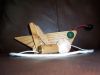



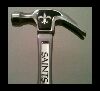
 Whats the best finish process for these/ Bascially they are handles that would get some outdoor use, but not left in the rain