Page 4 of 5
Posted: Wed Oct 15, 2014 4:28 pm
by tomsalwasser
Dick, you might have a frankenstein, made up of several different planes. In which case the date doesn't matter just the fact that it's working for you. I'm just getting started with planes too. I'm maybe I'm at 2% of where I want to be.
Posted: Wed Oct 15, 2014 4:49 pm
by rjent
Posted: Wed Oct 15, 2014 4:50 pm
by rjent
Picture limit....
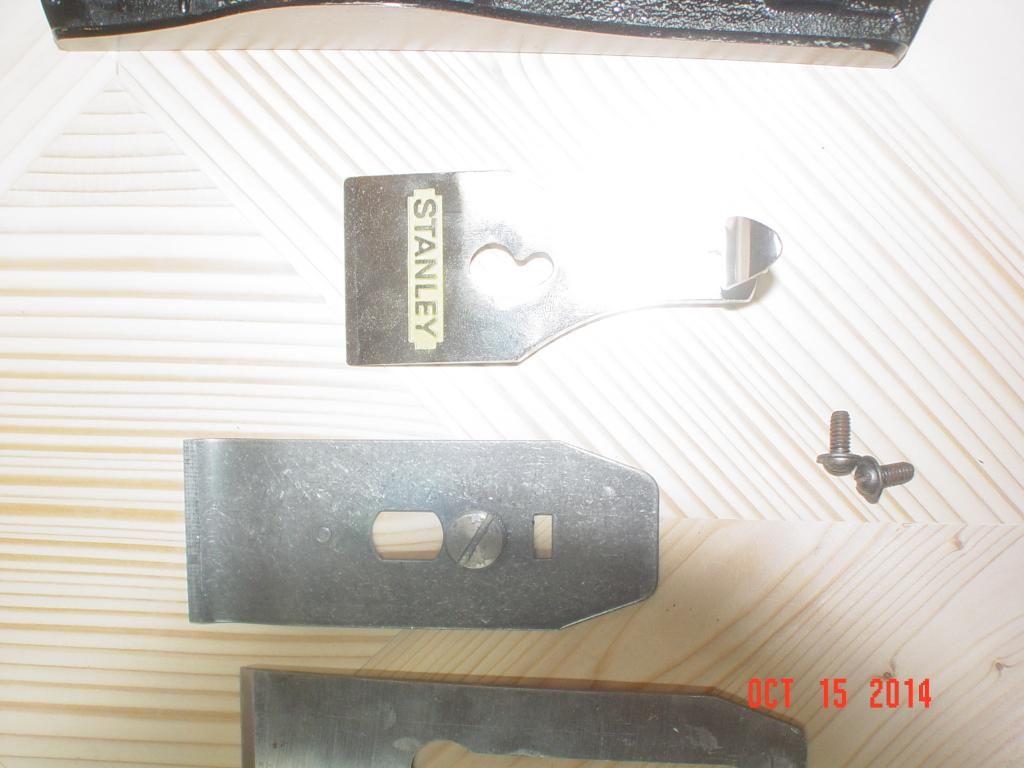
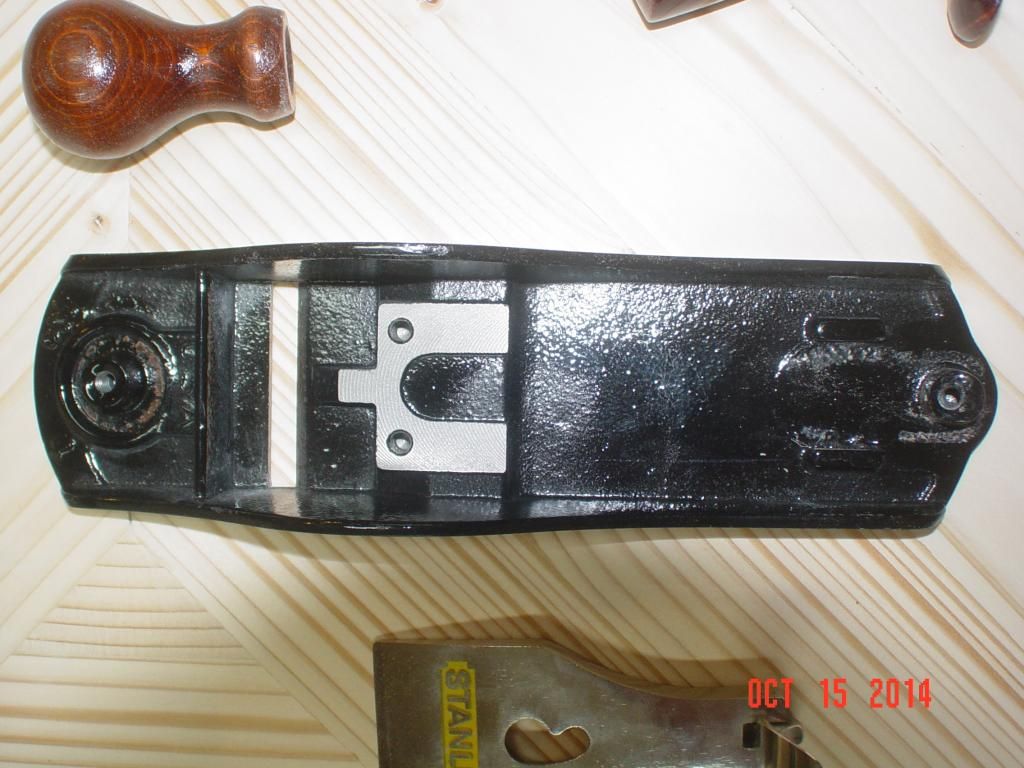
My guess is from the 70's because of some owner info in the box?
Thanks in advance!
Dick
Posted: Wed Oct 15, 2014 6:08 pm
by terrydowning
It could be even newer than that. Typically the 70's models were the ugly blue ones, there were some maroon ones as well. (I have a blue handyman #3 and it took a ton of work to get it usable)
My guess is maybe even late eighties or even nineties. Definitely not vintage. It does appear to be a serviceable plane though.
Order of importance from my experience and reading.
SHARP Cutting Iron (blade) Make sure that the back is flat where the Cap Iron mates to the back of the iron.
The part of the cap iron that mates with blade must be flat as well. if there are any gaps between the cap iron and the back of the cutting iron it will foul the plane and you planing experience will be loaded with frustration and anxiety.
The lever cap needs to be snug enough to keep things from shifting around but not so snug you can't make adjustments with the depth adjuster or lateral adjuster.
The sole needs to be coplanar at the toe, around the mouth, and the heel. You can have hollows as long as those area are all coplanar.
Some people go absolutely crazy here but I don't think it's an absolute requirement. Of course the flatter the sole is, the better result you will have.
Practice sharpening. a sharp iron is by far the best defense against planing frustrations. There are tons of resources on the web for sharpening, it's your choice on which to use. My advice is to choose a methodology that works for you and master it.
I use an inexpensive honing guide and 3 eze lap diamond stone in Coarse, Fine and Super fine.
If I need a more aggressive grind, I use 80 or 120 grit paper on granite tile.
After the super fine, I use a strop (One side is MDF, the other is leather) both sides are charged with Green honing compound for the final polish and maintenance during use.
Posted: Wed Oct 15, 2014 6:15 pm
by rjent
OK Terry thanks! My 70's thought was that a copyright on the owner manual was dated 1974. They could have been using the same manual since the 70's. The handles are wood. When did they start using the plastic ones?
Dick
terrydowning wrote:It could be even newer than that. Typically the 70's models were the ugly blue ones, there were some maroon ones as well. (I have a blue handyman #3 and it took a ton of work to get it usable)
My guess is maybe even late eighties or even nineties. Definitely not vintage. It does appear to be a serviceable plane though.
Order of importance from my experience and reading.
SHARP Cutting Iron (blade) Make sure that the back is flat where the Cap Iron mates to the back of the iron.
The part of the cap iron that mates with blade must be flat as well. if there are any gaps between the cap iron and the back of the cutting iron it will foul the plane and you planing experience will be loaded with frustration and anxiety.
The lever cap needs to be snug enough to keep things from shifting around but not so snug you can't make adjustments with the depth adjuster or lateral adjuster.
The sole needs to be coplanar at the toe, around the mouth, and the heel. You can have hollows as long as those area are all coplanar.
Some people go absolutely crazy here but I don't think it's an absolute requirement. Of course the flatter the sole is, the better result you will have.
Practice sharpening. a sharp iron is by far the best defense against planing frustrations. There are tons of resources on the web for sharpening, it's your choice on which to use. My advice is to choose a methodology that works for you and master it.
I use an inexpensive honing guide and 3 eze lap diamond stone in Coarse, Fine and Super fine.
If I need a more aggressive grind, I use 80 or 120 grit paper on granite tile.
After the super fine, I use a strop (One side is MDF, the other is leather) both sides are charged with Green honing compound for the final polish and maintenance during use.
Posted: Wed Oct 15, 2014 8:08 pm
by terrydowning
There's not much history after the failures of plane manufacturers starting in the 60's so not much s documented on them as no one liked them.
It's pretty much agreed among collectors that Post WW II planes are not as well built as pre-war. The war years are a tricky lot and a lot of franken planes exist there.
It could be a higher end plane from the 70's
The Handyman's were abysmal, some even came with stamped steel frogs rather than Iron. Flimsy and weak. Stay away from stamped steel frogs if you're out there looking for hand planes. They're junk and will never work right.
I say tune yours up and use it. If you can get it to give you those wispy thin shavings it does not matter one bit what "collectors" say.
Look for Hand Plane tuning videos on youtube. There is plenty of good info out there.
Any advice you can find by Paul Sellers is gold too. He does go against many commonly held beliefs in wood working but he's not sponsored by anyone, the advice he gives is from more than 50 years experience as a traditional English jojner.
Posted: Thu Oct 16, 2014 10:51 am
by WmZiggy
Lots of good advice and links here. It can be a bit overwhelming at first, but take your time and like all things it will become second nature.
Someone here mentioned a block plane. I want to ditto that. When I do frame and panel construction my Stanley 60-1/2 is at my side as I smooth corner joints. The 60-1/2 has a low angle blade setting which is really good on corners where you have changing grain directions. Stanley sells that as the 12-139 now, but if you can find it's "father" - the 60-1/2 such as on eBay (
http://www.ebay.com/sch/i.html?_from=R4 ... e&_sacat=0) go for it. I prefer the oldies.
There are other good ones from Lie-Nielson to Lee Valley, but as you will note, these will set the ol' pocket book back. (
http://www.leevalley.com/US/wood/page.a ... 1182,48942 )
However, good tools cost good money, but will last a lifetime with care. Junk, like the Stanley 12-140 you were looking to buy is money wasted.
Posted: Thu Oct 16, 2014 11:01 am
by WmZiggy
PS: the 60-1/2 has a moveable throat. In short the nose can be opened and closed depending on the work one is doing. This is another reason the plane is superior on corner joints. A very tight throat opening works well on changing grain direction. Also, the plane is smaller and easier to handle in situations like this.
Posted: Thu Oct 16, 2014 11:46 am
by terrydowning
I agree on the 60 1/2! Mine belonged to my Grandpa and is over 100 yrs old. It's still a work horse and my go to block plane.
Posted: Thu Oct 16, 2014 8:11 pm
by rjent
OK, you convinced me LOL. Let me watch some of the plethora of videos out there on setup and sharpening and see if I can get this thing working well.
I will get this 4 working before I start looking for others. Baby steps ....

Though I am finding out that none of this woodworking is brain surgery, challenging yes, but learnable .... and I find it totally addictive!

If it is a 70's vintage, is it worth fighting very long to get it to work? It was "free" with the Mark V, and was an afterthought from the owner's son. As we were about to leave, he said "Here, take and use this, you seem like a nice guy and will take care of all of my dads's equipment".
Dick


