roamer46
Even though my Cummins engines started up and ran fine on the pallets when I bought them, I decided to follow the advice of some gurus and service the aftercoolers. Good thing I did, too--the magical combination of a cast aluminum housing, bronze core, steel bolts, and saltwater had begun to cause minor problems that would have turned into expensive problems if I hadn't taken the aftercoolers apart.
Oh, and there's a blizzard forecast for tomorrow. This will be the big test of Tent Model XXX.
1969 Chris Craft Roamer 46 Refit: Servicing the Aftercoolers
Cheers,
Q


ERLover
Roamer46, how about an anadizer metal???
skou
ER, a "zinc" would only slow down corrosion.
Guys, for the most part, you absolutely CANNOT
use dis-similar metals around salt water,
In my (10+ years of being around aircraft) opinion,
the whole system should be made out of Stainless Steel,
and the right mix to protect from DM corrosion.
Q, what is this 12 inches of "snow?" From what Google
tells me, that looks like the stuff that builds up in my
freezer! :D Before I lived here, I lived in Hawaii.
We called "snow cones" shave ice, because NO ONE knew
what "snow" was.(Hope you weather the storm OK!)
steve
roamer46
Steve, may your ice maker go on the fritz someday soon...ideally, while I'm shoveling snow. :p
There actually are zincs in each aftercooler. They help a bit, but Cummins' dry assembly is just not a good way to go. Also, the aftercoolers will tend to collect condensate on the air side almost by design. Pulling the zincs after every trip would solve that problem, but who does that?
ERLover, if you figure out a process for having different metals--especially aluminum and copper--in water without having chemical reaction happen, you will be a very, very rich person. Each molecule of aluminum oxide occupies a space something like 21x bigger than the space occupied by the aluminum and oxygen before they react. When you're talking about the very small gaps between these parts, it fills up very quickly with very little aluminum lost to corrosion. Fortunately, heavy applications of grease and good o-rings seem to resolve the problem so long as you keep up on the maintenance. They say it's not too difficult of a job once you do it the first time. Luckily, I got to these before it was too late.
ERLover
@Roomer,>ERLover, if you figure out a process for having different metals--especially aluminum and copper--in water without having chemical reaction happen, you will be a very, very rich person. Each molecule of aluminum oxide occupies a space something like 21x bigger than the space occupied by the aluminum and oxygen before they react. When you're talking about the very small gaps between these parts, it fills up very quickly with very little aluminum lost to corrosion. Fortunately, heavy applications of grease and good o-rings seem to resolve the problem so long as you keep up on the maintenance. They say it's not too difficult of a job once you do it the first time. Luckily, I got to these before it was too late.
I just gave a suggestion, not a chemist, and my boats were slipped and used in fresh water, I know salt water is a whole other thing, but no experience in it. Forgive me ;)
skou
Roamer, I'm just saying what I learned in 10+ years working on
airplanes. Aircraft were not, for the most part, sitting in salt water.
(The world's best transmitter of corrosive electrical communication.)
But, sea planes were, sitting in salt water, as well as being asked to
fly. PLEASE, for the sale of YOUR boat, make DEAD sure you don't
have ANY dis-similar corrosion issues. One more concern, salt water
conducts electricity very well. That piece next to that other piece,
an issue. That piece, 4 feet away from the other piece, if you have
dis similar problems, it will find you, if BOTH of them touch the same
water.
Bro, what I'm trying to impart, is it is better to be sure, than not.
I'd HATE to hear about this boat going down, because of some
corrosion you could have prevented.
"Steve, may your ice maker go on the fritz someday soon...ideally, while I'm shoveling snow. :p"
What is that, that you're shoveling? Cleaning out the icebox?
Roamer, Sincerely, I wish you ALL the best!
steve
ERLover
My ER Buddy late nighter, later then JPG, good evening!!!!! :) Just got a SS Pro Planer on its stand, $525, Oh Ya an other one in the stable, just need that 4th ER with a SC!!!!!!!
roamer46
Good score, ERLover!
Steve, if you go waaaaay back near the beginning of my refit blog, there's an article on the rudders you might find interesting. Imagine plain steel rudder shafts running through Schedule 80 aluminum pipe rudder logs that were threaded at the top. Then, to keep the water out, they used shaft packing held in place with bronze gland nuts that were threaded directly onto the aluminum. I couldn't remove the rudders with heat, penetrating oil, a 10# mallet, or a 12-ton jack! Check it out:
https://1969chriscraftroamer46.wordpress.com/2013/02/09/1969-chris-craft-roamer-refit-rudders/
For the aftercooler, though, it all comes down to regular maintenance with lots of grease and good o-rings.
shipwright
Sometimes I just shake my head at the way some otherwise good manufacturers mix metals in heat exchangers for salt water use. I had several Mitsubishi diesels at one time that employed exchangers that had bronze cores in aluminium cast tanks. The metals were isolated with O rings. There were zincs and they worked if you changed them often enough but in the end I threw them all out and installed copper/bronze keel coolers.
In general I like to keep my submerged metals to stainless (316) and good high copper bronze.
They are relatively close on the galvanic scale and not hard to control with zincs.
Have you considered one of the induced current systems that sense the galvanic current and neutralize it with an equal but opposite current?
masonsailor2
We have been changing out all the through hulls as they need replacing with the titanium versions and on the next haul out this spring I will replace the last of the bronze fittings. We are very happy with the results. There is no corrosion whatsoever. Although they are pricey the overall cost is negligible because it appears they may never need replacing.
Paul
roamer46
Titanium is on the far side of the galvanic scale from aluminum. For my boat, it'd be far more risky than even bronze. For thru hull valves, marelon is the preferred material for metal boat guys these days.
shipwright, this boat came with a CAPAC system. Oddly enough, the worst pit on the whole hull was near the reference cell. Coincidence? Who knows. I may end up installing a new system, or just the monitoring part.
roamer46
We're finally done digging out from the Mid-Atlantic Blizzard of 2016. We got 22" down at the house, and I was very concerned about the tent covering the boat. During a lull in the storm, I took a drive out to the boatyard...
1969 Chris Craft Roamer 46 Refit: Mid-Atlantic Blizzard 2016
Cheers,
Q

rcplaneguy
Good design, with steep enough roof! Congratulations!
roamer46
Thanks! I was sweating bullets on the drive out. lol
roamer46
I want to have shore power when the boat (hopefully) splashes later this year. Which means I've got to wire the isolation transformer and lift that 175 pound bad boy onto its new bulkhead in the V-berth. What a chore that was. But...I got 'er done.
1969 Chris Craft Roamer 46 Refit: Reinstalling the Isolation Transformer
Cheers,
Q

JPG
I assume you have verified the transformer still works?
Is the purpose to remove any reference to 'ground'?
roamer46
Yup, it breaks the physical connection to the entire earth-ground system, including other boats nearby. It's a common problem that the boats around you cause corrosion problems.
The electrical system all worked when we first started on the boat, so I'm sure the transformer still works.
roamer46
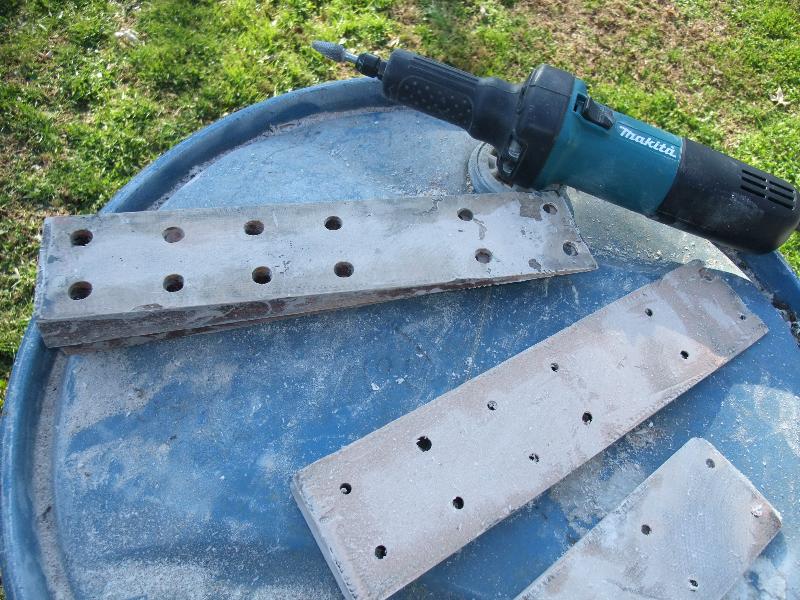
My ShopSmith bandsaw got a bit of a workout recently. Since I'm focusing on making the boat waterproof so I can splash later in 2016, I'm going to be jumping around from topic to topic quite a bit. But there's a method to the madness, and if nothing unexpected comes up I still think I can get it in the water this year. The swim platform is one thing that's got to get installed, but first I need to make spacers so it sits level with the waterline. The saw cut through the 3" mahogany boards like butter...tapered butter.
1969 Chris Craft Roamer 46 Refit: Making Spacers for the Swim Platform
Cheers,
Q
roamer46
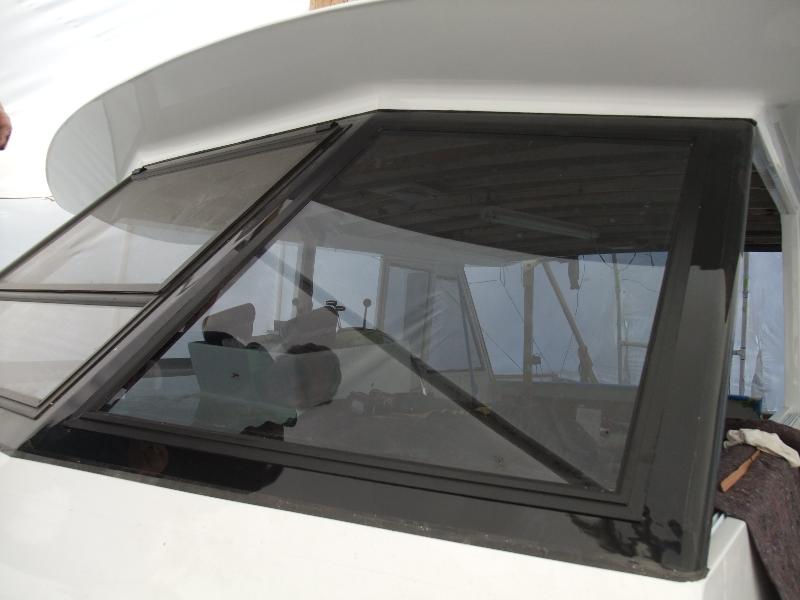
In other news, the window manufacturer out in Vancouver, Wa. finally sent me replacement trim rings so I could install the last helm windshield. The originals were oversized by 3/16", and I only got them to agree to sending the right-sized ones after stopping payment. I hate messing with a man's income stream, but I hate paying big money for expensive stuff that's not made to spec even worse. But wait! There's more! The boneheads oversized the replacements, too! I had to break out the die grinder to knock the weld blobs off the corners before they'd fit. Anyway, the helm windshields are now done and I can move on to other stuff.
1969 Chris Craft Roamer 46 Refit: Helm Windshield is Finally Done
Cheers,
Q
roamer46
Check another box off the honey-do list--I got the exhaust outlets installed. Now I just need to connect the turbos to the outlets and that's a major job out of the way.
1969 Chris Craft Roamer 46 Refit: Exhaust V
Cheers,
Q

