Some good advice already given above on dust collectors, but just to offer a little different perspective from another Shopsmith owner with a somewhat small shop (210 sq. ft). Your shop is half my size, so space is really a premium for you. First of all, if you can afford, and can fit a large dust collector in your shop, then by all means purchase one! To get a good quality 1.5 to 2HP dust collector (with cyclone), you are looking at spending between $1k and $2k minimum. This isn't a small purchase and when factored in with the size constraints of your shop (unless you can mount it outside and protect it), it may not be worth it. Another factor to keep in consideration is the noise. You have a small shop and any dust collector in this space will be very noisy, on top of the noise of the Shopsmith. A lot of 2HP and up dust collectors are in the 80dBA or higher noise range, which if you plan to run it while turning will be very loud.
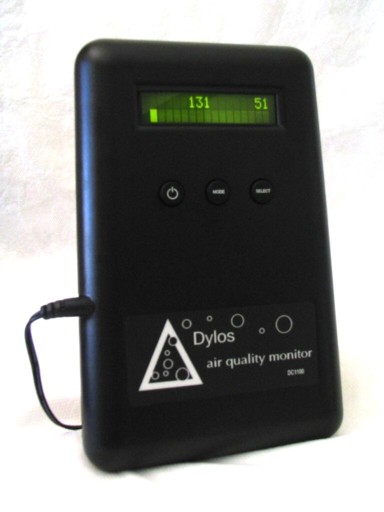
Personally, I haven't been able to afford a "nice" dust collector yet for my shop. When I do, I want to mount it outside and protect it from the elements (to keep noise out of the shop and save much needed floor space). I have a Shopsmith DC3300, but it is under powered and only gets down to 1um filtering with the large dust hood, but it still leaks some dust. My interim (bandaid) solution is to use a good quality Shopvac vacuum (6.5 peak HP) connected to a ClearVue CV-06 Mini cyclone instead. At the Shopvac inlet, I get 6000ft/min air speed. The cyclone cuts this down (restrictive), but I still get 4000ft/min at the end of a 12' long 2 1/4" vacuum hose that connects to my Shopsmith. If you read Bill Pentz' dissertation (http://billpentz.com/woodworking/cyclone/index.cfm) on dust collection, you know that 4000ft/min is the range that is expected to carry large shavings and dust from the jointer, planer or table saw down the hose and back to the cyclone (so they don't clog or settle out in the ductwork). To keep exhaust dust to a minimum, I run HEPA bags and HEPA filters on my Shopvac. Using this setup, I record no rise in ambient level dust in my shop using my Dylos (see pic below) air quality meter while jointing or planing (which means it is working well). Table saw does release some dust due to problems with the guard design, but using a ZCI insert it is minimal for me. For most operations in my shop I can keep dust counts under 100-200ppm for <0.5um particle size while working.
I mention my setup, because it might be a good enough (and cheap) solution to get you by for now until you figure out what to do. These are small enough that they can easily fit under a bench, or be stacked to take up minimal floor space. My setup cost only $200 if you count the vacuum and cyclone, less if you already have a Shopvac. As an alternative I have heard good things about the HF DC. You can get it on sale for $160, but you do need to add a Wynn HEPA cartridge filter to it (about $200 I think), but you also need to add a cyclone like a Super Dust Deputy or some other 4" size cyclone. So, even though the HF DC is cheap, to get a good functioning dust collector out of it, you are looking at close to $1k to properly set it up. Without a good quality (<1um filter rating, preferrably <0.3um) filter on the exhaust all you are doing is recirculating dust in the air and making air quality worse for yourself. Another option is bypass the hood/filter and vent the exhaust directly outside (will create a pressure differential in your house and lose any heated/cooled air though).
The downside of my temporary ShopVac setup is that it is not meant for continuous duty. ShopVac motors are tiny and the blower is designed for suction, not airflow. If the ShopVac inlet (or exhaust) gets too restricted or blocked off, or you want to turn and/or sand your woodturning for hours on end, then my setup will burn up (literally). Only a true dust collector is meant for continuous duty use for woodworking. Again, my setup is TEMPORARY, but is saving me lots of money right now so that I can save up for my dream dust collector system that will be mounted outside of my small shop.
Keep in mind large (high CFM) dust collectors exist to move large amounts of air down the ductwork which is lossy. Your shop is probably too small to consider ducting, so directly connecting to each tool is probably good enough (hence lower airflow blower is "ok" with adequate filter). Whether it is a vacuum or a dust collector, as long as you get close to 4000ft/min at each tool, then that is all that matters (provided the exhaust filter doesn't release all the dust back in the air). Bottomline it is hard to justify a large DC in a small shop (in my opinion)...even though I want one.
Since your shop has some connection to your house (door, etc.), I highly recommend spending $200 on a Dylos (DC1100 PRO) air quality monitor so you can see what dust level you have in the shop and what might be getting into the house.
P.S. When I used my Shopsmith DC3300, I always had a rise in ambient dust in my shop even though I sealed all around the motor, etc. inside. That supposed 1um dust hood on it still pumps out a ton of small particle dust that is bad for your lungs. When I started with my ShopVac experiment I didn't know if it would work or not, but sure enough the HEPA bags and filter on it excel compared to the DC3300 and the airflow is nearly twice as much.