zamlet
Hi all -
I'm not mechanically inclined, so bear with me. I have an old Shopsmith Mark V that has been sitting unused in my garage for probably 25 years or more. It has not been abused in any way, but it has not been maintained either - it's just been sitting idle for all this time. I dug it out a few weeks ago and dusted it off, then plugged it in and turned it on for 15-30 seconds, and it seemed to run fine (no smoke, scraping sounds, or other unusual noises), but I can't believe that it requires no maintenance after 25 years of not being used.
I doubt it needs a full overhaul, but I would like to make sure it has sufficient lubrication in all the places it needs to be lubricated, and has rust (if any) removed where it matters. Can someone suggest what the key places are to keep lubricated, how to get the lubricant TO those locations, and what kind(s) of lubricant to use? Thanks!
JPG
Movable sheaves. #10 MACHINE oil. (3in1 turbine sewing machine)
Other moving parts.(wingnuts manually rotated shafts)
Wax tubes. (way bench support posts)
Using it will reveal any thing else needing tlc.
BuckeyeDennis
And here's the
maintenance section of the Mark V manual, available for download. It goes into more detail, with illustrations, on how to do the cleaning & lubrication.
zamlet
OK, cool, thanks! I'm not certain what you're referring to by "moveable sheaves", and I don't really trust myself to be able to spot places that need oil vs. places that emphatically do NOT need oil, but hopefully the manual will make it clear.
Is machine oil really sufficient? I figured I'd probably need some grease somewhere.
br549
Yes, #10 machine oil is sufficient. No "grease" required.
The maintenance section that BuckeyeDennis provided a link to is a good summary, but be aware that there are many different versions of Mark Vs, and your model may differ slightly from that described in the summary. For example. the summary linked seems to indicate it was written for a Type "C" headstock, where the access cover on the back of the headstock is held in place by a screw and pivots for access; on earlier Type "B" headstocks the access cover is held on by a spring and must be pried off. The actual maintenance procedures should be the same, but little differences like that might throw you or make you doubt that you are proceeding correctly.
If you need a more detailed understanding of the various versions and their differences, the documents and posts by Everett Davis in this thread
https://forum.shopsmith.com/viewtopic.php?f=10&t=16113 should be a big help. Most of the restored manuals and documents are stored on his Google Drive.
Pictures of your Shopsmith would help other members clue you in to exactly what model you have. Once you know exactly which model you have, then you can fine tune the maintenance /owner's manual that would be best to use.
Best of luck, and just take your time, proceed methodically, and take notes and pictures of anything you are unsure how to put back together as you take it apart.
dusty
zamlet wrote
OK, cool, thanks! I'm not certain what you're referring to by "moveable sheaves", and I don't really trust myself to be able to spot places that need oil vs. places that emphatically do NOT need oil, but hopefully the manual will make it clear.
Is machine oil really sufficient? I figured I'd probably need some grease somewhere.
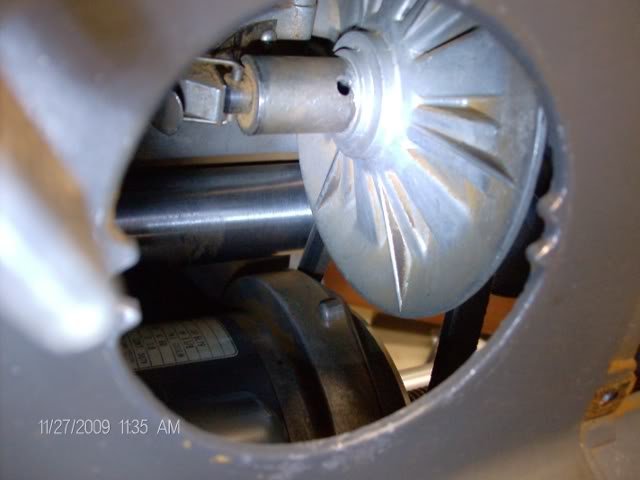
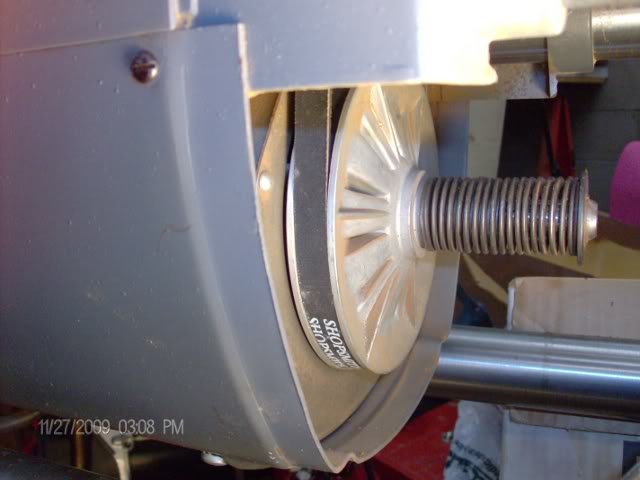
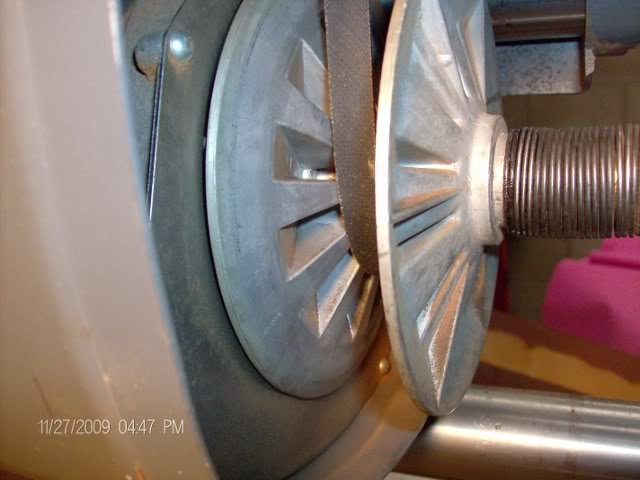
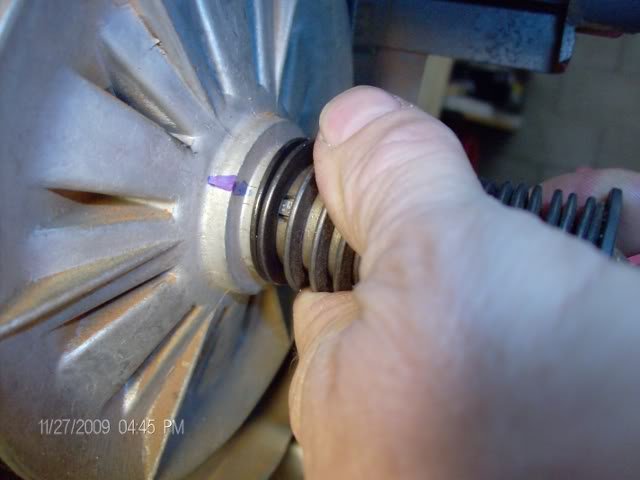
I hope these help you ID the moveable sheaves. Proper and regular lubrication of the sheaves is needed to achieve smooth speed changes.
The first and the last images show the holes where the machine oil is to be applied. I am inclined to apply far more oil (eight to ten drops) than the maintenance instructions call for. I put some in and then run the speed dial up and down a couple times and then do it ALL over again. I do this about every six months. I am (I believe) a typical Shopsmith user.
garys
If the speed changer moves easily and smoothly, I probably would do nothing to it. If it feels a bit hard to turn, give it just a bit of thin oil. Too much oil will collect dust and cause future problems by making it stick. Not enough oil can cause it to stick from lack of lubrication. And, NEVER turn the speed changer unless the maching is running. Trying to move it with the motor stationary will damage it.
If the headstock and table don't move easily, apply a bit of paste wax on the tubes.
The rest of the machine likely needs nothing other than use to build something. These machines were not made to putter on. When they work right, cut wood with them and build something.
JPG
Some puttering necessary(oiling the sheaves - waxing sliding parts). Then they run fer ever.
dusty
garys wrote
If the speed changer moves easily and smoothly, I probably would do nothing to it. If it feels a bit hard to turn, give it just a bit of thin oil. Too much oil will collect dust and cause future problems by making it stick. Not enough oil can cause it to stick from lack of lubrication. And, NEVER turn the speed changer unless the maching is running. Trying to move it with the motor stationary will damage it.
If the headstock and table don't move easily, apply a bit of paste wax on the tubes.
The rest of the machine likely needs nothing other than use to build something. These machines were not made to putter on. When they work right, cut wood with them and build something.
I do disagree unless by "too much" you mean soak it in oil. The bottom line - the sheaves need to be well oiled to work properly. Three or four drops won't do it.
chapmanruss
zamlet,
First off since it has been missed so far, Welcome to the Shopsmith Forum. As you can see you will find a lot of help here. Sometime with a little contradiction.
Since your Shopsmith has been sitting for a long time I would go with the advice of using more than the recommended number of drops of oil this time around. As has been stated you don't want to over do it either. Oil on surfaces in the headstock will collect dust and "gum" things up. There is a balance here. Dusty posted some great pictures showing the two pulley assemblies and where to lubricate the floating sheaves on those two pulleys. The top picture is looking in through the access hole on the back side of the Headstock. This one happens to be a "B" Headstock and the logo plate cover is pried off. It takes little effort to do that. Note the hole in the sleeve which is where the drops of oil go. The other three picture show the motor pulley which is accessed by removing the screws for the belt cover and sliding it away from the headstock on the way tubes. The bottom picture shows Dusty locating the oil hole under the spring.
As was already said you do not use grease on the Shopsmith. Other parts needing lubrication get it from using wax on the parts. Furniture paste wax like Johnsons original formula paste wax works best. Do not use car or spray wax. The paste wax lubricates the moving parts like the headstock sliding on the way tubes and provides protection against rust. Even the Quill should be removed to be cleaned and waxed. Apply the wax to the surface and after it dries buff it out. Do not leave the wax on the surfaces without buffing off the excess, kind of like waxing a car.
It was said before that depending on which era of Mark V you have will depend on which cover it has on the back of the headstock. The early Mark 5 with green paint colors had the "A" headstock during most of the first two years (1954 - 1955) in production. The rear logo plate on the back side of the headstock has no hole behind it and does not come off. It changed to the "B" Headstock with the pop off cover and they would have green, gold or gray paint depending on when they were made from late 1955 to 1991. The "C" Headstock has the cover held on by a screw at the bottom and a pin at the top. Just remove the screw and rotate the cover up and out of the way for access.
JPG
JPW(Original Paste Wax) is floor wax.
Original since anti slip compounds are NOT added(we need the slick)
Yellow can red stripe
Other brands exist(Trewax)
john_001
For getting oil into the moveable sheave oil holes, check out the "Zoom Spout Oiler" - $4 (including the oil) at Ace. It has a long, flexible spout that fits into the oil holes quite nicely.
zamlet
Wow, some great feedback! Thanks for the welcome, and thanks to all of you for your detailed posts! :)
First of all, br549 and chapmanruss, from your descriptions, I must have the 'B' headstock. My father purchased the machine back probably in the late 70s - early 80s, if I remember correctly. It is painted grey with sort of a krinkle paint, and the cover definitely pops off. There's no screw or pin, just a couple of springy clips. I don't know if pictures are necessary to identify it further, but I can take a few if it will help.
Dusty - thanks for the pictures! I am still not clear which of these parts are actually the "moveable sheaves" - do you mean the spring, or the pulley, or something else? Also, in that fourth image, is that purple mark universal or only on yours? (I haven't looked yet - sorry!)
We had an old replacement quill still in its shipping box, so my father replaced it at the same time we unearthed the whole unit, a couple of weeks ago. Apparently this was some sort of upgrade that he received many years ago but never installed until just now. I don't know what was upgraded, but he seemed to think it was important. The test run was after we installed the newer quill, not before.
I have tried to clean the unit up somewhat by brushing sawdust and regular dust away and scrubbing the bars with fine steel wool (they had a thin layer of rust on them but no corrosion that I could see). I knew wax was needed but I didn't know what sort of wax to use so I applied some sort of boat wax (= car wax?) to them afterward. I hope that was not a serious mistake! Why is car wax inappropriate?
We've both been very careful not to adjust the speed while the unit is not running. We did put it through its paces for the short time we had it running, and it seemed to work fine. The speed dial seemed a little stiff, but seemed fully operational. I figured it just needed a little lubrication. Where would I apply the lubrication to the speed dial?
This may be a silly question, but where should I go to get #10 machine oil? Would the local Home Depot or Ace Hardware be likely to have it? Should I be careful not to get #9 or #11 (assuming they even exist)?
Again, thanks to all of you for your help! I now have confidence that I can return this thing to full operation soon!
john_001
See above - our posts crossed.
JPG
Yes you have a "B" headstock.
Drops of oil go into the holes revealed in the first and last pix Dusty posted.
The 'new' quill is likely a two bearing quill upgrade.
The speed control knob is normally 'stiff' going towards slow. Gradual adjustment(slowly) reduces that 'feeling'.
Properly oiled sheaves will greatly reduce the stiff feeling as the sheaves will respond more quickly.
IIUC car wax is 'hard'(to resist the outdoor elements). The main reason for JPW is its slickness when buffed(good old carnuba wax) as well as corrosion resistence. Most current floor waxes are not suitable(the slick has been minimized).
Any hardware store should have "#10 machine oil", but will only identify it as 3 in 1, Zoomspout, sewing machine turbine . . . FWIW mineral oil works(sold by SS a while back).
That purple mark was 'added' to assist in locating the hole.
dusty
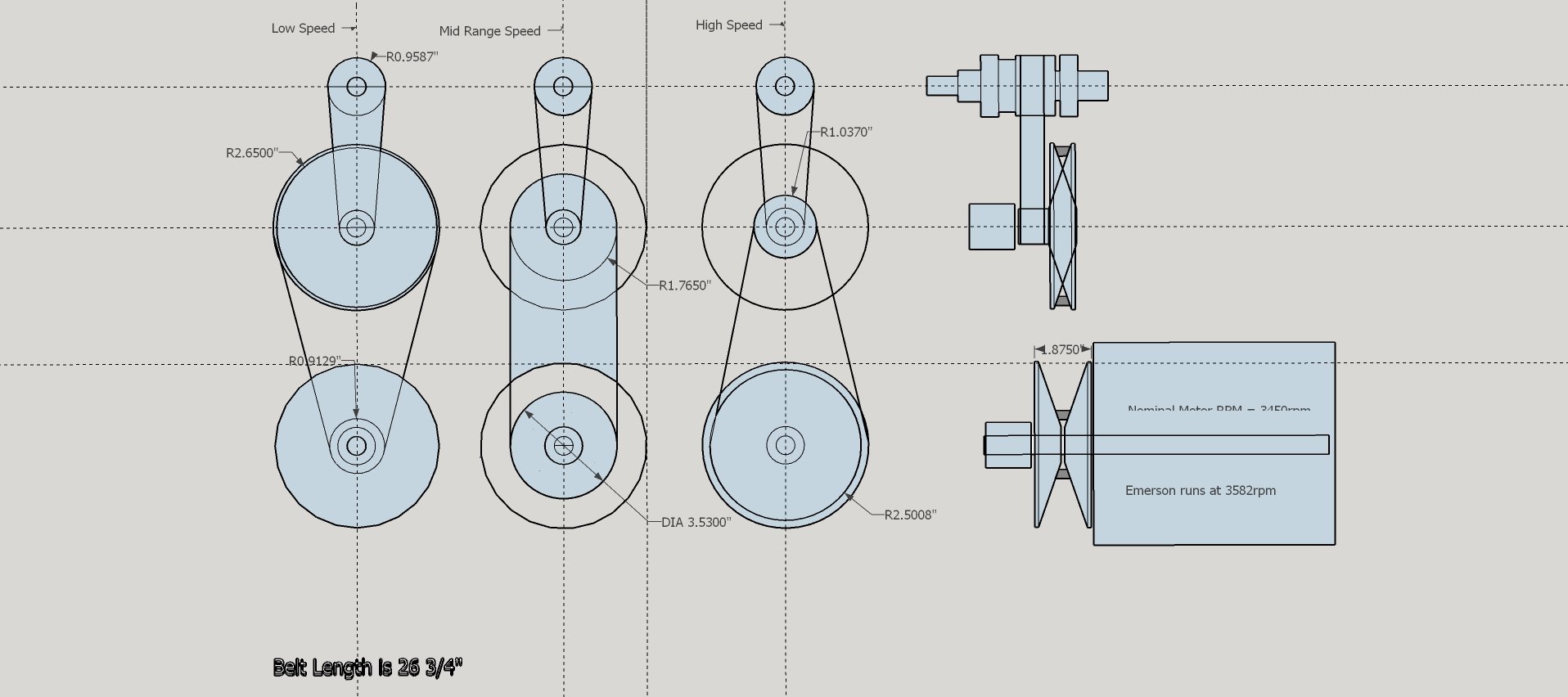
The upper sheave (image 1) is most frequently referred to as "the movable" sheave. However the lower sheave (image 4) moves also. They move in and out in conjunction with one another to establish a variable pulley arrange between the motor sheave (lower) and idler sheave (upper) resulting in speed control.
The last bottle of oil that I purchased was the ZoomSpout from ACE hardware. I prefer it not because of the oil but rather from the spout which makes it easier to get the oil where I want it ("in the hole").
DLB
As near as I can tell ZoomSpout is an oiler brand, and available with various contents. From my perspective it is not always clear what those contents are. In other threads folks have talked about the version with 'cooler oil,' but this seems to be regionally available. 3-In-One is widely available, frequently with an extendable spout that is better for oiling the sheaves than the old school can was. Either should be fine as long as you are happy with the contents. I choose the 3-In-One, but it is primarily a question of what is readily available near me.
- David
BuckeyeDennis
Zamlet, the term "sheave" is more-or-less synonomous with "pulley". But while most pulleys have a fixed width, the Shopsmith variable-speed drive (aka. Reeves drive) uses separate sheaves (half-pulleys). One of each half-pulley pair can "float" along the pulley shaft. This allows the effective pulley diameters (where the belt rides) to be changed, which in turn changes the drive ratio.
The most critical points to lubricate are where those "floating sheaves" ride on their shafts. The little lube hole hiding beneath the big spring in Dusty's photos is there to help you get oil to those points.
zamlet
BuckeyeDennis wroteZamlet, the term "sheave" is more-or-less synonomous with "pulley". But while most pulleys have a fixed width, the Shopsmith variable-speed drive (aka. Reeves drive) uses separate sheaves (half-pulleys). One of each half-pulley pair can "float" along the pulley shaft. This allows the effective pulley diameters (where the belt rides) to be changed, which in turn changes the drive ratio.
The most critical points to lubricate are where those "floating sheaves" ride on their shafts. The little lube hole hiding beneath the big spring in Dusty's photos is there to help you get oil to those points.
OK, that's a great explanation! The word "sheaves" was throwing me off as I was unclear what was being referred to.
It looks like either ZoomSpout or 3in1 is what I should be looking for. I guess I need to be scrupulously careful not to get any oil either on the inside surfaces of the sheaves or on the belt itself. Is there any way of protecting / preserving the belt itself? This one looks OK, but in my experience car engine belts often look OK right up to the day they separate.
JPG, what is the difference between the "two-bearing quill" and whatever its predecessor was? Should I be glad we did this update? I think I still have the old quill if there's any reason I should revert the change.
JPG
If it ain't broke, do not 'fix' it. The new quill is likely a good improvement. However a spare quill MAY come in hand IF the new one develops a 'problem'. The 'old' one has a single bearing. When you removed the 'old' one there was a funny shaped washer like thingie near the drive sleeve end of the splined quill shaft. Keep it. No GREAT loss if it 's location is unknown.
Any oil spill on either the belts or pulley will not reside there for long once it is running. But do clean up any spilled/dribbled/whatever.
Sheaves is a not totally accurate today term left over from the block and tackle days.
