Rather than visiting the SS forum yesterday I ended up using my limited free time to focus on making sawdust; I'm getting close to finishing my first woodworking bench. OK, to be fully honest, I did post about THAT in the "Beginning Woodworking" forum. Being a novice, I'm a bit proud of the work I've done on the bench, even if there are a couple of rough areas (mostly hidden).
Yesterday morning, before I got into working on the bench, I did install the drive shaft I purchased on ebay. I moved the good bearings from my 10ER to the new shaft, installed it, and found the pulley still wobbled. I was not surprised. With this good drive shaft I am able to determine that the pulley is not bored straight through, its more of a cone. I thought I might use a single shim around the shaft to fill the space, but it seems that the hole at the small pulley end is smaller than the other end, and the pulley still wobbled. I ended up with what I consider to be a very temporary fix. I folded two small pieces of aluminum heating duct tape in half and wrapped it nearly halfway around the side of the shaft opposite from the set screw, but this was inserted only at the large pulley end of the hole. The pulley now does not wobble, and when the belts are tensioned properly, the SS does not make the loud clattering. The sliding sheave on the speed changer no longer bangs back-and-forth on the oillite.
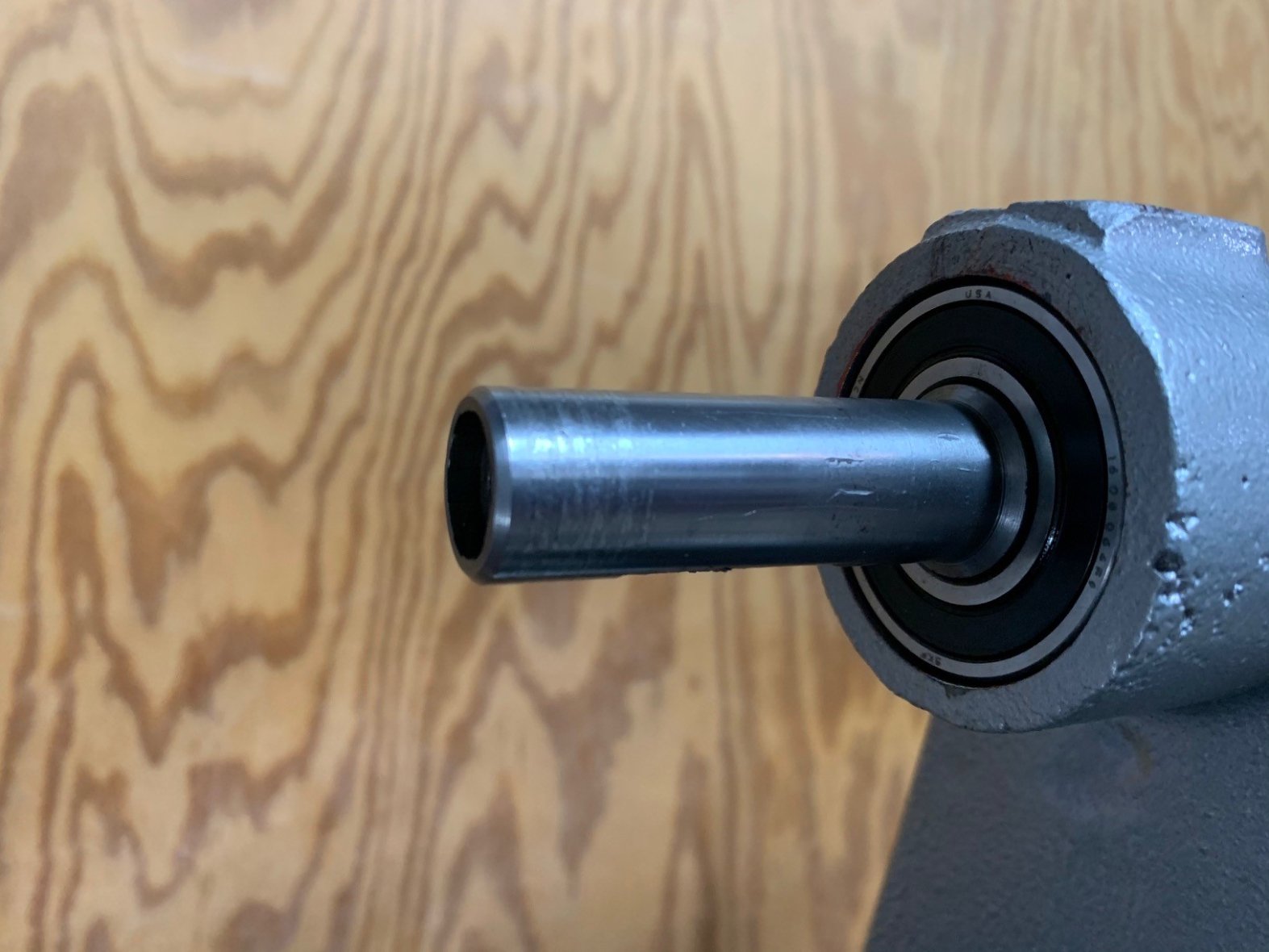
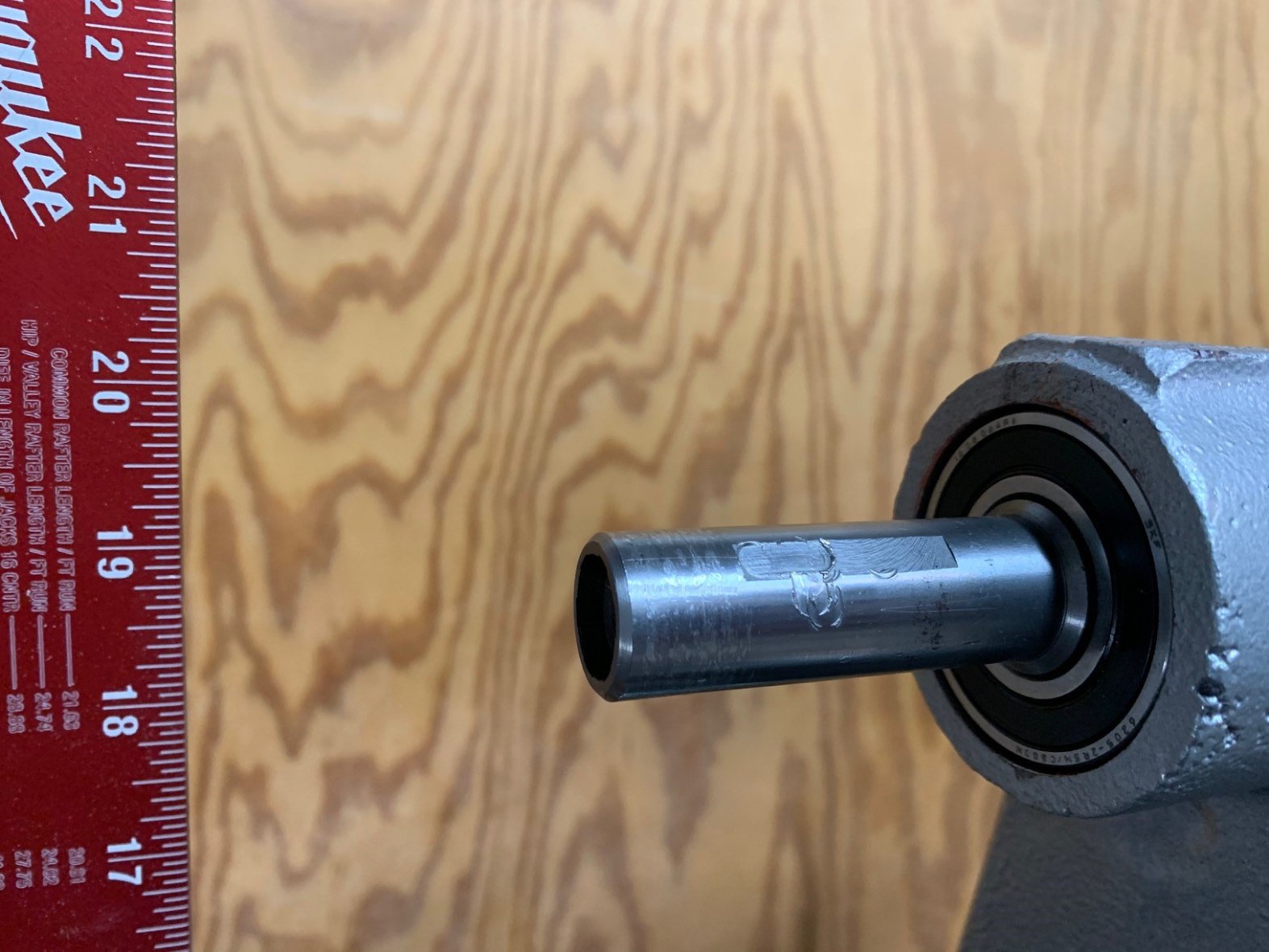
I believe the belts are tensioned correctly, but I've noticed the headstock pulley does get warm. I felt the exposed bearing and it seems to be warming up. I am not 100% sure I have everything installed correctly, I put it back together the way I found it, but it seems to me that there is nothing really holding the bearings, especially the exposed bearing, into the headstock. There is the cast aluminum piece between the bearings that is held in place with the set screw, but I don't think it is really putting pressure on either bearing, and the outside race of those bearings don't appear to be tightly seated into the headstock. Can there be something wrong here? Did I need to do something additional to ensure these bearings' outside races are firmly in place?
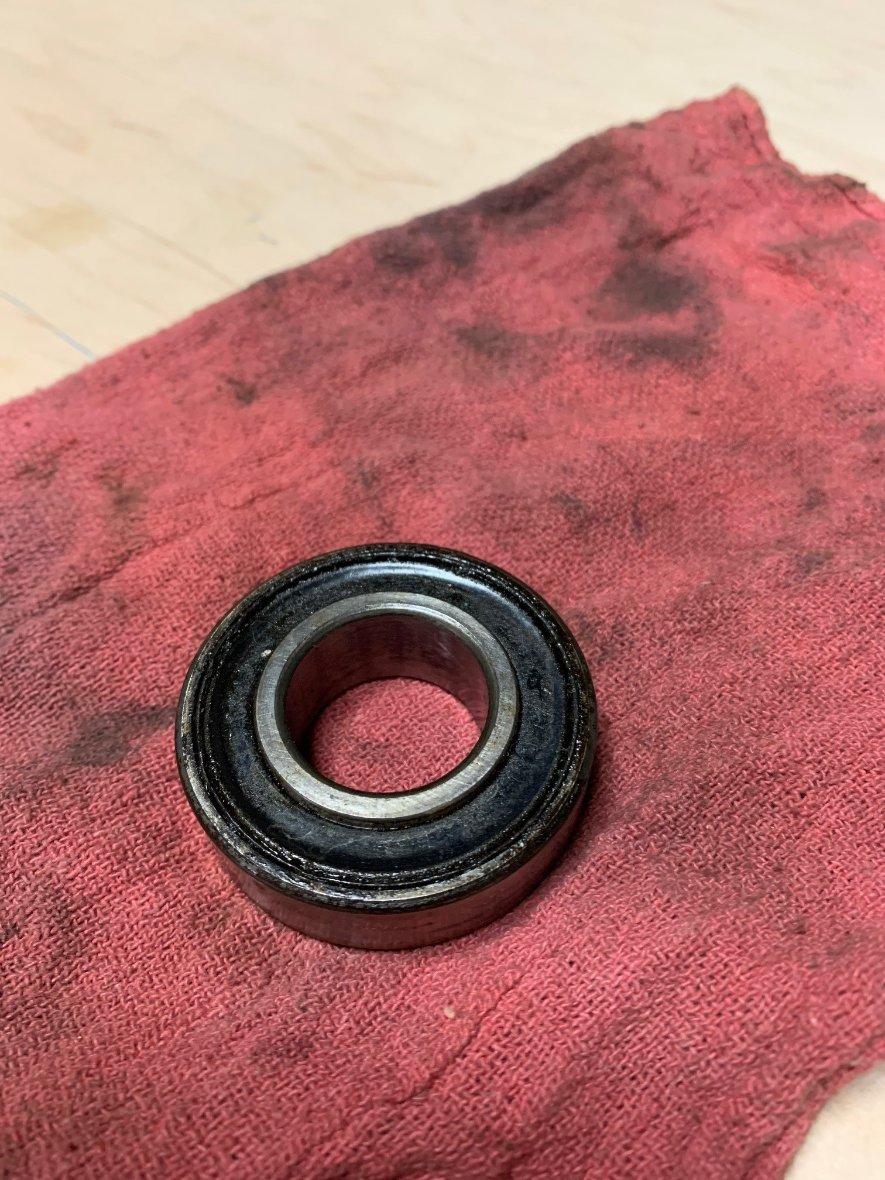
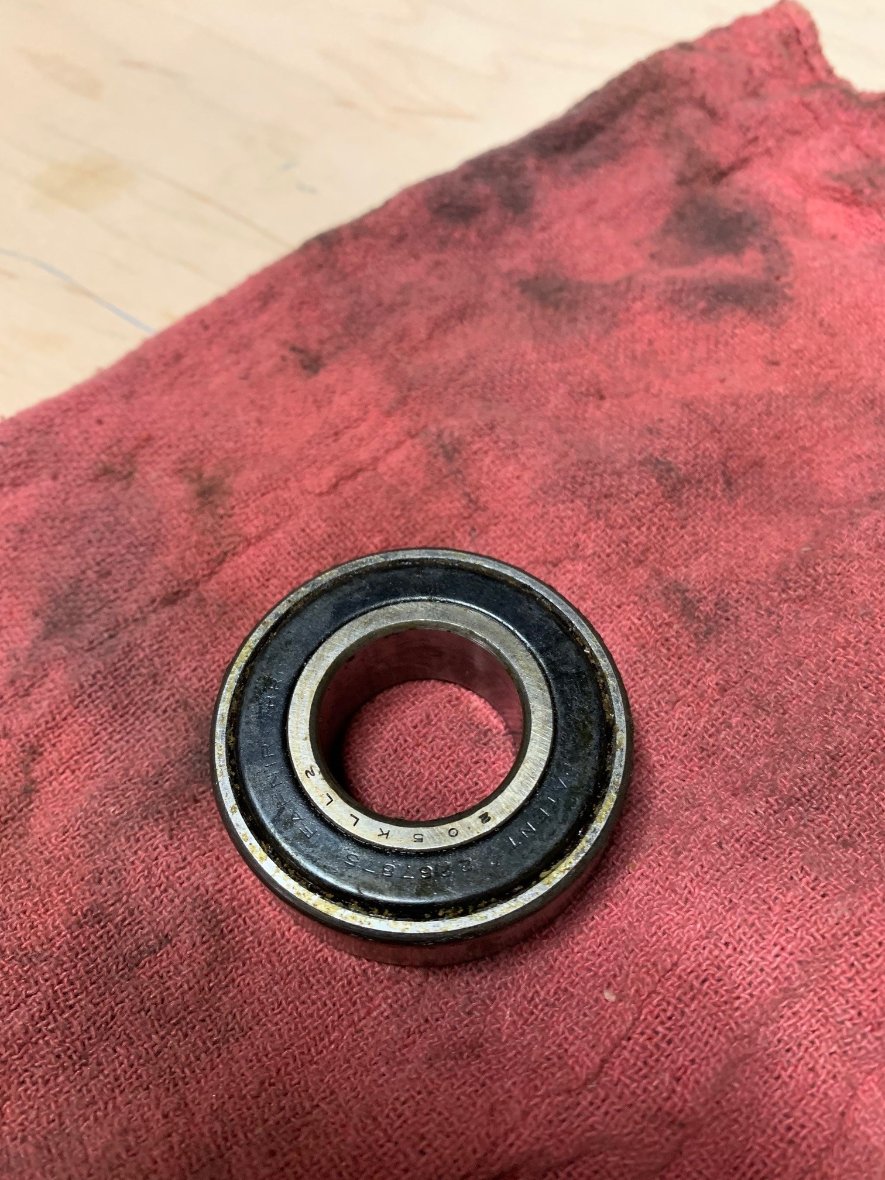
Below are photos of each side of the bad bearing. In the first you can clearly see the indentation in the rubber seal.