masonsailor2 wroteThree separate 20 amp circuits should be fine for a single person shop. A 30 amp 220 circuit might also come in handy.
Paul
I agree -- future-proofing is a good idea, and you may well run across a big 220V machine someday that you've just gotta have.
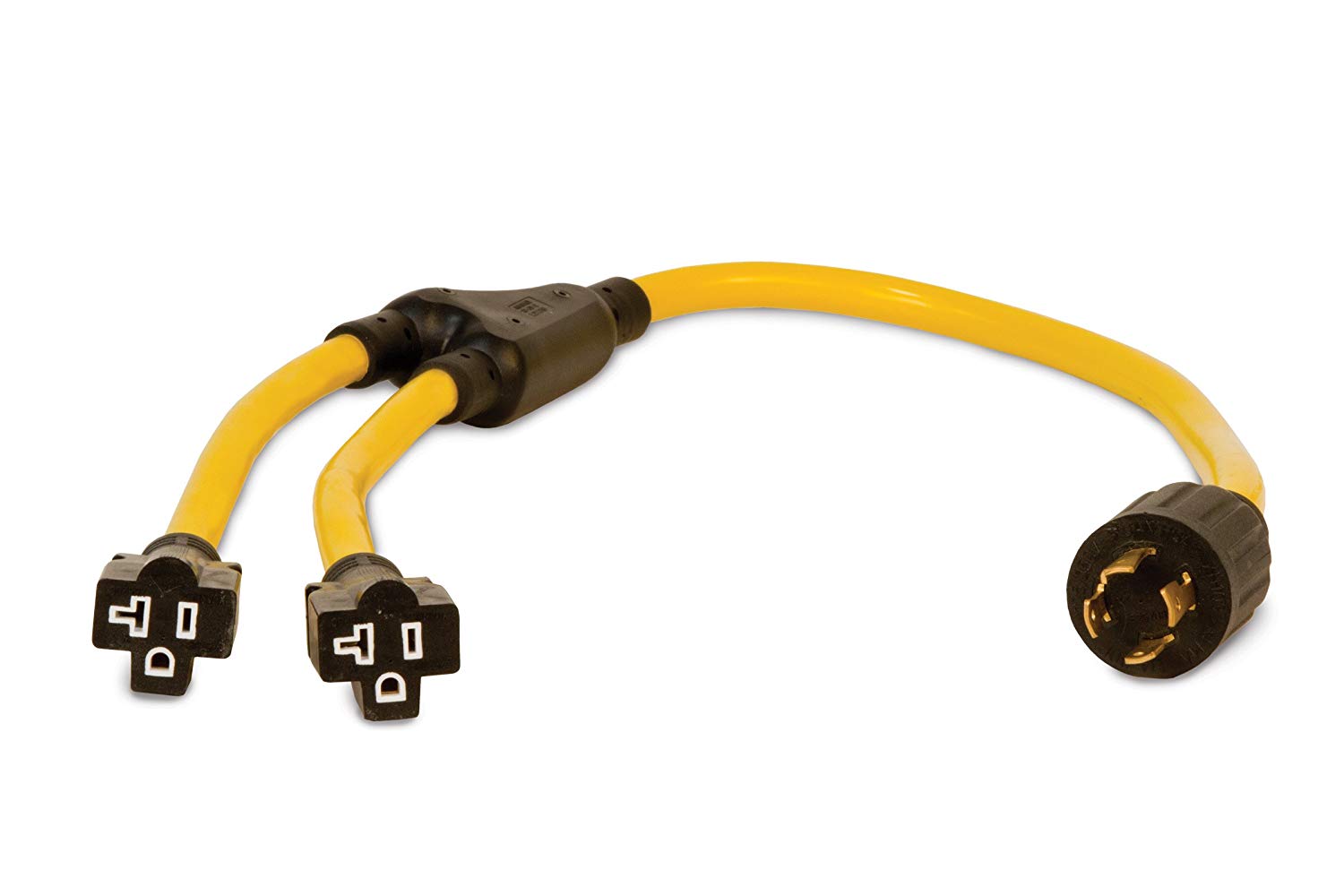
I did something in my shop that has worked out really well, and given me a lot of flexibility. I needed more live circuits in my basement workshop, but was limited to a couple of spare cable pulls that I had had the contractor install when finishing out a basement playroom for my kids. One of those was 12/3 cable, so I hooked it up to a 240V breaker, and installed a L14-20 twist-lock receptacle in the workshop.
The slick thing about this setup is that if you want to run a 240V machine, just install the mating plug on the machine cord, and plug it in. But if you need more 120V circuits instead, plug in a standard generator adapter cable, and it will break it out into two 120V circuits for you. These will have a shared neutral wire, but that's perfectly legit and code-compliant (unless a 120V AFCI/GFCI circuit is required).
In my case, even that wasn't enough future-proofing. Now I need to add a workroom subpanel, repurposing an existing 6/3 cable pull that was originally earmarked for a hot tub. Then I'll add a couple of 30A circuits, using L14-30 twist-lock connectors. Not to mention hooking up a rotary phase converter for the 3-phase machines in my stable ... :rolleyes: