I haven't had time to explore this thoroughly so I throw it out to you for some thoughts.
I replaced my pork chop, poly V belt and did a high speed adjustment per Nick's video (leaving about 1/6" showing between belt and edge of lower pulley).
When the speed dial is at low and as I turn it towards high, the speed does not seem to change until I've rotated through several letters. In other words, I can rotate from A to about D with no noticable speed increase.
What's going on?
Low speed problem
Moderator: admin
Low speed problem
I'm a self-made man but if I had it to do over, I think I'd call in someone else.
-
JPG

- Platinum Member
- Posts: 35598
- Joined: Wed Dec 10, 2008 7:42 pm
- Location: Lexington, Ky (TAMECAT territory)
oregondon wrote:I haven't had time to explore this thoroughly so I throw it out to you for some thoughts.
I replaced my pork chop, poly V belt and did a high speed adjustment per Nick's video (leaving about 1/6" showing between belt and edge of lower pulley).
When the speed dial is at low and as I turn it towards high, the speed does not seem to change until I've rotated through several letters. In other words, I can rotate from A to about D with no noticable speed increase.
What's going on?
Do it again but have less than 1/6" when doing the HS limit adjustment.
The sheaves have a limited range established by the belt width and the sheave motion. If there is minimal speed change near slow, it is likely caused by the belt 'bottoming out' in the motor pulley.
If memory serves me correctly, Nick said to set the screw so it is flush with the top of the locknut. That will not always be the case. There have been different sized nuts and screws.
So I think you need to back the screw out a bit to allow the belt to run closer to the outside of the motor pulley.
You did not mention the condition of the motor belt. It should be slightly wider than 1/2" at the widest(outer surface) edge.
The absolute high speed limit is when the control sheave begins to hit the speed control bracket.
I have found the belt has an effect on what the speed range ends up being. The high speed stop only controls the positioning of the control sheave, and the belt then determines the slow limit. So the position of the belt(floating sheave) when doing the high speed adjustment determines the actual speed adjustment range.
So slowly back the high speed adjustment screw out and watch the position of the belt on the motor pulley, but also be observant of the possible control sheave hitting the speed control bracket(this why you need to slowly back it out).
There is one setting of the HS screw that will result in the slow limit being reached as the dial reaches 'slow'. That position will be affected by the belt width. Remember to set the indicator dial to fast before installing the knob.
If you want to determine the impact point, adjust the screw out while manually slowly turning the shaft. Then run the screw in a ways.
Do realize the speed changes near slow are gradual.
╔═══╗
╟JPG ╢
╚═══╝
Goldie(Bought New SN 377425)/4" jointer/6" beltsander/12" planer/stripsander/bandsaw/powerstation /Scroll saw/Jig saw /Craftsman 10" ras/Craftsman 6" thicknessplaner/ Dayton10"tablesaw(restoredfromneighborstrashpile)/ Mark VII restoration in 'progress'/ 10E[/size](SN E3779) restoration in progress, a 510 on the back burner and a growing pile of items to be eventually returned to useful life. - aka Red Grange
╟JPG ╢
╚═══╝
Goldie(Bought New SN 377425)/4" jointer/6" beltsander/12" planer/stripsander/bandsaw/powerstation /Scroll saw/Jig saw /Craftsman 10" ras/Craftsman 6" thicknessplaner/ Dayton10"tablesaw(restoredfromneighborstrashpile)/ Mark VII restoration in 'progress'/ 10E[/size](SN E3779) restoration in progress, a 510 on the back burner and a growing pile of items to be eventually returned to useful life. - aka Red Grange
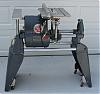
I find with using new motor belts with the proper high speed adjustment, I recommend not going pass C when slowing down until the belt has time to wear in and stretch. These lower speeds will put excessive pressure on the speed control assembly and the control sheave bearing. One technique I use to get around this is to increase the high speed setting a little making sure the control sheave does not hit the speed control bracket when doing this. This allows the control and idler sheave to be a little further apart for the same speed dial letters (setting) so you can now get the full speed dial range with a new belt.
Bill Mayo bill.mayo@verizon.net
Shopsmith owner since 73. Sell, repair and rebuild Shopsmith, Total Shop & Wood Master headstocks, SPTs, attachments, accessories and parts. US Navy 1955-1975 (FTCS/E-8)
Shopsmith owner since 73. Sell, repair and rebuild Shopsmith, Total Shop & Wood Master headstocks, SPTs, attachments, accessories and parts. US Navy 1955-1975 (FTCS/E-8)