Page 2 of 2
Re: Speed control problem
Posted: Tue Aug 13, 2024 11:32 am
by JPG
"I've never seen a machine that lends itself to user repair and shop made upgrades like this."
A product its time. Most stuff created back then had similar methods of assembly. Common hardware was used except when an ornery need required special things.
Also screws etc. were not always standardized as they are today. Case in point the older SS often used 5/32 hex heads on screw sizes that are not standard 5/32 today. An example is the 1/4-20 screw used in the shaper fence with a 5/32 hex head in the original design. Current production requires using a 3/16 screw so as to have a 5/32 hex head(so the SS tool kit will fit) - not a perfect solution since the casting still has the nut nest sized for the large 1/4" nut.
Also true DIY was more common then.
Re: Speed control problem
Posted: Tue Aug 13, 2024 1:19 pm
by edma194
JPG wrote: Tue Aug 13, 2024 11:32 am
"I've never seen a machine that lends itself to user repair and shop made upgrades like this."
A product its time. Most stuff created back then had similar methods of assembly. Common hardware was used except when an ornery need required special things.
Also screws etc. were not always standardized as they are today. Case in point the older SS often used 5/32 hex heads on screw sizes that are not standard 5/32 today. An example is the 1/4-20 screw used in the shaper fence with a 5/32 hex head in the original design. Current production requires using a 3/16 screw so as to have a 5/32 hex head(so the SS tool kit will fit) - not a perfect solution since the casting still has the nut nest sized for the large 1/4" nut.
There are always the tricky little details like nuts, bolts, and screws. None the less as a combination machine the standardization and reuse of parts is remarkable. The use of water pump bearings is pure genius, simplifying designs, reducing the number of parts per machine as well as the number of different parts across all accessories. The idler bearing in the headstock, the bandsaw, and the strip sander all use water pump bearings (and maybe something I forgot about too).
And while I hate roll pins and various retaining rings they are still common sizes and accessible. The castings are unique but by the 60s small custom parts and planned obsolescence were taking over consumer tool design. When Shopsmith restarted in the 70s they continued the design philosophy of user repair, maintenance, and upgrades.
This was off topic I suppose but I think it's those characteristics of the machine, the ability to maintain and repair them that attract us to them in addition too their utility as quality woodworking machines. Also why some of us have so many of them.
Re: Speed control problem
Posted: Tue Aug 13, 2024 2:38 pm
by DLB
Here is a picture of a standard one, in case that helps you to add the slight bend:
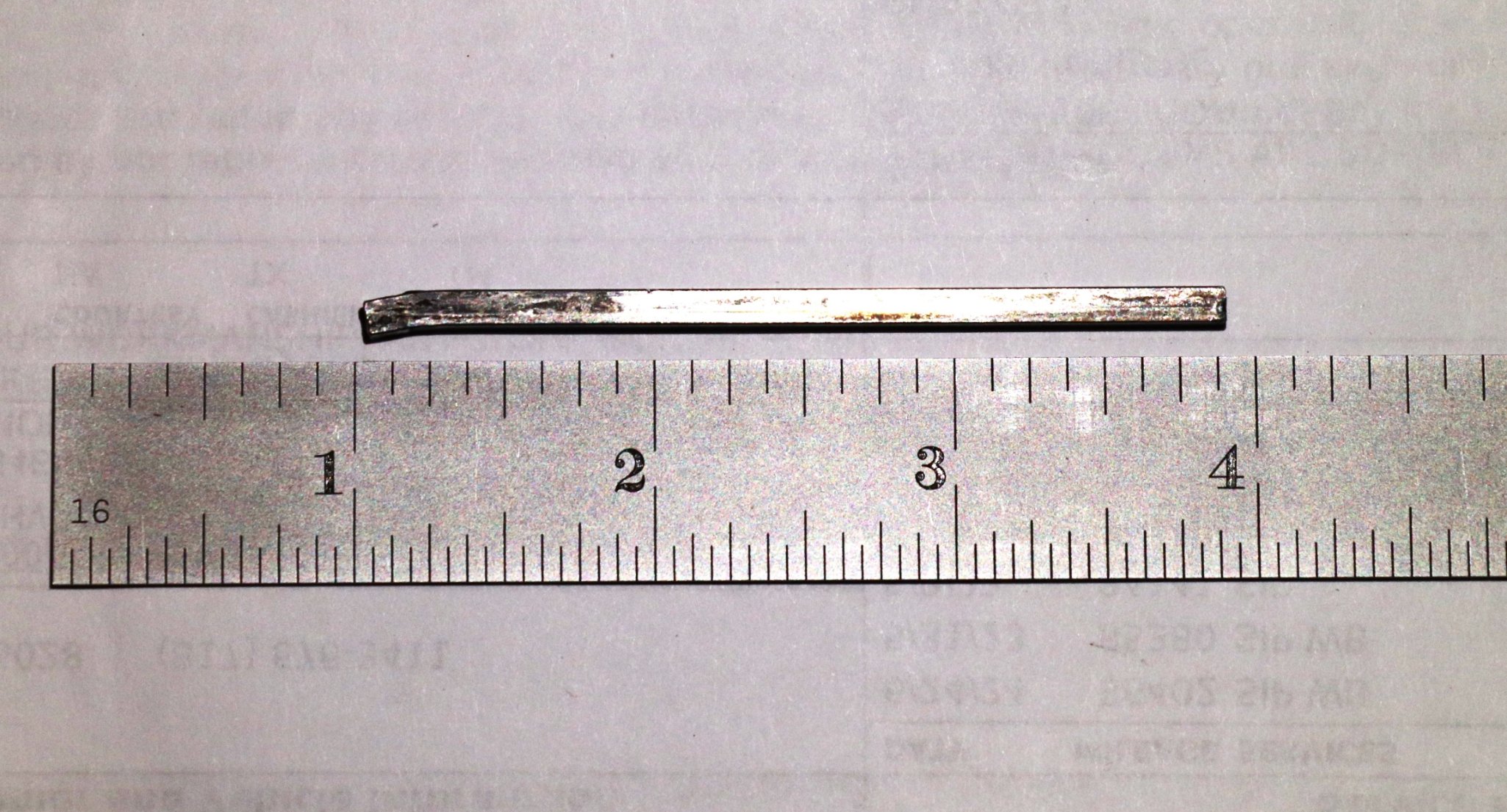
- Idler Key.JPG (414.63 KiB) Viewed 1035 times
The bend is small, maybe in the 30 degree range and about 1/8" from the end. Not much is needed since the fixed sheave keeps it in place.
- David
Re: Speed control problem
Posted: Tue Aug 13, 2024 9:23 pm
by JoeSark
Thanks everyone! David, the picture did help. After bending it, things are humming along nicely. One really nice feature is using the SS head to drive the old Craftsman machines when I restore them. It's so easy to put a hub in place of a pulley.