Page 2 of 3
Re: clogged DC6000
Posted: Mon Jan 19, 2026 1:38 pm
by HopefulSSer
DLB wrote: Mon Jan 19, 2026 10:09 am
FWIW, I don't have any issues with the DC-6000 combined with the standard (3 blade head) DeWalt 735 Planer with 2.5" connections. After thinking about your post, my guess would be that the biggest difference is that the DW735 has it's own blower that greatly increases air flow to the DC.
I think I'm remembering this correctly -- I seem to recall (probably on FB) someone had connected his DW735 to his DC6000, which was also connected to his (non-SS) table saw. The table saw was not running but the DeWalt and dust collector were. The fan in the planer overran the dust collector and it was spewing chips into the table saw.
The fan in the DW735 is incredibly powerful!
Re: clogged DC6000
Posted: Mon Jan 19, 2026 6:48 pm
by DLB
HopefulSSer wrote: Mon Jan 19, 2026 1:38 pm
I think I'm remembering this correctly -- I seem to recall (probably on FB) someone had connected his DW735 to his DC6000, which was also connected to his (non-SS) table saw. The table saw was not running but the DeWalt and dust collector were. The fan in the planer overran the dust collector and it was spewing chips into the table saw.
The fan in the DW735 is incredibly powerful!
I reported that here on the forum, but with the SS TS (510/520/M7 guard). Al Gale noted that he runs his DW735 into a DC-3300 and doesn't power the DC up. I learned a lesson, but still find it surprising. I didn't specialize in fluid dynamics, but I'm pretty sure this suggests the CFM of the planer exceeds the CFM of the DC in this setup by a pretty good margin. Hey, maybe I had a clog!
- David
Re: clogged DC6000
Posted: Mon Jan 19, 2026 8:06 pm
by HopefulSSer
I work with someone who has a DW735. He runs a 4" hose off it out the window supported by the crotch of a tree, and blasts the shavings out into his garden. He says it puts on quite the show!
Re: clogged DC6000
Posted: Mon Jan 19, 2026 9:38 pm
by Matanuska
I hook up my Makita 2040 15” planer with standard knives to a 4” main line running to a Dust Deputy cyclone attached to a Rockler wall mounted 4” blower with a fabric exhaust bag to catch the fines downstream of the blower. The planer puts out LOTS of large shavings but they don’t go through the blower so it never clogs up unless I forget to empty the drop out bin before it fills up. I can also attach the 4” main line to an adaptor on my SS jointer or use blast gates to Y off the main line to a smaller hose I can connect directly to my SS bandsaw, table saw, belt sander, or drum sander. I don’t think the system would work very well with the planer without the cyclone although it might be OK for the other tools.
Does the SS dust collector route all the shavings through its blower? If so an upstream cyclone dropout might be a good idea when using a planer.
Re: clogged DC6000
Posted: Tue Jan 20, 2026 11:29 am
by hfmann
Thanks guys for your detailed feedback.
I'm pretty sure I had at least two ports open at the same time these clogs took place. The next time I plane, I'll try shutting it down to the one port. It's such a hassle to take the manifold off to unclog it, I'm hesitant to test it until I need the planer again.
As to the anemometer, you're right, it's probably the cheapest one I could find. It would be interesting to see what it says with the manifold on and various # of open/closed ports.
Re: clogged DC6000
Posted: Tue Jan 20, 2026 11:51 am
by claimdude
I have no problems running my 735 hooked up to my dc6000.
jack
Re: clogged DC6000
Posted: Wed Jan 21, 2026 6:29 am
by RFGuy
hfmann wrote: Tue Jan 20, 2026 11:29 am
Thanks guys for your detailed feedback.
I'm pretty sure I had at least two ports open at the same time these clogs took place. The next time I plane, I'll try shutting it down to the one port. It's such a hassle to take the manifold off to unclog it, I'm hesitant to test it until I need the planer again.
As to the anemometer, you're right, it's probably the cheapest one I could find. It would be interesting to see what it says with the manifold on and various # of open/closed ports.
I have a similar, but different brand anemometer that I got off of Amazon. My point was just that we are at the limit of what these economical anemometers can achieve and measure due to the high airspeed involved. When I started investigating my DC-3300, it was only because the DC-3300 is such an anemic dust collector that I was able to get what I would consider "good" measurements off of it, i.e. I believe my measurements were comfortably inside the rated specs of my anemometer. I don't have a DC-6000, but based on the anemometer measurements Dusty was able to make before his broke, it looks like the DC-6000 is a definite improvement on the DC-3300. Jim McCann at Shopsmith communicated to Dusty that he believed the DC-6000 should be able to maintain 200CFM at all three ports of the manifold
simultaneously, but based on Dusty's findings this appears to be incorrect. As I, and others, have suspected on this forum, the limiting factor seems to be that 3 port manifold as it is very restrictive and I am sure causes A LOT of internal turbulence restricting airflow when more than 1 port is used at a time. Returning to what you measured, your DC-6000 appears to be a bit stronger in suction than Dusty's but it could just be the difference in test setup between the two of you. Dusty was quite thorough in constructing a coupler to optimize testing with the anemometer (see link below). At 200CFM, that is nearly 6000ft/min of airspeed through a single port of the DC-6000. I know the large dust collectors on the market, when they test them, they use a pitot tube style anemometer inserted into the ducting. Once you start getting close to that 6000ft/min airspeed, I believe you are getting at the end of range for most of these off-the-shelf, economical anemometers. The rated specs for your BT-100 show a max airspeed of 67.1mph (5905 ft/min), so anything that meter shows above this is off-scale. It might be reading close to accurate, but then again it could be wildly off. Who knows, your DC-6000 may be even more powerful than what your meter shows. Up to you if you want to take more measurements or not. It is fun. I was just trying to point out some of the limitations we have, both in testing and in interpreting the data. Thanks for giving us another datapoint on the DC-6000's performance.
viewtopic.php?p=304046#p304046
viewtopic.php?p=304121#p304121
P.S. It sucks that Shopsmith stopped selling that manifold replacement for the DC-3300 that would give you a 4" connection instead.
viewtopic.php?p=277212#p277212
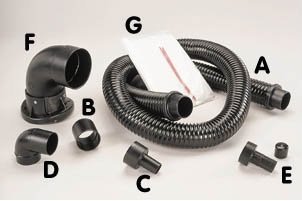
- dust.jpg (12.96 KiB) Viewed 48685 times
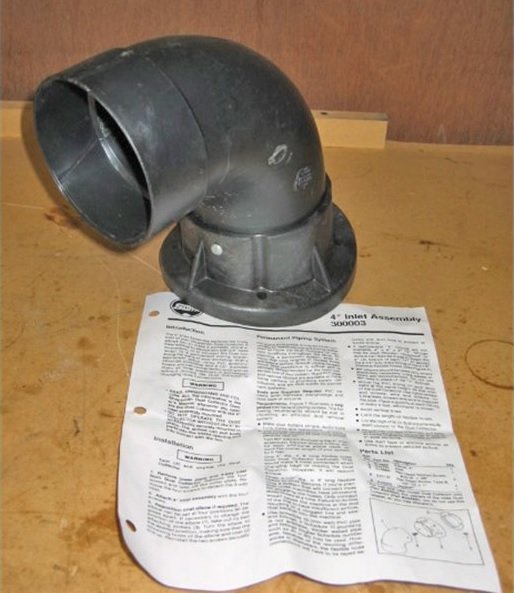
- dust2.jpg (51.04 KiB) Viewed 48685 times
Re: clogged DC6000
Posted: Wed Jan 21, 2026 11:27 am
by HopefulSSer
RFGuy wrote: Wed Jan 21, 2026 6:29 am
P.S. It sucks that Shopsmith stopped selling that manifold replacement for the DC-3300 that would give you a 4" connection instead.
The new management might bring it back if they got enough requests
I don't own a SS dust collector so I have no personal experience. But IMO, just from looking at pictures, the little tiny filter bag on top is woefully inadequate. It needs MUCH more surface area, especially if the bag is 1- or 2-micron. A bag double or treble the height would be better, a pleated filter would be much better still. That little bag has got to be a big contributor to reduced airflow.
I don't see a micron rating spec for the filtering on the SS web page. To me that is a critical data point.
Re: clogged DC6000
Posted: Wed Jan 21, 2026 11:36 am
by RFGuy
HopefulSSer wrote: Wed Jan 21, 2026 11:27 am
The new management might bring it back if they got enough requests
I don't own a SS dust collector so I have no personal experience. But IMO, just from looking at pictures, the little tiny filter bag on top is woefully inadequate. It needs MUCH more surface area, especially if the bag is 1- or 2-micron. A bag double or treble the height would be better, a pleated filter would be much better still. That little bag has got to be a big contributor to reduced airflow.
I don't see a micron rating spec for the filtering on the SS web page. To me that is a critical data point.
Agreed. Not sure the quantities would be enough, but I assume many DC-6000 owners are already using 4" equipment with them based on past posts. It would surely buy a lot of goodwill if the new company, once they get on their feet, could look into bringing certain items like this to market for the Shopsmith community. Accessories should be much easier to bring back or invent new, whereas new SPT's are much more difficult. Yeah, the filter bag is one of the biggest Achilles heels with the DC-3300 or DC-6000. This is why many woodworkers call these dust pumps, not dust collectors, i.e. because they spew more dust particulates back into the air through the bag exhaust than they collect. At one time, I found the following information on the Shopsmith website and recorded it in a past forum post. So, I will reiterate it here for everyone. Based on similar dust collector filter bags on the market, I do believe these numbers are reasonable. Also, this is why ANY HEPA filter excels in comparison because most HEPA filter cartridges filter down to 0.3µm. Below is the link with more info on where I got this Shopsmith information:
Shopsmith Filter Hood Sizing and Specs:
12" tall filter hood only filters downs to 7µm and the 24" filter hood down to 5µm, but the 42" filter hood filters down to 1µm
viewtopic.php?p=303980#p303980
Re: clogged DC6000
Posted: Wed Jan 21, 2026 1:23 pm
by hfmann
RFGuy wrote: Wed Jan 21, 2026 6:29 am
Who knows, your DC-6000 may be even more powerful than what your meter shows. Up to you if you want to take more measurements or not. It is fun. I was just trying to point out some of the limitations we have, both in testing and in interpreting the data. Thanks for giving us another datapoint on the DC-6000's performance.
I agree RFGuy. I really knows nothing about the validity of these anemometers. It is fun though. And I may use it to test the "speed" through the manifold with various combination of open /closed inlets.
hal