thormxer wrote:Some posts I have read on here said the real early greenies didn't have a clutch so I was assuming that mine doesn't. I honestly didn't look that close when I put the new belt on. I will look closer tonight.
The post that I linked that mickyd made after collaborating with one of my mentors, the late Bill Mayo, will really help you understand how to inspect, analyze and adjust the clutch if you have to.
I so miss my long talks with Bill Mayo. God rest his soul, and bless his loving wife Ann.
JPG is another of my mentors here, and his knowledge and experience is very valuable advice.
I can't say that there aren't any machines that had no clutch, only that I have never seen one. That said, I have one of the earliest "A" headstock units myself. Bill said it easily could have been among the first ever sand cast, not necessarily that it was among the earliest made as he and a number of others realized that some of the first cast went on the shelf, as they came out of the molds, and may have been used a bit later since they were likely first in last out in the batches cast.
Soon enough, they improved the molding process and went to an injection mold which allowed a much thinner casting sprue (that molding line across the top of the headstock), and they added the inspection port hole in the back.
Bill Mayo and I last discussed an idea I had run by him for installing a 4 inch screw-in plastic deck plate on the back of "A" headstocks and affixing the Inspection cover to the screw-in lid somewhat like the one I attached below which I could buy for less than $15.
Sadly Bill's health degradation accelerated and I did not embrace the project until he had a time to get better if he could.
Maybe it is something you might consider for yours and let us know how it works out. You would use a large metal hole saw at a slow speed to make that opening, the appropriate size for the deck plate you select.
It certainly would add more than $15 of value to the headstock in my mind.
Bill had abandoned modifying "A" headstocks and simply sold them for scrap metal as he had a copious supply of "B" or "C" headstocks he had aquired or could acquire on eBay etc. He chuckled when I shared it with him and said "I wonder why I never thought of that?"
Please take some photos and share what you find, and what you do. Many Gilmer drive systems are still in use today.
Everett
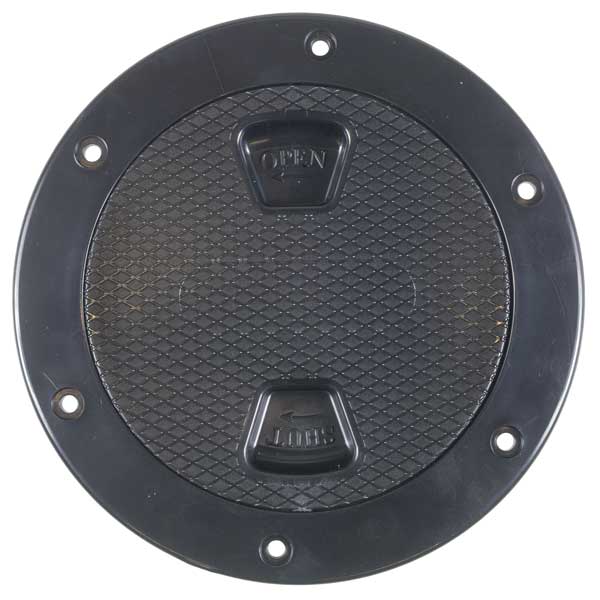
- 4 inch Screw-In Plastic Deck Plate.jpg (31.61 KiB) Viewed 8564 times
 That indicates an "A" headstock and no access hole...