Page 1 of 2
Vintage chestnut, vintage clampage
Posted: Sat Dec 09, 2017 8:03 am
by nuhobby
Just doing some early preparation for a little chest. What else for a little chest, but a little chestnut?
I got some vintage wormy chestnut of limited dimensions. Starting to glue up some small panels. My SS Cam Clamps are just the ticket!
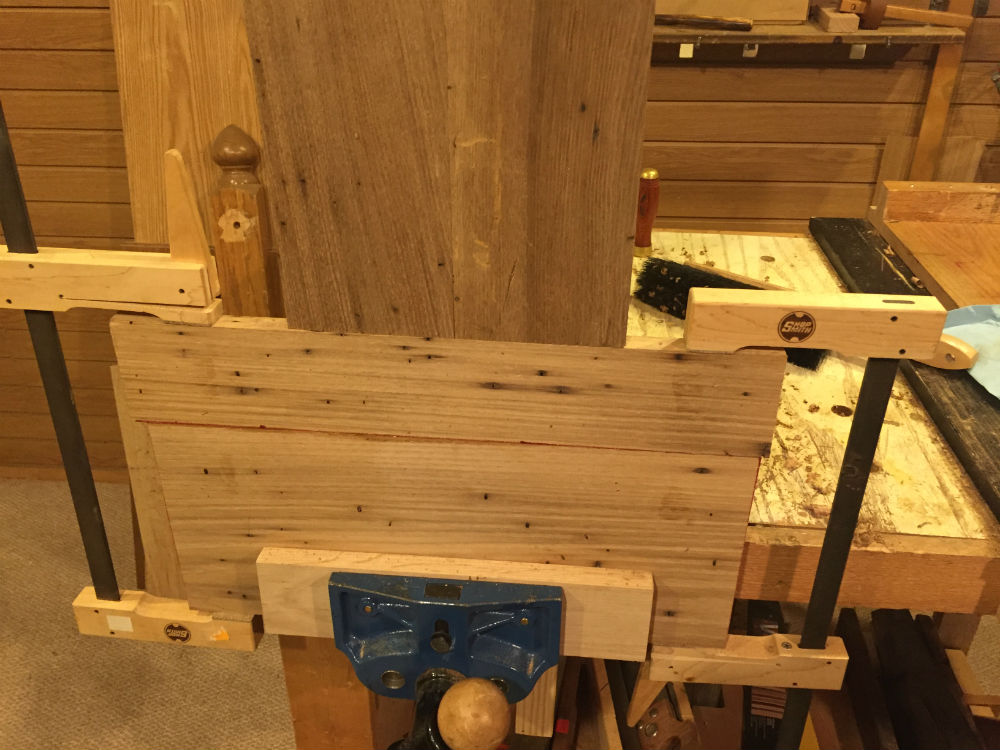
- Vintage Clampage.jpg (129.89 KiB) Viewed 15134 times
Happy Woodworking,
Chris
Re: Vintage chestnut, vintage clampage
Posted: Sat Dec 09, 2017 10:01 am
by Hobbyman2
Like
Re: Vintage chestnut, vintage clampage
Posted: Sat Dec 09, 2017 10:49 am
by garys
I've always wanted to make a project from American chestnut, but it is very difficult to get any around here so I've just never got to doing it.
I like the look of your project.
Re: Vintage chestnut, vintage clampage
Posted: Sat Dec 09, 2017 4:40 pm
by JPG
I like the look of his cam clamps.
BTW they are still available from luthier supplies folks.
Re: Vintage chestnut, vintage clampage
Posted: Mon Dec 11, 2017 9:24 am
by terrydowning
And Paul Sellers has a series of videos on how to make your own.
https://www.youtube.com/watch?v=Q5_e84I ... picnyKfTWZ
Re: Vintage chestnut, vintage clampage
Posted: Mon Dec 11, 2017 4:14 pm
by jsburger
nuhobby wrote:Just doing some early preparation for a little chest. What else for a little chest, but a little chestnut?
I got some vintage wormy chestnut of limited dimensions. Starting to glue up some small panels. My SS Cam Clamps are just the ticket!
Vintage Clampage.jpg
Happy Woodworking,
Chris
My Grandfather bought the H. F. Ball Planing Mill in Berlin, PA in the early 50's. I used to spend my summers there. All of the lumber sheds were made almost entirely of wormy chestnut. He built a new house in the mid 50's and the guest bedroom was entirely paneled in solid wormy chestnut. He tore out enough floor boards in the lumber sheds to make the paneling. He made a small cabinet for the guest room from wormy chestnut that I still have. The doors are one board and are 12" wide. The mill had a turn of the century molding machine that was bigger than a VW. That is what the paneling was milled on. It could run all four surfaces of the stock in one pass. There was also some wormy chestnut in the living room over the fire place.
Re: Vintage chestnut, vintage clampage
Posted: Mon Dec 11, 2017 8:24 pm
by nuhobby
Nice story and picture, jsburger! I'll hope my chest turns out as pretty-toned as the one you showed.
I did 5 glue-ups and now have cut away most of the excesses... starting to give an idea on what my sizes will be:
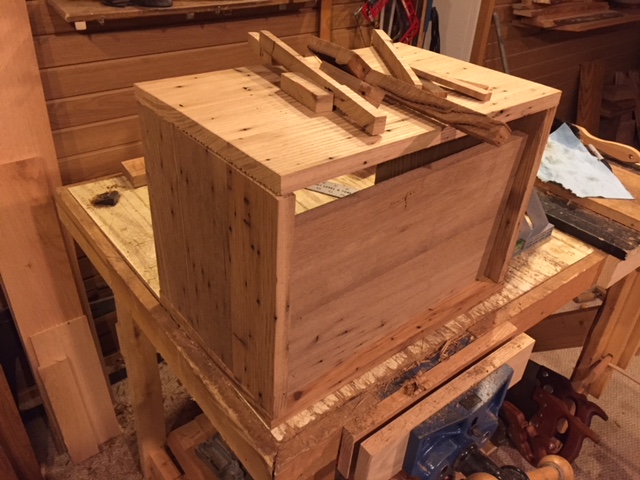
- 5 glued chestnut planks.JPG (121.2 KiB) Viewed 14971 times
Chris
Re: Vintage chestnut, vintage clampage
Posted: Mon Dec 11, 2017 8:54 pm
by jsburger
nuhobby wrote:Nice story and picture, jsburger! I'll hope my chest turns out as pretty-toned as the one you showed.
I did 5 glue-ups and now have cut away most of the excesses... starting to give an idea on what my sizes will be:
5 glued chestnut planks.JPG
Chris
I think he used Minwax but I am not sure what it was back then. Today I would use at least 6 or more coats of Tongue oil.
Re: Vintage chestnut, vintage clampage
Posted: Mon Dec 11, 2017 8:57 pm
by Hobbyman2
Nice piece of American history John.
Thanks for sharing
Re: Vintage chestnut, vintage clampage
Posted: Mon Dec 11, 2017 9:41 pm
by jsburger
This was a turn of the century lumber mill. It had an articulated horizontal 12"+ disk sander for sanding wood window sashes. They made them all the time from scratch. The farmers were always coming in for a new window sash.
There was a big swing saw for cut offs. No guard as I remember.
No line shafts, everything was electric but all the belts were flat leather. We had the lacing equipment to repair the belts. Crimp the pins on the end of the belt and replace the raw hide pin to hold the belt together.
The table saw, band saw, jointer multi tool (can you say Shopsmith) was very close to what is in this article (it was Crescent) was in the mill in the 50's. The only difference is the band saw had a cover on the upper wheel. What we had is in the second picture in the article.