Page 1 of 9
Parallel Extension Tables
Posted: Tue Dec 08, 2020 6:42 am
by dusty
IF a=b and b=c then a=c
If two lines are both parallel to a third line, then they are also parallel to each other.
If two Shopsmith tables (Main Table and Right Extension Table) are both parallel to another extension (Left Extension Table) then the Extension Tables are parallel to one another.table. There seems to be some disagreement. What say you?????
We have discussed, many times, the difficulties that some have getting the two extension tables parallel to another.
What is wrong with this logic???? Why is it difficult to achieve extension tables that can be exchanged????
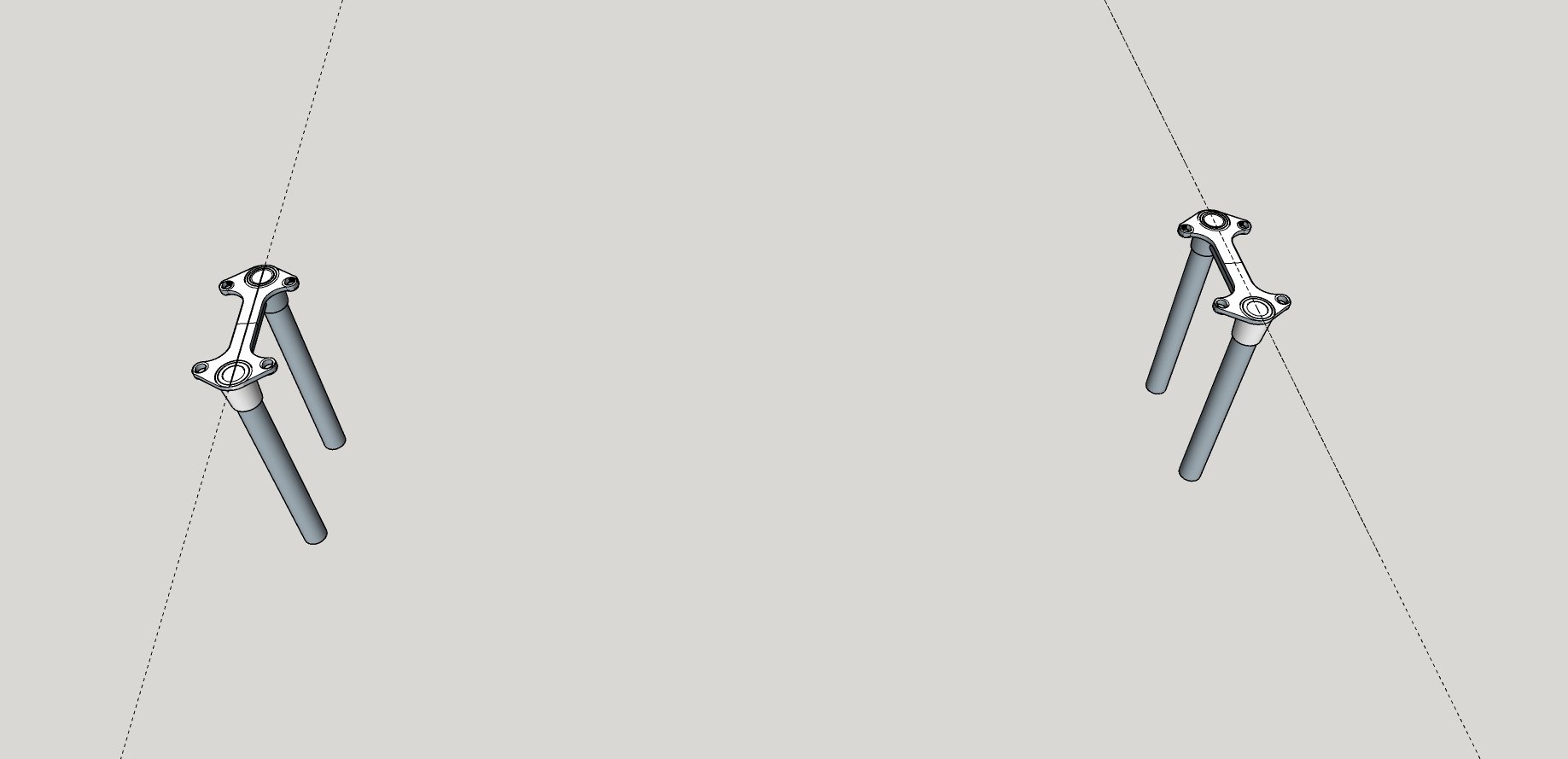
- Two Sets of Extension Table Legs.jpg (54.4 KiB) Viewed 1716 times
Re: Parallel Extension Tables
Posted: Tue Dec 08, 2020 7:13 am
by algale
Presumably because the table tops are mounted on tubular legs that pass through bore holes in the castings and additional bore holes in the castings hold the way tubes and bench tubes. You've got three axis of potential lack of parallelism: (1) front to back (imagine a horizontal line passing through the center of the leg bore holes in the end castings and the carriage), (2) vertically through the leg bore holes and (3) side to side through the way tube bores and bench tube bores.
If any of the bores don't align perfectly both horizontal and vertically, you'll never achieve interchangeability. Yes, all three table tops can be adjusted to be parallel to one another in a given configuration because they tops of the table can be adjusted independently of the tubular legs. But when you go to swap left for right extension table, any small lack of parallelism is revealed.
I doubt the tolerances of the bores in the castings are held tight enough to allow such interchangeability except by dumb luck. I also figure the way tubes and bench tubes have variations that contribute to the issue.
I don't think I've said anything here that will add anything new to your understanding of the Shopsmith or what others have said in the past about this issue.
Re: Parallel Extension Tables
Posted: Tue Dec 08, 2020 7:26 am
by dusty
It seems to me that all three of your hypotheses have been covered.
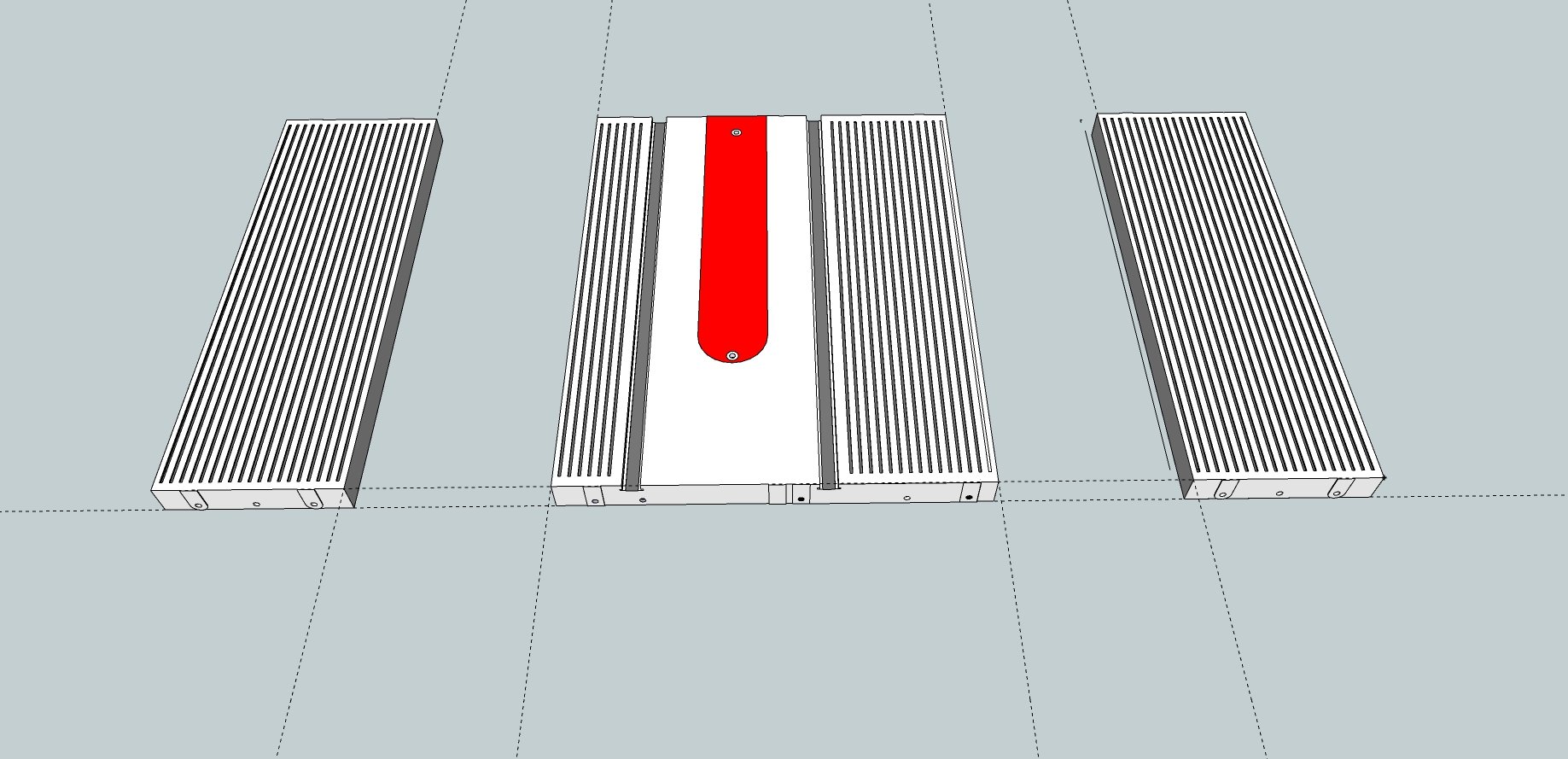
- Extension Table Ideal Setup.jpg (212.81 KiB) Viewed 1704 times
Keep in mind that the Main Table provides the reference surfaces Left, right, up, down). The tables (extension) can be aligned independent of the Bench and Way Tubes.
I am not arguing a point! I am trying to understand a phenomena that 'seems' to exist.
Re: Parallel Extension Tables
Posted: Tue Dec 08, 2020 8:18 am
by JPG
Understanding comes from accepting what Algale just said.
Anything that an extension table attaches(directly or indirectly) to will cause the thing that exists.
Each table can be individually adjusted to be parallel with the main table. Those adjustments compensate for the unique variation from perfectly nominal that the spt mounts exhibit.
Now the left and right spt mount anomalies will extremely unlikely be unequal.
So swapping the tables is unlikely to be equivalent.
Now I for one think by adjusting the bench/way tubes/spt mounts(end castings) one can get close to achieving what you describe with one table so with two the same result could occur.
However close is not good enough for those of us persnickety folks that worry about such things.
Re: Parallel Extension Tables
Posted: Tue Dec 08, 2020 8:24 am
by dusty
JPG wrote: Tue Dec 08, 2020 8:18 am
Understanding comes from accepting what Algale just said.
Anything that an extension table attaches(directly or indirectly) to will cause the thing that exists.
Each table can be individually adjusted to be parallel with the main table. Those adjustments compensate for the unique variation from perfectly nominal that the spt mounts exhibit.
Now the left and right spt mount anomalies will extremely unlikely be unequal.
So swapping the tables is unlikely to be equivalent.
Now I for one think by adjusting the bench/way tubes/spt mounts(end castings) one can get
close to achieving what you describe with one table so with two the same result
could occur.
However close is not good enough for those of us persnickety folks that worry about such things.
I am not certain whether you agree or disagree but I believe the objective is achievable by anyone who is persnickety enough to pursue it.
Re: Parallel Extension Tables
Posted: Tue Dec 08, 2020 8:36 am
by JPG
Agree? Yes and no.
I believe on can achieve parallel to the blade easily enough by compensating for parts variations. Any thing beyond that will be affected by the floor and legs in addition to parts variations in the other two planes.
Re: Parallel Extension Tables
Posted: Tue Dec 08, 2020 9:34 am
by RFGuy
Don't forget that the headstock tilts up to drill press mode. When the top waytubes are lowered back down to "seat" into the lock on one end there can be some variance for how it seats on this lock mechanism (movement to front or back). In other words I don't know that it is designed to perfectly autocenter the top waytubes to ensure they are parallel with the bore holes in the base castings every time. The result is that the main table can be out of parallel with one or both auxiliary tables
Re: Parallel Extension Tables
Posted: Tue Dec 08, 2020 10:22 am
by edma194
If you keep wiggling everything around you can get close enough all the tables in perfect harmonious alignment. That alignment will hold fast up until the moment you do anything useful. Move the main table on the carriage or change it's height, move the extension tables, move the head stock on the tubes, switch to drill press mode, or move the machine, all these and plenty of other things will throw off parallels and levels and alignments of all kinds. If only Shopsmiths were made with an additional 750 pounds of steel and cost 12 times as much and these problems would be largely diminished in scale.
Re: Parallel Extension Tables
Posted: Tue Dec 08, 2020 2:03 pm
by dusty
edma194 wrote: Tue Dec 08, 2020 10:22 am
If you keep wiggling everything around you can get close enough all the tables in perfect harmonious alignment. That alignment will hold fast up until the moment you do anything useful. Move the main table on the carriage or change it's height, move the extension tables, move the head stock on the tubes, switch to drill press mode, or move the machine, all these and plenty of other things will throw off parallels and levels and alignments of all kinds. If only Shopsmiths were made with an additional 750 pounds of steel and cost 12 times as much and these problems would be largely diminished in scale.
In days long gone, I might have been convinced that interchangeable extension tables was a pipe dream. No more!
Most of the variables that you guys speak of no longer play since the introduction of the double tilt. With the double tilt concept the Way Tubes are quit solid and once set properly cease to be an issue relative to this thread. The same would be true of a system built with two headrest assemblies. Take the base arm assembly out of the picture and most of the alleged variables are gone.
I do not believe that the bores for the Way Tubes and the Extension Table Legs introduce that degree of 'slop'.
Let me, however, throw in one caveat. I am not talking about maintaining precision to the degree of a milling machine. I am working with a wood working tool in an hobby wood shop. If I can maintain alignment that will allow me to expect repeatable accuracy to 1/64" throughout all my various setups, I am happy.
I still strive to maintain blade to miter slot relationships to within .003".
It should go without saying that when performing alignments or performing "precision" cuts that all locks are secured. Unlocking, moving and relocking either or both the headstock and the carriage does not introduce significant inconsistences.
Re: Parallel Extension Tables
Posted: Tue Dec 08, 2020 2:41 pm
by edma194
dusty wrote: Tue Dec 08, 2020 2:03 pm
Let me, however, throw in one caveat. I am not talking about maintaining precision to the degree of a milling machine. I am working with a wood working tool in an hobby wood shop. If I can maintain alignment that will allow me to expect repeatable accuracy to 1/64" throughout all my various setups, I am happy.
Yes, it is a woodworking machine, not a milling machine, and it's quite stable enough to work on a material which is not very stable in itself. That piece of wood you cut today may have different dimensions tomorrow, may be as flat as a Kansas pancake today and curved in four directions tomorrow. My Shopsmith stays within fine alignment for fine woodworking, rough carpentry, and even light metal work. And luckily I am not that finicky most of the time, I don't mind if things are not perfectly straight, or flat, or parallel, as long as they serve their purpose.
Ok, every once in a while I go nuts and spend excessive time and energy trying for an unattainable level of perfection, but I get over it after remembering all the times I failed to reach mechanical nirvana. And I also remember all the times someone has seen me scowling, asked what was the matter, and I'd tell them how something I made wasn't perfectly straight, or there was a huge gap between pieces, or it wasn't square, and then they said "What are you talking about? I don't see anything."