Page 1 of 2
DC6000 upgrade puzzlement
Posted: Sun Jul 28, 2024 8:20 pm
by hfmann
Hi all,
I started putting my upgrade together and ran into this unknown element. There is a machine screw on the outside of the inlet
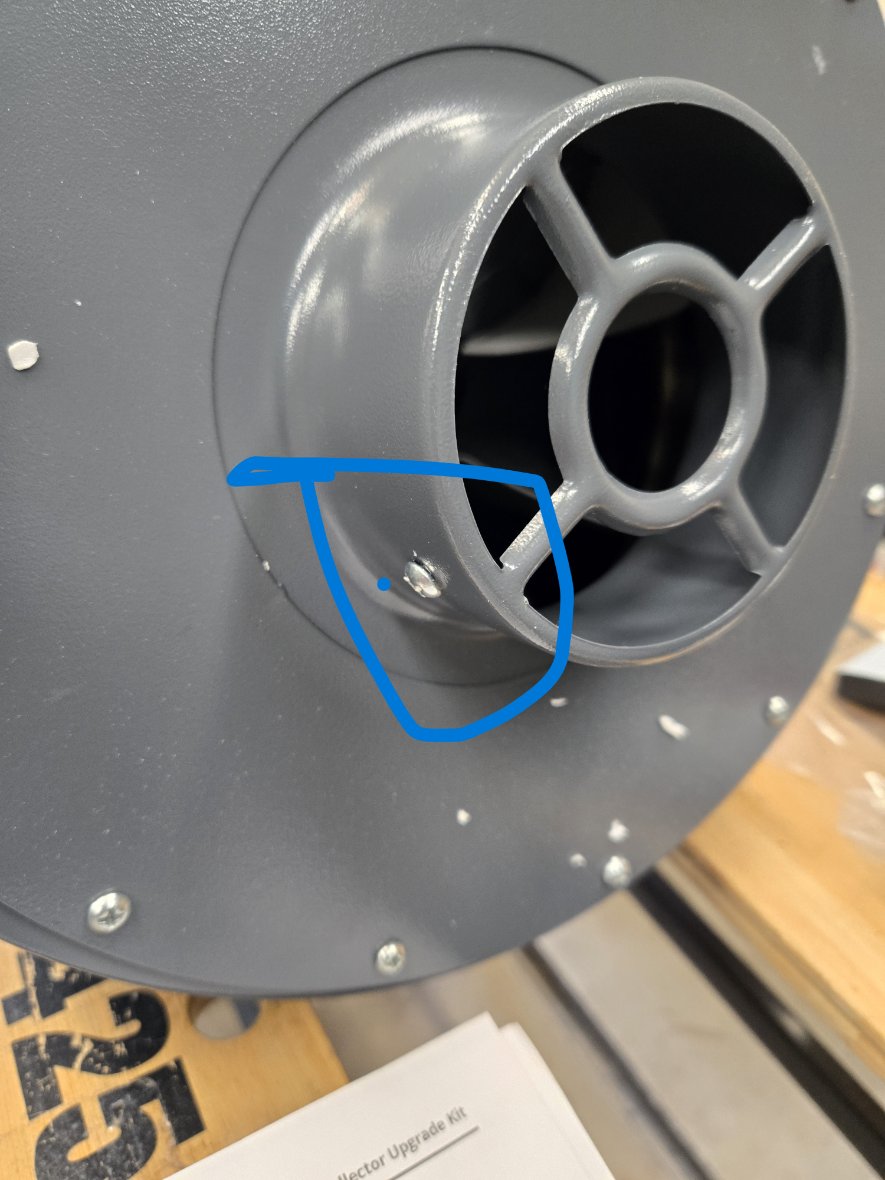
- Machine screw on inlet
- screw on outside of inlet.jpg (122.05 KiB) Viewed 1225 times
. It protrudes into the inlet and doesn't connect anything
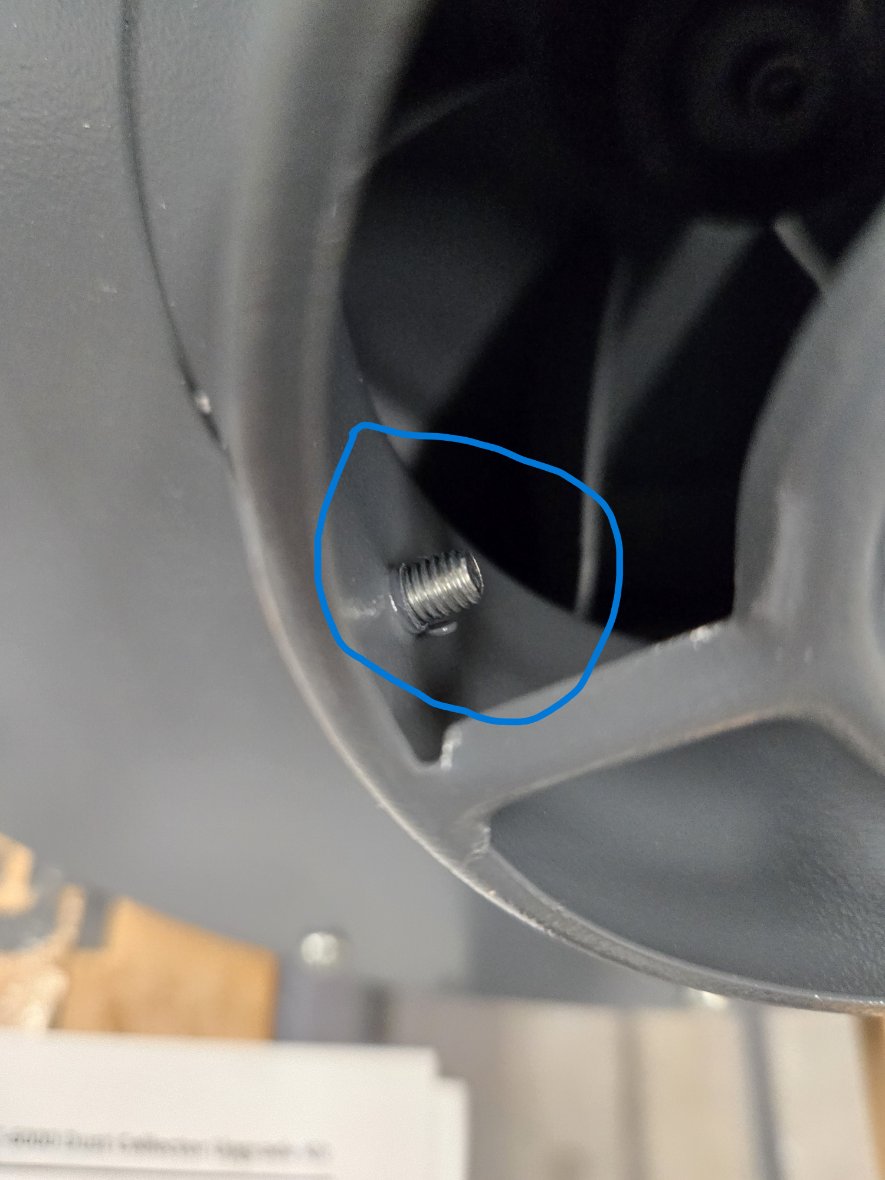
- Screw protruding into inlet.
- screw protrudes into inlet.jpg (93.89 KiB) Viewed 1225 times
. I can't figure out the reason it's there. Nothing in the instructions or exploded parts diagram gives me a clue. Is it supposed to be a stop for the union connector?
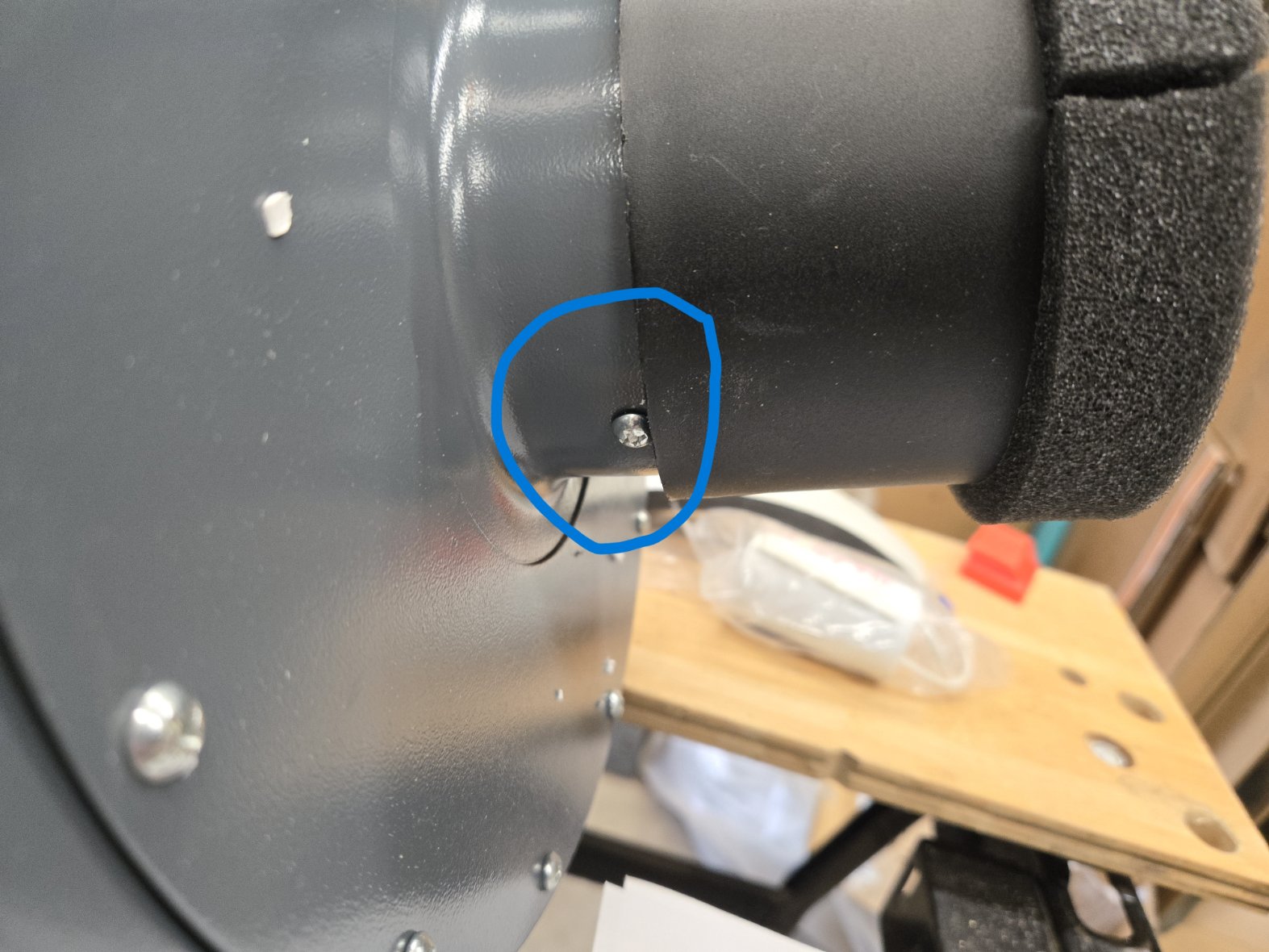
- Screw with union connector
- screw on outside of inlet with union connector.jpg (242.94 KiB) Viewed 1225 times
If I push the union connector over it, won't that create an air leak around the connector?
I'm stuck until I know how to treat this.
thanks,
hal
Re: DC6000 upgrade puzzlement
Posted: Sun Jul 28, 2024 10:15 pm
by HopefulSSer
My guess would be a connection for a ground wire to dissipate static electricity? (He said, basing it on nearly nothing at all.....)
Re: DC6000 upgrade puzzlement
Posted: Mon Jul 29, 2024 8:14 am
by dusty
Still another undocumented change.
I would take that screw out and proceed without it.
Re: DC6000 upgrade puzzlement
Posted: Mon Jul 29, 2024 9:00 am
by hfmann
Thanks HopefulSSer and Dusty,
I think Hopefuls' got it. There is a label inside the connector that says "Caution: This item should be grounded to dissipate static electric charges." [attachment=0]20240729_084009.jpg[/attachment
Now the question becomes - How to do that?
And if fitting the connector and new motor into the main housing causes the union to slide over the screw, how to seal the likely air leak?
thanks,
hal
Re: DC6000 upgrade puzzlement
Posted: Mon Jul 29, 2024 9:07 am
by HopefulSSer
Seems like the position of the screw was not completely thought out. If it were me I'd probably drill another hole that doesn't interfere with the connector and connect a ground wire there.
Re: DC6000 upgrade puzzlement
Posted: Mon Jul 29, 2024 9:35 am
by dusty
Static charge must have been an after thought. I did not receive a safety label like that and I do not have a grounding wire. Should I? My DC3000 has been in service for years (many) without incident.
Re: DC6000 upgrade puzzlement
Posted: Mon Jul 29, 2024 9:49 am
by HopefulSSer
In principle, with the right combination of dust and static, you could get the equivalent of a grain silo explosion. In practice I would that even if the probability is non-zero, it must be exceedingly small -- especially in a home shop. There might be enough static buildup however to damage electronics if you happen to have some incorporated into your setup.
Probably, that screw was added as a CYA measure. I speak with absolutely zero authority!
Re: DC6000 upgrade puzzlement
Posted: Mon Jul 29, 2024 10:34 am
by hfmann
Same here Dusty. No issues with my DC3000 over the years.
Hopeful - you probably got that CYA measure right.
Would the higher HP on the 6000 have more potential.
So HOW do I connect a grounding wire? attach the other end where? What gauge?
hal
Re: DC6000 upgrade puzzlement
Posted: Mon Jul 29, 2024 10:54 am
by HopefulSSer
You'd connect the other end to the pipe or hose some way. Lots of discussion (much of it not definitive) online, but what I'm finding most commonly is either wrapping or otherwise affixing a length of bare wire to it, or by running a strip of foil tape along it (obviously not so effective on flexible hose)
Re: DC6000 upgrade puzzlement
Posted: Mon Jul 29, 2024 1:04 pm
by JPG
I would do as Dusty suggested(remove it).
As for the 'documentation change', that is the fault of the Taiwanese supplier, not SS.
As I see it, that screw and label is not relevant to the SS implementation.
As for what to attach to the screw, the static drain wire(or whatever) that prevents static buildup in the non-conductive hose/duct.
The SS DC does not need it for the inlet coupling(IMO).
An assumption by the supplier is the housing will be grounded.