First, just signed up for this. Why not before and why I have not attempted to contact ShopSmith years ago about my problem? I don't have a good answer. Family challenges, Prostate CA in 2001, 4 surgeries certainly contributed. But I'm serious now about trying to get my old SM working again.
My great frustration for years has been my inability to trust the fence and inability to adjust it and get it to hold and retain a firm setting to give me an accurate 90 degree cut - not ever for years now!
I see that the Incra TSlll Ultra fence system will not fit the old Mark 5. My original paperwork is so faded, I cannot determine, nor by reading my old manual but I am pretty sure I have a Model 500. Not a 510.
Does anyone know if there is an up-grade/improved ACCURATE fence I can buy that will fit my old Mark 5?
Has anyone else had this problem? I repeat, I have carefully, slowly, REPEATEDLY followed the adjustment and set-up adjustment of the fence from the manual's instructions but I never can trust it for an accurate cut.
Thanks for any advice or current info you can provide.
Accurate fence for 1986 Mark 5
Moderator: admin
-
mbcabinetmaker
- Platinum Member
- Posts: 1627
- Joined: Thu Jul 20, 2006 6:18 am
- Location: Greer SC
Welcome to the forum.
I would highly recommend the 500 to 520 upgrade. You will be very pleased with the fence after that. First you should make sure that you do not have a 510 because the upgrades are totally different. Post some pictures and this forum will help.
I would highly recommend the 500 to 520 upgrade. You will be very pleased with the fence after that. First you should make sure that you do not have a 510 because the upgrades are totally different. Post some pictures and this forum will help.
****************
****************
Mark
2017 Power Pro Mark 7
2002 50th anniversary model 520
and a few other woodworking tools.
****************
Mark
2017 Power Pro Mark 7
2002 50th anniversary model 520
and a few other woodworking tools.

Welcome, I tend to agree a picture of the current table and even the fence would be helpful in providing the answer. Today I attended a demo in Lakewood CO, at least three people there were a bit taken by the 520 fence. If you want accuracy and having fence issues that upgrade is definitely the way to get the most from the Mark 5mbcabinetmaker wrote:Welcome to the forum.
I would highly recommend the 500 to 520 upgrade. You will be very pleased with the fence after that. First you should make sure that you do not have a 510 because the upgrades are totally different. Post some pictures and this forum will help.
F. Jim Parks
Lakewood, Colorado:)
When the love of power is replaced by the power of love the world will have a chance for survival.
Lakewood, Colorado:)
When the love of power is replaced by the power of love the world will have a chance for survival.

Hi,
Glad to see another member join us, welcome!
One thing that really can help is if you provide a location in your profile, you might happen to be near another owner who might be of some help with fence adjustments or give you a personal tour of a newer table system.
I got my first shopsmith in 1976, I have never had issues as you describe with the stock fence. That machine is now a 520 thanks for the upgrade kit. Now the 520 is a major upgrade $$ wise, as in about $1168.20 from a 500 to a 520. If you have the money that is a great way to go.
I now have 2 model 500's and 2 model 520's and an old 10ER. The two 500 have fences that work fine, again I'm not seeing the issues you do on them. You might have something that is defective or maybe it is just a mater of adjustment.
You have a lot of paths that you can take, some of them will require some major outlays of cash, other might be more hands on efforts. The more information you can share the better we can help if that is your desire.
Ed
Glad to see another member join us, welcome!
One thing that really can help is if you provide a location in your profile, you might happen to be near another owner who might be of some help with fence adjustments or give you a personal tour of a newer table system.
I got my first shopsmith in 1976, I have never had issues as you describe with the stock fence. That machine is now a 520 thanks for the upgrade kit. Now the 520 is a major upgrade $$ wise, as in about $1168.20 from a 500 to a 520. If you have the money that is a great way to go.
I now have 2 model 500's and 2 model 520's and an old 10ER. The two 500 have fences that work fine, again I'm not seeing the issues you do on them. You might have something that is defective or maybe it is just a mater of adjustment.
You have a lot of paths that you can take, some of them will require some major outlays of cash, other might be more hands on efforts. The more information you can share the better we can help if that is your desire.
Ed
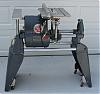
When I was doing home remodeling with a 500, I made a higher and longer auxilary fence that I bolted to the 500 fence. I kept a piece of 3/4" hardwood that the sides were parallel and quickly checked the fence to blade each time I reset the Shopsmith to a new location. Once I knew the table and fence was parallel to the saw blade, I never noticed any problem when moving the fence after that check.
In fact, I was having alignment problems after upgrading to the 510 table and fence that I switched back to using the 500 tables. The 520 fence is a light year ahead of the 510 and well worth the effort.
In fact, I was having alignment problems after upgrading to the 510 table and fence that I switched back to using the 500 tables. The 520 fence is a light year ahead of the 510 and well worth the effort.
Bill Mayo bill.mayo@verizon.net
Shopsmith owner since 73. Sell, repair and rebuild Shopsmith, Total Shop & Wood Master headstocks, SPTs, attachments, accessories and parts. US Navy 1955-1975 (FTCS/E-8)
Shopsmith owner since 73. Sell, repair and rebuild Shopsmith, Total Shop & Wood Master headstocks, SPTs, attachments, accessories and parts. US Navy 1955-1975 (FTCS/E-8)
Welcome to the forum Tatanka4.
Are you trying to make a RIP cut?
Are you trying to make a RIP cut?
SS 500(09/1980), DC3300, jointer, bandsaw, belt sander, Strip Sander, drum sanders,molder, dado, biscuit joiner, universal lathe tool rest, Oneway talon chuck, router bits & chucks and a De Walt 735 planer,a #5,#6, block planes. ALL in a 100 square foot shop.
.
.
Bob
.
.
Bob
-
JPG

- Platinum Member
- Posts: 35598
- Joined: Wed Dec 10, 2008 7:42 pm
- Location: Lexington, Ky (TAMECAT territory)
Like Ed, I do not understand the problems you are describing for the rip fence.
You mentioned 90° cuts. Are you referring to the miter gauge as a 'fence'?
Regardless, the table must be correctly aligned to the saw blade for either to function properly.
A pix or more showing the 'fence' and the non-square cuts would help.
You mentioned 90° cuts. Are you referring to the miter gauge as a 'fence'?
Regardless, the table must be correctly aligned to the saw blade for either to function properly.
A pix or more showing the 'fence' and the non-square cuts would help.
╔═══╗
╟JPG ╢
╚═══╝
Goldie(Bought New SN 377425)/4" jointer/6" beltsander/12" planer/stripsander/bandsaw/powerstation /Scroll saw/Jig saw /Craftsman 10" ras/Craftsman 6" thicknessplaner/ Dayton10"tablesaw(restoredfromneighborstrashpile)/ Mark VII restoration in 'progress'/ 10E[/size](SN E3779) restoration in progress, a 510 on the back burner and a growing pile of items to be eventually returned to useful life. - aka Red Grange
╟JPG ╢
╚═══╝
Goldie(Bought New SN 377425)/4" jointer/6" beltsander/12" planer/stripsander/bandsaw/powerstation /Scroll saw/Jig saw /Craftsman 10" ras/Craftsman 6" thicknessplaner/ Dayton10"tablesaw(restoredfromneighborstrashpile)/ Mark VII restoration in 'progress'/ 10E[/size](SN E3779) restoration in progress, a 510 on the back burner and a growing pile of items to be eventually returned to useful life. - aka Red Grange
-
foxtrapper
- Gold Member
- Posts: 439
- Joined: Fri Feb 16, 2007 10:05 am
The 500 rip fence is inherently unstable, inconsistent, and able to flex. The only thing that holds it in position are the three contact points at the face of the table.
Slight variations at those three contact points will dramatically throw off the angle of the rip fence. The fence will also easily deflect the further back you push on it.
So don't expect too much from it.
Can you improve things and make an accurate rip? Certainly! Put a straight edge along the blade and mark the table, front and back. From those marks place a clamped on rip fence, clamped onto the table front and back. Now you've got a secure fence, nice and square to the blade.
For good and bad, the blade can be moved on a shopsmith, as can the table. So marking the table with a tape measure is rather pointless. But, this also means you can adjust the blade position to get the cut perfect, instead of attempting to move the fence. Get the fence roughly in position, fine tune with the blade on some scrap stock.
That's what I do with my 500 when I need to make long and accurate rips with my 500.
Slight variations at those three contact points will dramatically throw off the angle of the rip fence. The fence will also easily deflect the further back you push on it.
So don't expect too much from it.
Can you improve things and make an accurate rip? Certainly! Put a straight edge along the blade and mark the table, front and back. From those marks place a clamped on rip fence, clamped onto the table front and back. Now you've got a secure fence, nice and square to the blade.
For good and bad, the blade can be moved on a shopsmith, as can the table. So marking the table with a tape measure is rather pointless. But, this also means you can adjust the blade position to get the cut perfect, instead of attempting to move the fence. Get the fence roughly in position, fine tune with the blade on some scrap stock.
That's what I do with my 500 when I need to make long and accurate rips with my 500.
-
dusty

- Platinum Member
- Posts: 21530
- Joined: Wed Nov 22, 2006 6:52 am
- Location: Tucson (Wildcat Country), Arizona
Accurate fence for 1986 Mark 5
Please think about this question for a few seconds "before" you jump my frame.
After determining that your fence is straight (that's a prerequisite), does it really matter whether or of it is absolutely parallel to the line of cut.
The cut occurs as the teeth on the infeed side of the blade make contact with the work piece. Once that contact is made, the work piece will never be longer than it was at that moment of initial contact.
The only way it can get shorter is to make contact with the blade again on the outfeed side of the blade.
All the fence really does is provide a way to help stabilize the direction of feed into the blade so that the secondary contact is never made.
Even with a perfectly straight, properly aligned and stable fence, if you do not keep the work piece tight against the rip fence for its entire length (until the blade no longer makes any contact with the blade), you will have some sort of deviant cut.
A proper rip cut is as much about technique as it is about quality of fence. A nice high quality fence makes it all easier but guarantees nothing if your technique is sloppy.
After determining that your fence is straight (that's a prerequisite), does it really matter whether or of it is absolutely parallel to the line of cut.
The cut occurs as the teeth on the infeed side of the blade make contact with the work piece. Once that contact is made, the work piece will never be longer than it was at that moment of initial contact.
The only way it can get shorter is to make contact with the blade again on the outfeed side of the blade.
All the fence really does is provide a way to help stabilize the direction of feed into the blade so that the secondary contact is never made.
Even with a perfectly straight, properly aligned and stable fence, if you do not keep the work piece tight against the rip fence for its entire length (until the blade no longer makes any contact with the blade), you will have some sort of deviant cut.
A proper rip cut is as much about technique as it is about quality of fence. A nice high quality fence makes it all easier but guarantees nothing if your technique is sloppy.
"Making Sawdust Safely"
Dusty
Sent from my Dell XPS using Firefox.
Dusty
Sent from my Dell XPS using Firefox.

Dusty,dusty wrote:Please think about this question for a few seconds "before" you jump my frame.
After determining that your fence is straight (that's a prerequisite), does it really matter whether or of it is absolutely parallel to the line of cut.
The cut occurs as the teeth on the infeed side of the blade make contact with the work piece. Once that contact is made, the work piece will never be longer (I think you mean wider --Al) than it was at that moment of initial contact.
The only way it can get shorter is to make contact with the blade again on the outfeed side of the blade.
All the fence really does is provide a way to help stabilize the direction of feed into the blade so that the secondary contact is never made.
Even with a perfectly straight, properly aligned and stable fence, if you do not keep the work piece tight against the rip fence for its entire length (until the blade no longer makes any contact with the blade), you will have some sort of deviant cut.
A proper rip cut is as much about technique as it is about quality of fence. A nice high quality fence makes it all easier but guarantees nothing if your technique is sloppy.
I think you are right. I would add to caveats. First, I think you meant to say that the ripped work piece will never be wider than where it first makes contact with the front teeth (and I have made a correction in red to your above quote). Second, the lack of parallism won't matter as long as the back of the fence is skewed further away from blade. If out of parallel and skewed toward the blade, there will be pinching and kickback.
Al