Of all the tools I own, I have yet to master the jointer. Admit I haven't put a lot of time into it but that is because every attempt become quickly frustrating.
I understand the issue of "snipe" and how that can happen. However I seem to have the opposite problem. Every time I try to edge joint a board it ends up concave with high points on the ends. The more I try to correct, the more pronounced it becomes.
Bottom line: Do I have a technique or an alignment problem ?
Jointer problems
Moderator: admin
Jointer problems
Bob
LTC, US Army
Ft. Leonard Wood, MO
Hoo-ah !
LTC, US Army
Ft. Leonard Wood, MO
Hoo-ah !
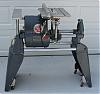
First make sure both input and output tables are perfectly flat and parallel with each other. I have had to rework the the sliding surface faces of a few joiners to get the perfect parallel surfaces. You need a 24" or longer accurate edge like a machinests scale. There are prior posts on building an outfeed extension table for the joiner that may help. I even had to have a few joiner surfaces machined ($40) to be perfectly flat and parallel.
Bill Mayo bill.mayo@verizon.net
Shopsmith owner since 73. Sell, repair and rebuild Shopsmith, Total Shop & Wood Master headstocks, SPTs, attachments, accessories and parts. US Navy 1955-1975 (FTCS/E-8)
Shopsmith owner since 73. Sell, repair and rebuild Shopsmith, Total Shop & Wood Master headstocks, SPTs, attachments, accessories and parts. US Navy 1955-1975 (FTCS/E-8)
-
dusty

- Platinum Member
- Posts: 21530
- Joined: Wed Nov 22, 2006 6:52 am
- Location: Tucson (Wildcat Country), Arizona
The absolute first response needs to be "check table alignment".major_bob wrote:Of all the tools I own, I have yet to master the jointer. Admit I haven't put a lot of time into it but that is because every attempt become quickly frustrating.
I understand the issue of "snipe" and how that can happen. However I seem to have the opposite problem. Every time I try to edge joint a board it ends up concave with high points on the ends. The more I try to correct, the more pronounced it becomes.
Bottom line: Do I have a technique or an alignment problem ?
Adjust the infeed table so that it is at the same height as the outfeed table. Lay a straight edge on the tables and check that it makes contact with the entire length of the jointer tables. Position the blade where it will not touch the straight edge while doing this.
Given that the tables are flat, readjust the infeed table so that it is about 1/16" lower than the outlet table and joint a board that is about 24" long. If this jointed board exhibits the same problem, then the issue is technique.
Keep the board being jointed firmly against the infeed table until a significant part of the board has passed onto the outfeed table at which time you shift your primary attention to the outfeed side while all the time keeping the stock down on the table(s).
In the end, this entire operation becomes a shifting of primary pressure from infeed table to outfeed table and for me it is a shifting of weight from right side to left side. I stand at the side of the jointer when using it...not at the infeed end.
My suspicion would be technique. But, you said "every time I try to edge joint"..... . Technique issues are usually inconsistent.
If you feed a board just 3" into the jointer blade and then back it off, is the end of that board a clean, straight cut or is it concave (your stated problem)?
I'm betting it is a straight clean cut.
I think the solution will be practice.
"Making Sawdust Safely"
Dusty
Sent from my Dell XPS using Firefox.
Dusty
Sent from my Dell XPS using Firefox.

I too had the same issues, and the biggest piece of advice to take away from everyones help here, was the pressure on the outfeed side. I was putting too much emphasis on the infeed side. Wrong, outfeed. I also use my left hand as a "featherboard" trying to keep consistant, even, pressure against the fence and down to the outfeed table at the same time.
After I concentrated on this, and practiced a little more, things got "smoother":D (get it, smoother,jointer,smoother).
I also find I do a better job if I ct my work pieces down to less than 3' as they are easier to manage with a standard surface with no extensions. The longer the board for me, the larger the potential for error.
After I concentrated on this, and practiced a little more, things got "smoother":D (get it, smoother,jointer,smoother).
I also find I do a better job if I ct my work pieces down to less than 3' as they are easier to manage with a standard surface with no extensions. The longer the board for me, the larger the potential for error.
R Hart
-
dusty
- Platinum Member
- Posts: 21530
- Joined: Wed Nov 22, 2006 6:52 am
- Location: Tucson (Wildcat Country), Arizona
I think that the reason jointing longer pieces cause a problem is because longer pieces are more difficult to keep in constant contactwith the outfeed table. An extension table for the jointer may be something that would help.mrhart wrote:I too had the same issues, and the biggest piece of advice to take away from everyones help here, was the pressure on the outfeed side. I was putting too much emphasis on the infeed side. Wrong, outfeed. I also use my left hand as a "featherboard" trying to keep consistant, even, pressure against the fence and down to the outfeed table at the same time.
After I concentrated on this, and practiced a little more, things got "smoother":D (get it, smoother,jointer,smoother).
I also find I do a better job if I ct my work pieces down to less than 3' as they are easier to manage with a standard surface with no extensions. The longer the board for me, the larger the potential for error.
"Making Sawdust Safely"
Dusty
Sent from my Dell XPS using Firefox.
Dusty
Sent from my Dell XPS using Firefox.
Well I don't have a machinist straight edge but the one I have does seem to indicate that the outfeed table is not parallel to the infeed side. It appears to have a slight tilt towards towards the end (left). I have looked at my SS Jointer manual and there doesn't seem to be any instructions on how to make this adjustment.
Bob
LTC, US Army
Ft. Leonard Wood, MO
Hoo-ah !
LTC, US Army
Ft. Leonard Wood, MO
Hoo-ah !

line up the tables first
I don't have this kind of misalignment so I can't help you solve that. Someone here will be able to.
As for trying to joint without a concave edge it would help to have a feather board to hold the plank to the fence. I installed the jointer feather board retrofit and it helps. This will allow you to keep the pressure on the outfeed table as you go thru. If you keep the pressure over the knives or the infeed table you will wind up with a concave edge - sometimes that is a desirable result for glue up.
What puzzles me is why you mention getting 'snipe' on the jointer. That happens to me on the thickness planer, but never on the jointer. If you have a board that is concave to begin with you may think it is snipe since only the front and rear ends will be cut.
Forrest
As for trying to joint without a concave edge it would help to have a feather board to hold the plank to the fence. I installed the jointer feather board retrofit and it helps. This will allow you to keep the pressure on the outfeed table as you go thru. If you keep the pressure over the knives or the infeed table you will wind up with a concave edge - sometimes that is a desirable result for glue up.
What puzzles me is why you mention getting 'snipe' on the jointer. That happens to me on the thickness planer, but never on the jointer. If you have a board that is concave to begin with you may think it is snipe since only the front and rear ends will be cut.
Forrest
Forrest
Huntington Beach, CA
1985 500->510->520, bandsaw, jointer, planer, PowerPro, double-tilt, 3" casters,(now obsolete) speed increaser
Huntington Beach, CA
1985 500->510->520, bandsaw, jointer, planer, PowerPro, double-tilt, 3" casters,(now obsolete) speed increaser
I had something similar to this when I first got my jointer(pre-owned). I took it apart and found that the infeed table was slightly loose and had collected some shavings in the gap. After cleaning it up and waxing it carefully, it works much better. It also adjusts much easier.major_bob wrote:Well I don't have a machinist straight edge but the one I have does seem to indicate that the outfeed table is not parallel to the infeed side. It appears to have a slight tilt towards towards the end (left). I have looked at my SS Jointer manual and there doesn't seem to be any instructions on how to make this adjustment.
I don't tear it down anymore, but do regularly spray the gibs with Bostik Dri-
Cote or Bostik Bearing Lube.(Whatever I grab first)
I also blow it out after each use as I find it packs with shavings. My one complaint about the machine.
Jim in Bakersfield:D
-
JPG

- Platinum Member
- Posts: 35600
- Joined: Wed Dec 10, 2008 7:42 pm
- Location: Lexington, Ky (TAMECAT territory)
Snipe can occur with the jointer and is the result of the knives being lower than the outfeed table when it occurs on the leading end, and if too high it can occur on the trailing end. Also improper pressure on the infeed end at the end of the pass can result in the work piece 'tilting' and getting sniped.
The planer has the same deal, except the blade to feed roll dimensions are the culprit.
The planer has the same deal, except the blade to feed roll dimensions are the culprit.
╔═══╗
╟JPG ╢
╚═══╝
Goldie(Bought New SN 377425)/4" jointer/6" beltsander/12" planer/stripsander/bandsaw/powerstation /Scroll saw/Jig saw /Craftsman 10" ras/Craftsman 6" thicknessplaner/ Dayton10"tablesaw(restoredfromneighborstrashpile)/ Mark VII restoration in 'progress'/ 10E[/size](SN E3779) restoration in progress, a 510 on the back burner and a growing pile of items to be eventually returned to useful life. - aka Red Grange
╟JPG ╢
╚═══╝
Goldie(Bought New SN 377425)/4" jointer/6" beltsander/12" planer/stripsander/bandsaw/powerstation /Scroll saw/Jig saw /Craftsman 10" ras/Craftsman 6" thicknessplaner/ Dayton10"tablesaw(restoredfromneighborstrashpile)/ Mark VII restoration in 'progress'/ 10E[/size](SN E3779) restoration in progress, a 510 on the back burner and a growing pile of items to be eventually returned to useful life. - aka Red Grange
-
dusty
- Platinum Member
- Posts: 21530
- Joined: Wed Nov 22, 2006 6:52 am
- Location: Tucson (Wildcat Country), Arizona
I hate being the barer of bad news but there is no adjustment for that. You might be able to shim the outfeed table but I don't know how.major_bob wrote:Well I don't have a machinist straight edge but the one I have does seem to indicate that the outfeed table is not parallel to the infeed side. It appears to have a slight tilt towards towards the end (left). I have looked at my SS Jointer manual and there doesn't seem to be any instructions on how to make this adjustment.
"Making Sawdust Safely"
Dusty
Sent from my Dell XPS using Firefox.
Dusty
Sent from my Dell XPS using Firefox.