I have been resurrecting a greenie headstock this past couple of days and after putting all but the belt cover on, I 'fired' it up. All was well - except - a clickety clack noise as it slowed down when turned off( and sometimes as adjusting the speed slower.
After careful looking(and listening and feeling) to it I came to the conclusion it was coming from the gilmer cluitch.
I did not get into the clutch and have still never done so.
I e-mailed Master Bill and he mentioned the bearings etc. I had not replaced any of them.
I broke it down and eliminated the motor and quill as the source.
I about used up a month's worth of 'thinking' and decided internal parts were shifting to cause the noise. At last a potential cause arose in my noggin. Side thrust could cause the in/out ends to move relative to each other.
So I decreased the gilmer belt tension and the noise got less. Decreased the tension more, and it finally quit making noise. That is where I left it!
I asked Bil if he thought our experience/e-mail conversation should be 'public' and he definately thought so.
So here it is! At the end Bill mentioned he tensions the Gilmer belts less than the poly-v belts.
Gilmer Clutch Noise
Moderator: admin
-
JPG

- Platinum Member
- Posts: 35600
- Joined: Wed Dec 10, 2008 7:42 pm
- Location: Lexington, Ky (TAMECAT territory)
Gilmer Clutch Noise
╔═══╗
╟JPG ╢
╚═══╝
Goldie(Bought New SN 377425)/4" jointer/6" beltsander/12" planer/stripsander/bandsaw/powerstation /Scroll saw/Jig saw /Craftsman 10" ras/Craftsman 6" thicknessplaner/ Dayton10"tablesaw(restoredfromneighborstrashpile)/ Mark VII restoration in 'progress'/ 10E[/size](SN E3779) restoration in progress, a 510 on the back burner and a growing pile of items to be eventually returned to useful life. - aka Red Grange
╟JPG ╢
╚═══╝
Goldie(Bought New SN 377425)/4" jointer/6" beltsander/12" planer/stripsander/bandsaw/powerstation /Scroll saw/Jig saw /Craftsman 10" ras/Craftsman 6" thicknessplaner/ Dayton10"tablesaw(restoredfromneighborstrashpile)/ Mark VII restoration in 'progress'/ 10E[/size](SN E3779) restoration in progress, a 510 on the back burner and a growing pile of items to be eventually returned to useful life. - aka Red Grange
-
trainguytom

- Gold Member
- Posts: 324
- Joined: Sat Feb 10, 2007 7:22 pm
- Location: Central WI
Interesting info
I do have a question, though. When you first assembled it, fired it up, and got the noise, was the gilmer belt tension about where you have set it on other gilmer machines that you may have worked on that did not make the same noise.
What I'm getting at is: if the tension felt right, based on your experience assembling other machines where no noise was present, and there was this noise on this machine, then lowering belt tension is getting rid of the symptom , but not the actual cause. (I'm probably re-stating the obvious, here, that you've already figured out, which led you to the conclusion that the clutch is the issue)
Wondering if the set screw on the clutch has loosened up. That's been the only real problem I've personally had with the greenies. Also, while we're on the subject of clutches, I've wondered about their function. (I wonder about a lot of stuff)
It seems to me that, because of the design of the gilmer belt/cogged shafts, it was felt that a clutch was necessary.(otherwise, why go to the expense) But was it to allow for a gradual grab of the power shaft on startup, or to avoid an instant stop/lockup if, for example, you decided to cut a railroad spike with the table saw? That said, is it really necessary on startup...not sure on that, and in all my years of using Smiths, I don't think I've locked one up hard & fast enough to be a problem.
I'm sure there are guys who've spent more time on theirs, so I'm wondering if this is an issue, or if there's a clutch issue where you don't have the parts to rebuild, maybe you could just gob a bunch of JB Weld in it & use it as a solid piece. (Told ya, I wonder about a lot of stuff)
What I'm getting at is: if the tension felt right, based on your experience assembling other machines where no noise was present, and there was this noise on this machine, then lowering belt tension is getting rid of the symptom , but not the actual cause. (I'm probably re-stating the obvious, here, that you've already figured out, which led you to the conclusion that the clutch is the issue)
Wondering if the set screw on the clutch has loosened up. That's been the only real problem I've personally had with the greenies. Also, while we're on the subject of clutches, I've wondered about their function. (I wonder about a lot of stuff)
It seems to me that, because of the design of the gilmer belt/cogged shafts, it was felt that a clutch was necessary.(otherwise, why go to the expense) But was it to allow for a gradual grab of the power shaft on startup, or to avoid an instant stop/lockup if, for example, you decided to cut a railroad spike with the table saw? That said, is it really necessary on startup...not sure on that, and in all my years of using Smiths, I don't think I've locked one up hard & fast enough to be a problem.
I'm sure there are guys who've spent more time on theirs, so I'm wondering if this is an issue, or if there's a clutch issue where you don't have the parts to rebuild, maybe you could just gob a bunch of JB Weld in it & use it as a solid piece. (Told ya, I wonder about a lot of stuff)
My dad's 1951 10er, 2 more 10er's, same vintage, a Goldie MK5, a 510 shortie with 34inch tubes, bandsaw, jointer, jigsaw, belt sander, a ton of small SS goodies and still looking...you just can't have enough Shopsmith stuff
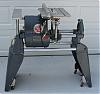
The first year of the Gilmer Drive had a solid drive sleeve hub. They were having problems with the teeth on the Gilmer belt beening torn off or shedded. The clutch was added in late 54 or early 55 to ease the strain on the gilmer belt teeth & belt. I doubt if the clutch was designed to slip when starting the motor. I believe it was to allow the saw blade to slow down briefly when first engaging hard wood or later, if a knot or a bind was encountered. Even with the clutch set to what I believe was the slippage rate of around 10-20 ft pds., I have been able to gradually stall the 3/4 HP motor without the clutch slipping. Even when I started asking questions about the Gilmer Drive in the mid 70s, there were no real printed material available. I talked to old time Shopsmith repairmen then for what I believe was some answers.trainguytom wrote:I do have a question, though. When you first assembled it, fired it up, and got the noise, was the gilmer belt tension about where you have set it on other gilmer machines that you may have worked on that did not make the same noise.
What I'm getting at is: if the tension felt right, based on your experience assembling other machines where no noise was present, and there was this noise on this machine, then lowering belt tension is getting rid of the symptom , but not the actual cause. (I'm probably re-stating the obvious, here, that you've already figured out, which led you to the conclusion that the clutch is the issue)
Wondering if the set screw on the clutch has loosened up. That's been the only real problem I've personally had with the greenies. Also, while we're on the subject of clutches, I've wondered about their function. (I wonder about a lot of stuff)
It seems to me that, because of the design of the gilmer belt/cogged shafts, it was felt that a clutch was necessary.(otherwise, why go to the expense) But was it to allow for a gradual grab of the power shaft on startup, or to avoid an instant stop/lockup if, for example, you decided to cut a railroad spike with the table saw? That said, is it really necessary on startup...not sure on that, and in all my years of using Smiths, I don't think I've locked one up hard & fast enough to be a problem.
I'm sure there are guys who've spent more time on theirs, so I'm wondering if this is an issue, or if there's a clutch issue where you don't have the parts to rebuild, maybe you could just gob a bunch of JB Weld in it & use it as a solid piece. (Told ya, I wonder about a lot of stuff)
I find the set screw in the Gilmer clutch hub being loose is much more likely the drive train problem (4-5 times) than the clutch slipping. Same set screw problem on the Poly-V drive sleeve hub.
Bill Mayo bill.mayo@verizon.net
Shopsmith owner since 73. Sell, repair and rebuild Shopsmith, Total Shop & Wood Master headstocks, SPTs, attachments, accessories and parts. US Navy 1955-1975 (FTCS/E-8)
Shopsmith owner since 73. Sell, repair and rebuild Shopsmith, Total Shop & Wood Master headstocks, SPTs, attachments, accessories and parts. US Navy 1955-1975 (FTCS/E-8)

-
JPG
- Platinum Member
- Posts: 35600
- Joined: Wed Dec 10, 2008 7:42 pm
- Location: Lexington, Ky (TAMECAT territory)
This was my 'maiden' voyage with a gilmer machine.trainguytom wrote:I do have a question, though. When you first assembled it, fired it up, and got the noise, was the gilmer belt tension about where you have set it on other gilmer machines that you may have worked on that did not make the same noise.
What I'm getting at is: if the tension felt right, based on your experience assembling other machines where no noise was present, and there was this noise on this machine, then lowering belt tension is getting rid of the symptom , but not the actual cause. (I'm probably re-stating the obvious, here, that you've already figured out, which led you to the conclusion that the clutch is the issue)
Wondering if the set screw on the clutch has loosened up. That's been the only real problem I've personally had with the greenies. Also, while we're on the subject of clutches, I've wondered about their function. (I wonder about a lot of stuff)
It seems to me that, because of the design of the gilmer belt/cogged shafts, it was felt that a clutch was necessary.(otherwise, why go to the expense) But was it to allow for a gradual grab of the power shaft on startup, or to avoid an instant stop/lockup if, for example, you decided to cut a railroad spike with the table saw? That said, is it really necessary on startup...not sure on that, and in all my years of using Smiths, I don't think I've locked one up hard & fast enough to be a problem.
I'm sure there are guys who've spent more time on theirs, so I'm wondering if this is an issue, or if there's a clutch issue where you don't have the parts to rebuild, maybe you could just gob a bunch of JB Weld in it & use it as a solid piece. (Told ya, I wonder about a lot of stuff)
I set the tension quite tight(obviously[hindsight] too tight).
It took quite a while of running/listening to narrow it down. I was able to 'get the noise' by hand turning, and that helped considerably.Last but not least was that it only occurred with the gilmer belt attached. I did not get the flash of understanding right away. Had to sleep on it first!
AIUI the gilmer belt will shred with a sudden stoppage of the quill(jammed blade etc.), or the metal parts are severely stressed. So the clutch provides an upper torque limit for that scenario.
Due to the relatively sedate start up speed curve on the 3/4 hp motors, I do not think that is relevant to the clutch.
╔═══╗
╟JPG ╢
╚═══╝
Goldie(Bought New SN 377425)/4" jointer/6" beltsander/12" planer/stripsander/bandsaw/powerstation /Scroll saw/Jig saw /Craftsman 10" ras/Craftsman 6" thicknessplaner/ Dayton10"tablesaw(restoredfromneighborstrashpile)/ Mark VII restoration in 'progress'/ 10E[/size](SN E3779) restoration in progress, a 510 on the back burner and a growing pile of items to be eventually returned to useful life. - aka Red Grange
╟JPG ╢
╚═══╝
Goldie(Bought New SN 377425)/4" jointer/6" beltsander/12" planer/stripsander/bandsaw/powerstation /Scroll saw/Jig saw /Craftsman 10" ras/Craftsman 6" thicknessplaner/ Dayton10"tablesaw(restoredfromneighborstrashpile)/ Mark VII restoration in 'progress'/ 10E[/size](SN E3779) restoration in progress, a 510 on the back burner and a growing pile of items to be eventually returned to useful life. - aka Red Grange
-
JPG
- Platinum Member
- Posts: 35600
- Joined: Wed Dec 10, 2008 7:42 pm
- Location: Lexington, Ky (TAMECAT territory)
About that set screw! Does the shaft have a flat? I did not see one, but
I did not rotate the pulley on the shaft.
I think a good tightening will do, but blue locktite wouldn't hurt!
I did not rotate the pulley on the shaft.
I think a good tightening will do, but blue locktite wouldn't hurt!
╔═══╗
╟JPG ╢
╚═══╝
Goldie(Bought New SN 377425)/4" jointer/6" beltsander/12" planer/stripsander/bandsaw/powerstation /Scroll saw/Jig saw /Craftsman 10" ras/Craftsman 6" thicknessplaner/ Dayton10"tablesaw(restoredfromneighborstrashpile)/ Mark VII restoration in 'progress'/ 10E[/size](SN E3779) restoration in progress, a 510 on the back burner and a growing pile of items to be eventually returned to useful life. - aka Red Grange
╟JPG ╢
╚═══╝
Goldie(Bought New SN 377425)/4" jointer/6" beltsander/12" planer/stripsander/bandsaw/powerstation /Scroll saw/Jig saw /Craftsman 10" ras/Craftsman 6" thicknessplaner/ Dayton10"tablesaw(restoredfromneighborstrashpile)/ Mark VII restoration in 'progress'/ 10E[/size](SN E3779) restoration in progress, a 510 on the back burner and a growing pile of items to be eventually returned to useful life. - aka Red Grange

-
trainguytom
- Gold Member
- Posts: 324
- Joined: Sat Feb 10, 2007 7:22 pm
- Location: Central WI
Locktite
I use locktite on just about all the allan (allen?) locking screws on my machines. I use a medium strength non-permanent variety. I don't have stuff loosen up & screws can be removed without trouble. I just get Harbor Freight # 42. As I recall, it's pretty cheap.(as am I)
My dad's 1951 10er, 2 more 10er's, same vintage, a Goldie MK5, a 510 shortie with 34inch tubes, bandsaw, jointer, jigsaw, belt sander, a ton of small SS goodies and still looking...you just can't have enough Shopsmith stuff
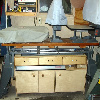
For setting the tension of the Gilmer belt, I have had good success following the instructions found on the last page of this document.JPG40504 wrote:This was my 'maiden' voyage with a gilmer machine.
I set the tension quite tight(obviously[hindsight] too tight).
It took quite a while of running/listening to narrow it down. I was able to 'get the noise' by hand turning, and that helped considerably.Last but not least was that it only occurred with the gilmer belt attached. I did not get the flash of understanding right away. Had to sleep on it first!
AIUI the gilmer belt will shred with a sudden stoppage of the quill(jammed blade etc.), or the metal parts are severely stressed. So the clutch provides an upper torque limit for that scenario.
Due to the relatively sedate start up speed curve on the 3/4 hp motors, I do not think that is relevant to the clutch.
Rob in San Diego
Email: SDSSmith51 AT gmail.com
Email: SDSSmith51 AT gmail.com
-
terrydowning
- Platinum Member
- Posts: 1678
- Joined: Mon Jul 19, 2010 3:26 pm
- Location: Windsor, CO