How do you set points with a multi meter? I always just use a playing card to set the gap, then advance or retard using the timing marks on the flywheel. Is there something else I should be doing?rlkeeney wrote:[*]An old school analog engine analyzer that is essentially a specialized multimeter. I can set up points and do several engine diagnostic tests with it.
An ohmmeter as a tool in a wood shop?
Moderator: admin
-
JPG

- Platinum Member
- Posts: 35600
- Joined: Wed Dec 10, 2008 7:42 pm
- Location: Lexington, Ky (TAMECAT territory)
frank81 wrote:How do you set points with a multi meter? I always just use a playing card to set the gap, then advance or retard using the timing marks on the flywheel. Is there something else I should be doing?
'DWELL';)......
╔═══╗
╟JPG ╢
╚═══╝
Goldie(Bought New SN 377425)/4" jointer/6" beltsander/12" planer/stripsander/bandsaw/powerstation /Scroll saw/Jig saw /Craftsman 10" ras/Craftsman 6" thicknessplaner/ Dayton10"tablesaw(restoredfromneighborstrashpile)/ Mark VII restoration in 'progress'/ 10E[/size](SN E3779) restoration in progress, a 510 on the back burner and a growing pile of items to be eventually returned to useful life. - aka Red Grange
╟JPG ╢
╚═══╝
Goldie(Bought New SN 377425)/4" jointer/6" beltsander/12" planer/stripsander/bandsaw/powerstation /Scroll saw/Jig saw /Craftsman 10" ras/Craftsman 6" thicknessplaner/ Dayton10"tablesaw(restoredfromneighborstrashpile)/ Mark VII restoration in 'progress'/ 10E[/size](SN E3779) restoration in progress, a 510 on the back burner and a growing pile of items to be eventually returned to useful life. - aka Red Grange
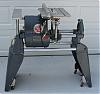
When I set up my motor repair and rebuilding station, I found a new still in the box an "old school analog engine analyzer" I had stored that I believe I brought in the early 1960s. It has a 10" analog meter with a 0 to 100 ohm scale that I use. I believe it is accurate to .1 ohm when set up. I do not use the other cables and scales on the analyzer at this time. Any one has seen the analyzer has never seen one before or even knew about one. Before the digital age.rlkeeney wrote:OK I'm a meter junkie. I have:
I never realized there were so many until I started making a list.
- An old school analog engine analyzer that is essentially a specialized multimeter. I can set up points and do several engine diagnostic tests with it.
I only have one Shopsmith.
Bill Mayo bill.mayo@verizon.net
Shopsmith owner since 73. Sell, repair and rebuild Shopsmith, Total Shop & Wood Master headstocks, SPTs, attachments, accessories and parts. US Navy 1955-1975 (FTCS/E-8)
Shopsmith owner since 73. Sell, repair and rebuild Shopsmith, Total Shop & Wood Master headstocks, SPTs, attachments, accessories and parts. US Navy 1955-1975 (FTCS/E-8)
Useful electrical power calculations for motors
Recent posts in this thread by joshh and Dusty may not have drawn the correct conclusions about electrical measurements and calculations of the power being consumed by the SS motor.
Ammeter and voltmeter measurements at the point of SS plugin to a wall receptacle or extension cord, measure independent values of current and voltage. The nature of alternating current power systems is that current and voltage values only peak at the same time in resistive circuits such as baseboard electric heaters. For such heaters, separate current and voltage measurements generally provide good values to calculate power measured in Watts (for example 9 Amps of current x 120 Volts = 1080 Watts of heat).
Motors are a special case. Because motors use coils of wire in their design, the current and voltage waves do not normally peak at the same time. The logical measurement and calculating techniques used above for baseboard electric heaters does not work as simply for motors. The formula for motors is current (Amps) x voltage (Volts) x pf (power factor is the measure of how much the peaks of current and voltage are different in time from each other) = Power (Watts). Except in industrial plants where such measurements and the use of power factor correcting capacitors to resolve the power factor problem are used, such measurements are too expensive for any benefit in home shops.
Motor efficiency and power factor vary greatly with motor load in a home shop application. This alone makes an attempt to measure motor power too complex for any useful comparison to a SS rating of 1-1/8 hp.
Ammeter and voltmeter measurements at the point of SS plugin to a wall receptacle or extension cord, measure independent values of current and voltage. The nature of alternating current power systems is that current and voltage values only peak at the same time in resistive circuits such as baseboard electric heaters. For such heaters, separate current and voltage measurements generally provide good values to calculate power measured in Watts (for example 9 Amps of current x 120 Volts = 1080 Watts of heat).
Motors are a special case. Because motors use coils of wire in their design, the current and voltage waves do not normally peak at the same time. The logical measurement and calculating techniques used above for baseboard electric heaters does not work as simply for motors. The formula for motors is current (Amps) x voltage (Volts) x pf (power factor is the measure of how much the peaks of current and voltage are different in time from each other) = Power (Watts). Except in industrial plants where such measurements and the use of power factor correcting capacitors to resolve the power factor problem are used, such measurements are too expensive for any benefit in home shops.
Motor efficiency and power factor vary greatly with motor load in a home shop application. This alone makes an attempt to measure motor power too complex for any useful comparison to a SS rating of 1-1/8 hp.
Art ve9bp
Mk 7 PowerPro;bandsaw, planer, jointer, belt sander, DC3300; 330 sq ft shop
Mk 7 PowerPro;bandsaw, planer, jointer, belt sander, DC3300; 330 sq ft shop
-
JPG
- Platinum Member
- Posts: 35600
- Joined: Wed Dec 10, 2008 7:42 pm
- Location: Lexington, Ky (TAMECAT territory)
Well said!!!!!!artlinux wrote:Recent posts in this thread by joshh and Dusty may not have drawn the correct conclusions about electrical measurements and calculations of the power being consumed by the SS motor.
Ammeter and voltmeter measurements at the point of SS plugin to a wall receptacle or extension cord, measure independent values of current and voltage. The nature of alternating current power systems is that current and voltage values only peak at the same time in resistive circuits such as baseboard electric heaters. For such heaters, separate current and voltage measurements generally provide good values to calculate power measured in Watts (for example 9 Amps of current x 120 Volts = 1080 Watts of heat).
Motors are a special case. Because motors use coils of wire in their design, the current and voltage waves do not normally peak at the same time. The logical measurement and calculating techniques used above for baseboard electric heaters does not work as simply for motors. The formula for motors is current (Amps) x voltage (Volts) x pf (power factor is the measure of how much the peaks of current and voltage are different in time from each other) = Power (Watts). Except in industrial plants where such measurements and the use of power factor correcting capacitors to resolve the power factor problem are used, such measurements are too expensive for any benefit in home shops.
Motor efficiency and power factor vary greatly with motor load in a home shop application. This alone makes an attempt to measure motor power too complex for any useful comparison to a SS rating of 1-1/8 hp.

Add the 'detail' that the currents may not be 'sinusoidal'(easily reduced to mathematical equations).
╔═══╗
╟JPG ╢
╚═══╝
Goldie(Bought New SN 377425)/4" jointer/6" beltsander/12" planer/stripsander/bandsaw/powerstation /Scroll saw/Jig saw /Craftsman 10" ras/Craftsman 6" thicknessplaner/ Dayton10"tablesaw(restoredfromneighborstrashpile)/ Mark VII restoration in 'progress'/ 10E[/size](SN E3779) restoration in progress, a 510 on the back burner and a growing pile of items to be eventually returned to useful life. - aka Red Grange
╟JPG ╢
╚═══╝
Goldie(Bought New SN 377425)/4" jointer/6" beltsander/12" planer/stripsander/bandsaw/powerstation /Scroll saw/Jig saw /Craftsman 10" ras/Craftsman 6" thicknessplaner/ Dayton10"tablesaw(restoredfromneighborstrashpile)/ Mark VII restoration in 'progress'/ 10E[/size](SN E3779) restoration in progress, a 510 on the back burner and a growing pile of items to be eventually returned to useful life. - aka Red Grange
-
JPG
- Platinum Member
- Posts: 35600
- Joined: Wed Dec 10, 2008 7:42 pm
- Location: Lexington, Ky (TAMECAT territory)
Card thickness is a physical dimension.frank81 wrote:That's what the playing card is for.
Dwell is a percentage of time.
Related, but only loosely so.(i.e. gap can only approximate a dwell percentage). Granted tis usually adequate!;)
╔═══╗
╟JPG ╢
╚═══╝
Goldie(Bought New SN 377425)/4" jointer/6" beltsander/12" planer/stripsander/bandsaw/powerstation /Scroll saw/Jig saw /Craftsman 10" ras/Craftsman 6" thicknessplaner/ Dayton10"tablesaw(restoredfromneighborstrashpile)/ Mark VII restoration in 'progress'/ 10E[/size](SN E3779) restoration in progress, a 510 on the back burner and a growing pile of items to be eventually returned to useful life. - aka Red Grange
╟JPG ╢
╚═══╝
Goldie(Bought New SN 377425)/4" jointer/6" beltsander/12" planer/stripsander/bandsaw/powerstation /Scroll saw/Jig saw /Craftsman 10" ras/Craftsman 6" thicknessplaner/ Dayton10"tablesaw(restoredfromneighborstrashpile)/ Mark VII restoration in 'progress'/ 10E[/size](SN E3779) restoration in progress, a 510 on the back burner and a growing pile of items to be eventually returned to useful life. - aka Red Grange
Further detail about harmonic content of waveforms
I tussled with myself about adding this complexity of harmonic content of current and voltage waveforms to my post. It seemed to just add extra complexity to a conclusion that the calculation of power (Watt) consumption by the motor is not reasonably possible in the home workshop.
I see a similar background / experience in your reply.
Art
I see a similar background / experience in your reply.
Art
Art ve9bp
Mk 7 PowerPro;bandsaw, planer, jointer, belt sander, DC3300; 330 sq ft shop
Mk 7 PowerPro;bandsaw, planer, jointer, belt sander, DC3300; 330 sq ft shop
I built a test setup to test DC motors and controllers many years ago. As a separate task, I put several different Shopsmith 3/4 HP and 1 1/8 HP motors in this test setup. Measuring the voltage and current amps with various loads, I found the 3/4 HP motor could use less amps some times at different loads but less than 10% difference. I have always used the 3/4 HP motors in my personal Shopsmiths. I find proper alignment and sharp saw blades are must more critical than HP for the Shopsmiths.artlinux wrote:Motor efficiency and power factor vary greatly with motor load in a home shop application. This alone makes an attempt to measure motor power too complex for any useful comparison to a SS rating of 1-1/8 hp.
Bill Mayo bill.mayo@verizon.net
Shopsmith owner since 73. Sell, repair and rebuild Shopsmith, Total Shop & Wood Master headstocks, SPTs, attachments, accessories and parts. US Navy 1955-1975 (FTCS/E-8)
Shopsmith owner since 73. Sell, repair and rebuild Shopsmith, Total Shop & Wood Master headstocks, SPTs, attachments, accessories and parts. US Navy 1955-1975 (FTCS/E-8)
-
JPG
- Platinum Member
- Posts: 35600
- Joined: Wed Dec 10, 2008 7:42 pm
- Location: Lexington, Ky (TAMECAT territory)
Agreed! Keyword 'calculation'!artlinux wrote:I tussled with myself about adding this complexity of harmonic content of current and voltage waveforms to my post. It seemed to just add extra complexity to a conclusion that the calculation of power (Watt) consumption by the motor is not reasonably possible in the home workshop.
I see a similar background / experience in your reply.
Art
I cannot 'imagine' what a discussion here about 'imaginary' power would produce!:D
We might get by with 'apparent' power!:rolleyes:
╔═══╗
╟JPG ╢
╚═══╝
Goldie(Bought New SN 377425)/4" jointer/6" beltsander/12" planer/stripsander/bandsaw/powerstation /Scroll saw/Jig saw /Craftsman 10" ras/Craftsman 6" thicknessplaner/ Dayton10"tablesaw(restoredfromneighborstrashpile)/ Mark VII restoration in 'progress'/ 10E[/size](SN E3779) restoration in progress, a 510 on the back burner and a growing pile of items to be eventually returned to useful life. - aka Red Grange
╟JPG ╢
╚═══╝
Goldie(Bought New SN 377425)/4" jointer/6" beltsander/12" planer/stripsander/bandsaw/powerstation /Scroll saw/Jig saw /Craftsman 10" ras/Craftsman 6" thicknessplaner/ Dayton10"tablesaw(restoredfromneighborstrashpile)/ Mark VII restoration in 'progress'/ 10E[/size](SN E3779) restoration in progress, a 510 on the back burner and a growing pile of items to be eventually returned to useful life. - aka Red Grange