Thanks Bill. You'll get no argument from me concerning the importance of oiling the sheaves. There was a reason why I didn't do that, but no excuse.
When I get around to rebuilding my headstock, I'll PM you about the parts.
Control Sheave Bearing
Moderator: admin
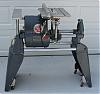
A little "Paul Harvey" take on the above. There is about a 1/4" spacing between the Control Sheave bearing and the end of the Idler Shaft when the Control Sheave is fully compressed. I am amazed at the amount of crud that ends up in this area. I always dropped the motor, removed the Speed Control Assembly and removed the Control Sheave on any Headstock I purchased. I would use a rag to remove all the crud from the control sheave cylinder (takes several tries) and then use lots of oil to flush out the remaining crud in the bearing with a 5/8" dowel or idler shaft. I would remove the motor from the motor pan and blow out all the sawdust from the motor. Then, I would determine if the headstock needed to be totally disassembled and rebuilt at that time. If your headstock has not been oiled for many hours or years or you do not know, You may want to accomplish the above. At least flush out the control sheave bearing at least 4 or 5 times to get all the crud removed. One time oiling may only get more crud into the bearing and possible causing a bearing failure. I still recommend the 12 to 20 drops for the control sheave bearing after the control bearing has been flushed and done at least once a year and more often if possible. Every Thanksgiving or Christmas is a good time to note on your calender for this task in case you forget.billmayo wrote:Yes, I use a lot of tubes of LocTite 271 (permanent) on almost every thing with threads or has a press fit. Just placing a new bearing in the Control Sheave may not solve your problem for long. I had a couple bearings pull out after a couple of years so I machine .08"-.09" deeper so I room to stake the end of the Control Sheave housing. Not had any failures since doing this. Also just replacing the control sheave may find that it does not fit on the idler shaft, is too loose and/or the vanes hit each other. I always replace the complete Control/Idler Sheave Assembly where I can mix and match the Control Sheave to the shaft and Idler Sheave. I do have the Gilmer and Poly-V assemblies available.
Soapbox Time: The lack of no or insufficent oil in the Control Sheave is the major reason for about 90% of the headstock failures. I find you need at least 12 to 20 drops of oil in the Control Sheave oil hole (Speed Control set to FAST), cycle slowly thruough the speed range and repeat oiling again. This is needed to flush out the aluminum sheave particles and belt dust and other crud that collected at this bearing. I do not believe you can over oil the control sheave bearing as long as the oil is put into the oil hole. In fact, I believe the oil flushed out the control sheave bearing helps lubricated the worm gear and quadrant of the speed control assembly.
Bill Mayo bill.mayo@verizon.net
Shopsmith owner since 73. Sell, repair and rebuild Shopsmith, Total Shop & Wood Master headstocks, SPTs, attachments, accessories and parts. US Navy 1955-1975 (FTCS/E-8)
Shopsmith owner since 73. Sell, repair and rebuild Shopsmith, Total Shop & Wood Master headstocks, SPTs, attachments, accessories and parts. US Navy 1955-1975 (FTCS/E-8)
-
timberframer
- Bronze Member
- Posts: 6
- Joined: Tue Nov 19, 2013 9:06 am
- Location: Baltimore, MD