
I can see that making the tenons, as well as the mortises in the sides of workpieces (e.g. table legs), would be quick and easy with loose tenons. Making those mortises is where I think the overarm pin router would shine. And unless it's a through tenon for show, I can't see any downside, either functionally or aesthetically.forrestb wrote:After watching Norm put together a big mahogany door without cutting a single fixed tenon I was sold.
I advise that you check out slip, or loose, tenons. You do mortises in both pieces and make a loose tenon that ties both pieces together. It is much easier to fit the loose tenon to the mortise.
If you have a lot of m/t joints this technique will save you tons of time since all mortises are the same and the tenons are made in batch form.
A bookcase made for my inspiration had like 50 m/t joints - I would never have finished it otherwise.
Forrest
But how do you cut the mortises on the ends of workpieces (e.g. table stretchers)?
I've gotta believe that the SS in horizontal boring mode would be a good tool for the job, but I haven't figured out a good way to fixture the workpiece and control the length of the mortise. Maybe some sort of sled with stop blocks?

I saw the Wood Whisperer make loose tenons look really easy with a Festool Domino joining machine, but that's way outside my toy budget.


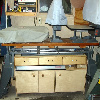

 Anyone else have experience with that combo?