Yes, it is confusing. Bearings may deviate some but not to the extent that we are talking about.
We hardly ever discuss vintage issues on the band saws; we treat them as though they are all exactly the same but we know they are not. However, the parts that, on occasion, need to be filed or shimmed all appear to be unchanged.
The bottom line is simple. If you are going to delve into this issue with your band saw, you need to treat it as a unique effort and just do "whatever is necessary". The other guys experiences are nothing more than guide lines.
Can the Shopsmith Bandsaw Be Quieted
Moderator: admin
-
dusty

- Platinum Member
- Posts: 21530
- Joined: Wed Nov 22, 2006 6:52 am
- Location: Tucson (Wildcat Country), Arizona
Re: Can the Shopsmith Bandsaw Be Quieted
"Making Sawdust Safely"
Dusty
Sent from my Dell XPS using Firefox.
Dusty
Sent from my Dell XPS using Firefox.
-
dusty
- Platinum Member
- Posts: 21530
- Joined: Wed Nov 22, 2006 6:52 am
- Location: Tucson (Wildcat Country), Arizona
Re: Can the Shopsmith Bandsaw Be Quieted
Yes, it CAN BE quieted but only to a certain (hard to define) level. The design changes that might reduce the noise level would be prohibitive. I came to this conclusion by striping one of my band saws down to the minimum number of devises needed to keep the blade tracking on the wheels. I removed the back up bearings and the cool blocks. I then backed off the adjustable brackets that hold the cool blocks; the blade had tracked back and was making contact with the bracket. Each item that I removed changed or reduced the noises I was hearing.
I now have a band saw with the upper and lower wheels, auto-track bearings and a blade. As I spin the wheels as fast as I can (manually), I can hear the auto-track bearings against the blade. This is not a disturbing noise but it is there. I am running a new set of 627ZZ bearings in the auto-track.
I then installed the lower backup bearings (another pair of new 627ZZ bearings). The noise level increased. Not a great deal but enough to notice.
I could carry this blow by blow accounting until I have the band saw back to an operating configuration but I believe you get the picture. Moving metal on metal makes noise. That noise is additive. When you get all done the band saw will be quieter but it is not QUIET.
The cool blocks, btw, are "not cool". If you run with cool blocks touching the blade as I do, you will need to get used to their contribution to the noise level. In this regard - the Carter Guides makes sense.
I am not done with this experiment yet but I have drawn most of my conclusions. Yes, the band saw makes a lot of noise that can be reduced or eliminated but there is a limit.
The squeal did not occur at any time during this exercise.
I now have a band saw with the upper and lower wheels, auto-track bearings and a blade. As I spin the wheels as fast as I can (manually), I can hear the auto-track bearings against the blade. This is not a disturbing noise but it is there. I am running a new set of 627ZZ bearings in the auto-track.
I then installed the lower backup bearings (another pair of new 627ZZ bearings). The noise level increased. Not a great deal but enough to notice.
I could carry this blow by blow accounting until I have the band saw back to an operating configuration but I believe you get the picture. Moving metal on metal makes noise. That noise is additive. When you get all done the band saw will be quieter but it is not QUIET.
The cool blocks, btw, are "not cool". If you run with cool blocks touching the blade as I do, you will need to get used to their contribution to the noise level. In this regard - the Carter Guides makes sense.
I am not done with this experiment yet but I have drawn most of my conclusions. Yes, the band saw makes a lot of noise that can be reduced or eliminated but there is a limit.
The squeal did not occur at any time during this exercise.
"Making Sawdust Safely"
Dusty
Sent from my Dell XPS using Firefox.
Dusty
Sent from my Dell XPS using Firefox.
-
dusty
- Platinum Member
- Posts: 21530
- Joined: Wed Nov 22, 2006 6:52 am
- Location: Tucson (Wildcat Country), Arizona
Re: Can the Shopsmith Bandsaw Be Quieted
Somewhere in this thread, someone asked how fast the bearings would be turning.
Given that the bearing has a diameter of 22mm (.8861") and the band saw wheels have a diameter of 11", we can determine the ratio of the two at any given speed.
11" / .8861" = 12.415
12.415 x 1050 = 13036
At the maximum operating speed (for the band saw) of 1050 rpm, the bearings will be turning at 13036 rpm (assuming NO slippage).
The 627ZZ has a limiting speed of 31000 rpm. Speed should not be a problem.
Given that the bearing has a diameter of 22mm (.8861") and the band saw wheels have a diameter of 11", we can determine the ratio of the two at any given speed.
11" / .8861" = 12.415
12.415 x 1050 = 13036
At the maximum operating speed (for the band saw) of 1050 rpm, the bearings will be turning at 13036 rpm (assuming NO slippage).
The 627ZZ has a limiting speed of 31000 rpm. Speed should not be a problem.
"Making Sawdust Safely"
Dusty
Sent from my Dell XPS using Firefox.
Dusty
Sent from my Dell XPS using Firefox.

Re: Can the Shopsmith Bandsaw Be Quieted
I must be missing something. You are talking about the auto track/backup bearings right? If so then correct me if I am wrong but the speed of those bearings is determined by the speed of the blade in surface feet per minute and the circumference of the bearings. This is not a pulley and belt arrangement.dusty wrote:Somewhere in this thread, someone asked how fast the bearings would be turning.
Given that the bearing has a diameter of 22mm (.8861") and the band saw wheels have a diameter of 11", we can determine the ratio of the two at any given speed.
11" / .8861" = 12.415
12.415 x 1050 = 13036
At the maximum operating speed (for the band saw) of 1050 rpm, the bearings will be turning at 13036 rpm (assuming NO slippage).
The 627ZZ has a limiting speed of 31000 rpm. Speed should not be a problem.
John & Mary Burger
Eagle's Lair Woodshop
Hooper, UT
Eagle's Lair Woodshop
Hooper, UT

Re: Can the Shopsmith Bandsaw Be Quieted
Without doing the actual math Dusty's numbers seem reasonable.
I don't recall or feel like looking up the bearings I purchased but my guess is they are not rated to 31000 but more in the 25K range. Even that puts them well above the speeds we are talking about here.
Most of my bandsawing I do at 950 rpm as that is what I remember as a bandsaw speed so that even lowers the numbers farther.
Ed
I don't recall or feel like looking up the bearings I purchased but my guess is they are not rated to 31000 but more in the 25K range. Even that puts them well above the speeds we are talking about here.
Most of my bandsawing I do at 950 rpm as that is what I remember as a bandsaw speed so that even lowers the numbers farther.
Ed
{Knight of the Shopsmith} [Hero's don't wear capes, they wear dog tags]
-
JPG

- Platinum Member
- Posts: 35600
- Joined: Wed Dec 10, 2008 7:42 pm
- Location: Lexington, Ky (TAMECAT territory)
Re: Can the Shopsmith Bandsaw Be Quieted
True, but: The math is correct. The back of the blade moves at the same rate(feet/min) as the sides of the blade.jsburger wrote:I must be missing something. You are talking about the auto track/backup bearings right? If so then correct me if I am wrong but the speed of those bearings is determined by the speed of the blade in surface feet per minute and the circumference of the bearings. This is not a pulley and belt arrangement.dusty wrote:Somewhere in this thread, someone asked how fast the bearings would be turning.
Given that the bearing has a diameter of 22mm (.8861") and the band saw wheels have a diameter of 11", we can determine the ratio of the two at any given speed.
11" / .8861" = 12.415
12.415 x 1050 = 13036
At the maximum operating speed (for the band saw) of 1050 rpm, the bearings will be turning at 13036 rpm (assuming NO slippage).
The 627ZZ has a limiting speed of 31000 rpm. Speed should not be a problem.
The back causes the guide/backup bearings to rotate at a rate essentially the same as would a belt on a pulley.
The sides are imparted the same fpm as would a belt on a pulley.
The relative rpms are indeed determined by a ratio(inverse) of the wheel/bearing/'pulley' diameter.
Thus bearing rpm = 11/.8861 x 1050 = Same as Dusty.
. . . . . . . . .= inch/inch x rpm
Now yes we be ignoring fpm here, but it cancels out of a more detailed equation since it is a common factor.
fpm = rpm x ∏ Din / 12ft/in = 1050 x ( 11 ∏ / 12 ) = 3024 fpm
............................= 13036 x ( .8861 ∏ / 12 )= 3024 fpm
╔═══╗
╟JPG ╢
╚═══╝
Goldie(Bought New SN 377425)/4" jointer/6" beltsander/12" planer/stripsander/bandsaw/powerstation /Scroll saw/Jig saw /Craftsman 10" ras/Craftsman 6" thicknessplaner/ Dayton10"tablesaw(restoredfromneighborstrashpile)/ Mark VII restoration in 'progress'/ 10E[/size](SN E3779) restoration in progress, a 510 on the back burner and a growing pile of items to be eventually returned to useful life. - aka Red Grange
╟JPG ╢
╚═══╝
Goldie(Bought New SN 377425)/4" jointer/6" beltsander/12" planer/stripsander/bandsaw/powerstation /Scroll saw/Jig saw /Craftsman 10" ras/Craftsman 6" thicknessplaner/ Dayton10"tablesaw(restoredfromneighborstrashpile)/ Mark VII restoration in 'progress'/ 10E[/size](SN E3779) restoration in progress, a 510 on the back burner and a growing pile of items to be eventually returned to useful life. - aka Red Grange
Re: Can the Shopsmith Bandsaw Be Quieted
JPG wrote:True, but: The math is correct. The back of the blade moves at the same rate(feet/min) as the sides of the blade.jsburger wrote:I must be missing something. You are talking about the auto track/backup bearings right? If so then correct me if I am wrong but the speed of those bearings is determined by the speed of the blade in surface feet per minute and the circumference of the bearings. This is not a pulley and belt arrangement.dusty wrote:Somewhere in this thread, someone asked how fast the bearings would be turning.
Given that the bearing has a diameter of 22mm (.8861") and the band saw wheels have a diameter of 11", we can determine the ratio of the two at any given speed.
11" / .8861" = 12.415
12.415 x 1050 = 13036
At the maximum operating speed (for the band saw) of 1050 rpm, the bearings will be turning at 13036 rpm (assuming NO slippage).
The 627ZZ has a limiting speed of 31000 rpm. Speed should not be a problem.
The back causes the guide/backup bearings to rotate at a rate essentially the same as would a belt on a pulley.
The sides are imparted the same fpm as would a belt on a pulley.
The relative rpms are indeed determined by a ratio(inverse) of the wheel/bearing/'pulley' diameter.
Thus bearing rpm = 11/.8861 x 1050 = Same as Dusty.
. . . . . . . . .= inch/inch x rpm
Now yes we be ignoring fpm here, but it cancels out of a more detailed equation since it is a common factor.
fpm = rpm x ∏ Din / 12ft/in = 1050 x ( 11 ∏ / 12 ) = 3024 fpm
............................= 13036 x ( .8861 ∏ / 12 )= 3024 fpm
I just didn't think it through as usual. I haven't used some of this stuff in years.

And then there is...
- Attachments
-
- formula.png (3.26 KiB) Viewed 3038 times
John & Mary Burger
Eagle's Lair Woodshop
Hooper, UT
Eagle's Lair Woodshop
Hooper, UT
Re: Can the Shopsmith Bandsaw Be Quieted
If I understood correctly someone was confused by the mention of 'using a shim, as directed' when all the bearings are the same.
I bought Bill Mayo's bearing kit and A) completely worth it! and B) he included a shim. (I also switched to cool blocks and won't go back).
perhaps that is where the discrepancy originated?
I bought Bill Mayo's bearing kit and A) completely worth it! and B) he included a shim. (I also switched to cool blocks and won't go back).
perhaps that is where the discrepancy originated?
-
JPG
- Platinum Member
- Posts: 35600
- Joined: Wed Dec 10, 2008 7:42 pm
- Location: Lexington, Ky (TAMECAT territory)
Re: Can the Shopsmith Bandsaw Be Quieted
AIUI the shim is placed between the bearings to increase the 'groove' width.fitzhugh wrote:If I understood correctly someone was confused by the mention of 'using a shim, as directed' when all the bearings are the same.
I bought Bill Mayo's bearing kit and A) completely worth it! and B) he included a shim. (I also switched to cool blocks and won't go back).
perhaps that is where the discrepancy originated?
╔═══╗
╟JPG ╢
╚═══╝
Goldie(Bought New SN 377425)/4" jointer/6" beltsander/12" planer/stripsander/bandsaw/powerstation /Scroll saw/Jig saw /Craftsman 10" ras/Craftsman 6" thicknessplaner/ Dayton10"tablesaw(restoredfromneighborstrashpile)/ Mark VII restoration in 'progress'/ 10E[/size](SN E3779) restoration in progress, a 510 on the back burner and a growing pile of items to be eventually returned to useful life. - aka Red Grange
╟JPG ╢
╚═══╝
Goldie(Bought New SN 377425)/4" jointer/6" beltsander/12" planer/stripsander/bandsaw/powerstation /Scroll saw/Jig saw /Craftsman 10" ras/Craftsman 6" thicknessplaner/ Dayton10"tablesaw(restoredfromneighborstrashpile)/ Mark VII restoration in 'progress'/ 10E[/size](SN E3779) restoration in progress, a 510 on the back burner and a growing pile of items to be eventually returned to useful life. - aka Red Grange
Re: Can the Shopsmith Bandsaw Be Quieted
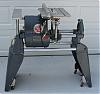
I find just a quick honing of the back edges of the saw blade is all you need to do with the bearings that I use. I found when using a .010 shim between the bearings, the saw blade slowly wore the bearings (earlier version that I did use) to where the saw blade dropped between the bearings and caused the saw blade to lock up. It may cause more side thrust on the bearings with a shim between the bearings.