I'm looking for some advice/ explanation about how this i-socket gizmo works, and to see if it could be used as an hour meter. (I started this thread in the Maintenance section of the forum, since some of the previous discussion about hour meters was here.)
http://dgcproducts.com/index.html
For those of you who haven't seen it, it's designed to turn on your vacuum/dust collector at the same time you turn on a power tool, and shut the vacuum off 7 seconds after the power tool is shut off (to clear any remaining chips or dust from the hoses). The i-socket plugs directly into a wall socket, and it has two sockets itself, one for the power tool and one for the vacuum. I have one, and it works exactly as advertised with the Mark V and the DC3300 plugged in. Very handy!
So I got to thinking- why couldn't I plug an electric analog clock into the "vacuum" socket and use it as an hour meter (to know when to do the suggested 10-hour maintenance)? Much to my surprise, the clock runs continuously when plugged into the "vacuum" socket, whether or not the Mark V is turned on or off, or is even plugged into the "tool" socket. So the "vacuum" socket is "live" continuously, yet the DC3300 does not turn on until the "tool" socket senses that the Mark V is turned on. Does it have something to do with the current draw from the DC3300 being a lot higher than that of the clock? Any ideas?
I googled "smart power switch" and found a site which has a circuit diagram on how to make one of these yourself, and a description of how it works, but it made little sense to me. But I know there are a lot of electrical gurus who frequent this forum, so maybe it'll make sense to someone else.
For what it's worth, Craftsman apparently makes one of these "smart switches" also, at about half the price of the i-socket, but there are a few reports about the Craftsman model having a fairly short lifetime.
Thanks for any and all help!
Gary
i-socket and hour meter
Moderator: admin
-
JPG

- Platinum Member
- Posts: 35600
- Joined: Wed Dec 10, 2008 7:42 pm
- Location: Lexington, Ky (TAMECAT territory)
Have you tried it with BOTH the clock and the Dust Collector plugged in at the same time to the 'slave' socket?
╔═══╗
╟JPG ╢
╚═══╝
Goldie(Bought New SN 377425)/4" jointer/6" beltsander/12" planer/stripsander/bandsaw/powerstation /Scroll saw/Jig saw /Craftsman 10" ras/Craftsman 6" thicknessplaner/ Dayton10"tablesaw(restoredfromneighborstrashpile)/ Mark VII restoration in 'progress'/ 10E[/size](SN E3779) restoration in progress, a 510 on the back burner and a growing pile of items to be eventually returned to useful life. - aka Red Grange
╟JPG ╢
╚═══╝
Goldie(Bought New SN 377425)/4" jointer/6" beltsander/12" planer/stripsander/bandsaw/powerstation /Scroll saw/Jig saw /Craftsman 10" ras/Craftsman 6" thicknessplaner/ Dayton10"tablesaw(restoredfromneighborstrashpile)/ Mark VII restoration in 'progress'/ 10E[/size](SN E3779) restoration in progress, a 510 on the back burner and a growing pile of items to be eventually returned to useful life. - aka Red Grange

Hi,
I have one of the old sears units and it has worked for a lot of years, I don't recall the actual year I got it but 12 or 15 years is within the range of a guess. One thing that will kill them is over current and I have always keep that in mind when using it. It doesn't have the fancy delay off and it doesn't have a micro controller to limit inrush. It was also quite cheap back then.
I have noticed that the latest Lee Valley catalog has an Automatic Vacuum Switch now the has two power cords so you can use just one on things needing only 15 amps or plug into a second circuit and have 30 amps available. It has the delay off and two circuit breakers.
http://www.leevalley.com/wood/page.aspx ... 13&p=63013
My guess is the triac has some leakage and that is enough to run the clock, you might add a small load and "use" it up, ie a lamp or the like.
Ed
I have one of the old sears units and it has worked for a lot of years, I don't recall the actual year I got it but 12 or 15 years is within the range of a guess. One thing that will kill them is over current and I have always keep that in mind when using it. It doesn't have the fancy delay off and it doesn't have a micro controller to limit inrush. It was also quite cheap back then.
I have noticed that the latest Lee Valley catalog has an Automatic Vacuum Switch now the has two power cords so you can use just one on things needing only 15 amps or plug into a second circuit and have 30 amps available. It has the delay off and two circuit breakers.
http://www.leevalley.com/wood/page.aspx ... 13&p=63013
My guess is the triac has some leakage and that is enough to run the clock, you might add a small load and "use" it up, ie a lamp or the like.
Ed
{Knight of the Shopsmith} [Hero's don't wear capes, they wear dog tags]
I see JPG has an idea for you to try out, you will need to have the dust collector turned on which I guess is the normal mode for using this setup.
I see no on/off switch on the i-socket so I guess at the end of the day you need to turn off the dust collector or unplug it???
Ed
I see no on/off switch on the i-socket so I guess at the end of the day you need to turn off the dust collector or unplug it???
Ed
{Knight of the Shopsmith} [Hero's don't wear capes, they wear dog tags]
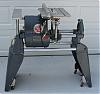
i-socket and hour meter
The hour meter draws a very small amount of current. The 7 sec. delay has circuits that will bleed off after the power tool is turned off to disconnect the DC. Like a keep alive curcuit but should not enought current to even feel if you were to hold both dust collector leads after 7 sec when the power tool is turned off. What voltage reading do you get at the DC plug when it is plugged into the outlet.
I have been replacing the Shopsmith headstock Logo cover with a plate holding a 110 VAC non-resetting hour meter and tapping the leads into the headstock motor wires.
I have been replacing the Shopsmith headstock Logo cover with a plate holding a 110 VAC non-resetting hour meter and tapping the leads into the headstock motor wires.
Bill Mayo bill.mayo@verizon.net
Shopsmith owner since 73. Sell, repair and rebuild Shopsmith, Total Shop & Wood Master headstocks, SPTs, attachments, accessories and parts. US Navy 1955-1975 (FTCS/E-8)
Shopsmith owner since 73. Sell, repair and rebuild Shopsmith, Total Shop & Wood Master headstocks, SPTs, attachments, accessories and parts. US Navy 1955-1975 (FTCS/E-8)
Thanks!
Thanks for all the ideas, guys, we have a solution!
The i-socket only has one "slave" socket, so I plugged a power strip into the "slave" socket. The light on the power strip stayed on, whether or not the Mark V is plugged into the "tool" socket or not, or whether the Mark V is turned off or on. So per Ed's suggestion, I also plugged a lamp into the power strip as well. A 7W compact fluorescent lamp flickered and tried to start for several minutes, but was apparently not enough "load" to cut the power. A 60W incandescent lamp immediately cut the power.
So with a power strip plugged into the "slave" socket, and the DC3300, a 60W lamp, and an electric analog clock plugged into the power strip, everything works correctly. The DC3300, the lamp, and the clock all start when the Mark V is turned on. A few seconds after the Mark V is turned off, the DC3300, the lamp, and the clock also turn off. The lamp and clock also switch on and off correctly without the DC3300 connected, but the clock, without the lamp also plugged in, runs all the time.
So now I have a workable "hour meter" using existing equipment.
Bill- Your hour meter in place of the SS logo/access panel is certainly a much more elegant solution. I haven't yet taken anything on the Mark V apart except for the quill for cleaning, and the belt cover for maintenance. The words "...tapping the leads into the headstock motor wires...." make me nervous at the moment. I need to watch the SS DVDs on headstock assembly and repair a few more times first, I think!
Thanks again, everyone, for your help!
Gary
The i-socket only has one "slave" socket, so I plugged a power strip into the "slave" socket. The light on the power strip stayed on, whether or not the Mark V is plugged into the "tool" socket or not, or whether the Mark V is turned off or on. So per Ed's suggestion, I also plugged a lamp into the power strip as well. A 7W compact fluorescent lamp flickered and tried to start for several minutes, but was apparently not enough "load" to cut the power. A 60W incandescent lamp immediately cut the power.
So with a power strip plugged into the "slave" socket, and the DC3300, a 60W lamp, and an electric analog clock plugged into the power strip, everything works correctly. The DC3300, the lamp, and the clock all start when the Mark V is turned on. A few seconds after the Mark V is turned off, the DC3300, the lamp, and the clock also turn off. The lamp and clock also switch on and off correctly without the DC3300 connected, but the clock, without the lamp also plugged in, runs all the time.
So now I have a workable "hour meter" using existing equipment.
Bill- Your hour meter in place of the SS logo/access panel is certainly a much more elegant solution. I haven't yet taken anything on the Mark V apart except for the quill for cleaning, and the belt cover for maintenance. The words "...tapping the leads into the headstock motor wires...." make me nervous at the moment. I need to watch the SS DVDs on headstock assembly and repair a few more times first, I think!
Thanks again, everyone, for your help!
Gary
-
JPG
- Platinum Member
- Posts: 35600
- Joined: Wed Dec 10, 2008 7:42 pm
- Location: Lexington, Ky (TAMECAT territory)
Methinks with the DC plugged in and turned on, that the lamp is not needed!;)
greitz wrote:Thanks for all the ideas, guys, we have a solution!
The i-socket only has one "slave" socket, so I plugged a power strip into the "slave" socket. The light on the power strip stayed on, whether or not the Mark V is plugged into the "tool" socket or not, or whether the Mark V is turned off or on. So per Ed's suggestion, I also plugged a lamp into the power strip as well. A 7W compact fluorescent lamp flickered and tried to start for several minutes, but was apparently not enough "load" to cut the power. A 60W incandescent lamp immediately cut the power.
So with a power strip plugged into the "slave" socket, and the DC3300, a 60W lamp, and an electric analog clock plugged into the power strip, everything works correctly. The DC3300, the lamp, and the clock all start when the Mark V is turned on. A few seconds after the Mark V is turned off, the DC3300, the lamp, and the clock also turn off. The lamp and clock also switch on and off correctly without the DC3300 connected, but the clock, without the lamp also plugged in, runs all the time.
So now I have a workable "hour meter" using existing equipment.
Bill- Your hour meter in place of the SS logo/access panel is certainly a much more elegant solution. I haven't yet taken anything on the Mark V apart except for the quill for cleaning, and the belt cover for maintenance. The words "...tapping the leads into the headstock motor wires...." make me nervous at the moment. I need to watch the SS DVDs on headstock assembly and repair a few more times first, I think!
Thanks again, everyone, for your help!
Gary
╔═══╗
╟JPG ╢
╚═══╝
Goldie(Bought New SN 377425)/4" jointer/6" beltsander/12" planer/stripsander/bandsaw/powerstation /Scroll saw/Jig saw /Craftsman 10" ras/Craftsman 6" thicknessplaner/ Dayton10"tablesaw(restoredfromneighborstrashpile)/ Mark VII restoration in 'progress'/ 10E[/size](SN E3779) restoration in progress, a 510 on the back burner and a growing pile of items to be eventually returned to useful life. - aka Red Grange
╟JPG ╢
╚═══╝
Goldie(Bought New SN 377425)/4" jointer/6" beltsander/12" planer/stripsander/bandsaw/powerstation /Scroll saw/Jig saw /Craftsman 10" ras/Craftsman 6" thicknessplaner/ Dayton10"tablesaw(restoredfromneighborstrashpile)/ Mark VII restoration in 'progress'/ 10E[/size](SN E3779) restoration in progress, a 510 on the back burner and a growing pile of items to be eventually returned to useful life. - aka Red Grange
I use a quick splice connector for 16-14 ga wire right after where the motor leads comes out of the motor. Black to black/blue and white to white leads. No insulation stripping needed.greitz wrote:Bill- Your hour meter in place of the SS logo/access panel is certainly a much more elegant solution. I haven't yet taken anything on the Mark V apart except for the quill for cleaning, and the belt cover for maintenance. The words "...tapping the leads into the headstock motor wires...." make me nervous at the moment. I need to watch the SS DVDs on headstock assembly and repair a few more times first, I think!
Thanks again, everyone, for your help!
Gary
http://www.delcity.net/store/Quick-Splices/p_9110.a_1
Bill Mayo bill.mayo@verizon.net
Shopsmith owner since 73. Sell, repair and rebuild Shopsmith, Total Shop & Wood Master headstocks, SPTs, attachments, accessories and parts. US Navy 1955-1975 (FTCS/E-8)
Shopsmith owner since 73. Sell, repair and rebuild Shopsmith, Total Shop & Wood Master headstocks, SPTs, attachments, accessories and parts. US Navy 1955-1975 (FTCS/E-8)
another senior moment
OOPS! JPG and Ed, you were absolutely right, the clock (hour meter) works fine with just the DC3300 when you REMEMBER TO TURN ON THE DC! That foot switch is a blessing, but sometimes I wish it was easier to tell if it is on or off just by looking.
Bill- pardon my extreme lack of electrical understanding. Is your hour meter wired in series with the power switch, or in parallel to it, or something else? I saw the pictures of the quick splice connectors in your link, but I still don't understand what wires go where. Sorry!
Gary
Bill- pardon my extreme lack of electrical understanding. Is your hour meter wired in series with the power switch, or in parallel to it, or something else? I saw the pictures of the quick splice connectors in your link, but I still don't understand what wires go where. Sorry!
Gary