Page 1 of 2
spray ink question
Posted: Sun Jun 14, 2015 8:10 pm
by reible
I've had mixed results in the past when I have routed a sign then over sprayed with a clear coat then sprayed a color (paint) followed by trying to sand off the paint (except where the letters are).
In a lot of cases the letters are "ruff" and the paint still manages to wick into the fibers leaving a less then wonderful look. I have gone to the extreme of many many coats of clear which works better but can be costly and still you can get some wicking.
My brother who use to make signs had used shellac, something I'm going to try once I can make a sample piece to try. At least that is something I have on hand.
I've heard of using deck sealant to cover coat then add the color and sand but it seems they don't sell that in less then a gallon size container..... way to much to just test with.
I have heard that another method is to use spray ink but I have not gone that route either. EagleAmerica sells a Marsh brand for a price that I wouldn't mind trying but I thought I'd see if anyone here has any thoughts on the subject. So do you?
Reference:
http://www.eagleamerica.com/product/v40 ... ign_making
Postage is another issue, one can will cost me $6.99 to ship which makes it less attractive unless it really works well for my project. I guess I could find a few other thing to get up to almost $25 so I'd get more for money on the shipping.
Ed
Re: spray ink question
Posted: Sun Jun 14, 2015 8:44 pm
by Gene Howe
Ed, Amazon is about $2 per can cheaper and if you are a Prime customer, shipping is free.
Re: spray ink question
Posted: Sun Jun 14, 2015 8:55 pm
by reible
I did check amazon for the blue color I want
http://www.amazon.com/MARSH-Stencil-Wei ... KDES7RN6WT
and since I'm not a prime member I'd have to purchase a few more things to get to the $35 level. And I'm sure I could find a few more things I need there too......
Ed
Re: spray ink question
Posted: Sun Jun 14, 2015 9:25 pm
by JPG
I have used shellac in laser engraving followed by paint fill successfully. The wood was walnut, and the engraving quite small. I have filled laser engraving with tinted wood putty like stuff. I do not recall what brand it was, but the epilog operator at Woodcraft let me try it. Shellac before applying.
I do believe shellac is the 'secret'. After the paint dries(over the shellac in the depression) alcohol will remove the shellac from the surrounding area.
Maybe the laser burning closes the pores????
Re: spray ink question
Posted: Sun Jun 14, 2015 9:51 pm
by rjent
Use a thicker paint like an enamel for your letters in the sign. It won't wick as bad and you brush it on.
Just a thought ...
Re: spray ink question
Posted: Sun Jun 14, 2015 10:12 pm
by benush26
I am certain that there is something in this that I am misunderstanding....

but just in case ....
The man I worked for got the occasional request for a cottage lake cabin sign with router and engraved details. However nothing proud of the surface of the wood. After routing, he would prime and then paint the enhanced area, trying to avoid the non routed surface, however, some always leaked. After the paint had thoroughly dried, he would send the surface over the jointer (or planer if that large) to remove the top 1/64 or there abouts. The painted edges of the engraving and or routing came out crisp. No tear out. Brush on a protectant, usually shellac, over the entire thing.
I've made a few signs like that and that is the only method I have ever used!! Though now I use automotive spray paint (I like the colors and effects I can get!

) and a spray coating, usually urethane.
Though the methods are different, am I describing a different type of project?

. If they are the same project, you might try the jointer/planer clean up method. If they are completely different, I apologize for throwing a mangled wrench into a monkey free project idea.


Be well,
Ben
Re: spray ink question
Posted: Sun Jun 14, 2015 10:54 pm
by reible
The last project I attempted was so bad I ended taking the belt sander and taking the whole thing off and had to start over. Now maybe I'm picky but I really want the letters to look crisp and clean even up close.
This is a bench that I'm making and it has been an on and off again thing for several years but I think we have made a decision on a finish. So I have the letters routed (extra deep just in case more sanding is needed then I would expect). The wood is cedar.
I want it to look good up close as the lettering is on the back, where your back will rest so people who want to sit will be right up there close in. This is in contrast to some signs I have made where people normally don't get so close and when you are 10 feet away you no longer see the defects much less when you are 20 feet away. Here they will be right up on it.
I've also used bondo (auto body stuff) to fill in routed things then sanded and that has a nice look too but not for this project where I want to go with a blue color in the letters. (This is a compromise where someone dear to me wanted the seat blue and I wanted a clear finish.)
Weather permitting I will get a couple of pictures of the back pieces tomorrow so you see what I'm up to.
I'm thinking I will make a few letters in some cedar and test a few methods before I commit to the back.
Ed
Re: spray ink question
Posted: Mon Jun 15, 2015 10:02 am
by roy_okc
Ed,
Following is what I use for lasered and CNCed projects, still learning myself, but getting much better results now. I highly recommend sealing with shellac sanding sealer, I use Zinsser Bullseye SealCoat sanding sealer (it is dewaxed, so you'll have few problems with other paints/finishes sticking to it). Use a heavy first, maybe second coat within the routed areas followed by multiple lighter coats to make sure that it is well sealed and the end grain isn't wicking any more in, also put some at least around the routed areas on top if not the entire top for where you will oops and get your colored finish outside the lines. Let dry at least over night. Then apply your fill color (acrylic paints work well for me) with a brush, make sure it is not alcohol based, try to stay in the lines as much as possible and immediately clean off any oopsies as well as you can. If necessary, after drying thoroughly, sand off anything you couldn't clean up/missed, sand deeper if you don't want the top shellac showing at all. Finish with your top coats, keeping in mind if you use finishes that would yellow the painted insets. I'd highly recommend a coat or two of a very clear finish (lacquer, water-based poly) if you use something else for the top to help protect the inset coloring.
Recommend you hone/test your techniques on scrap first.
Roy
Re: spray ink question
Posted: Mon Jun 15, 2015 10:58 am
by reible
So here is the project, well the parts we are talking about in this tread. As you can see it is a vanity sort of thing but none the less I still want it to look good.

- IMG_7262sc.jpg (138.71 KiB) Viewed 6539 times
The only sanding sealer I have on hand is this:
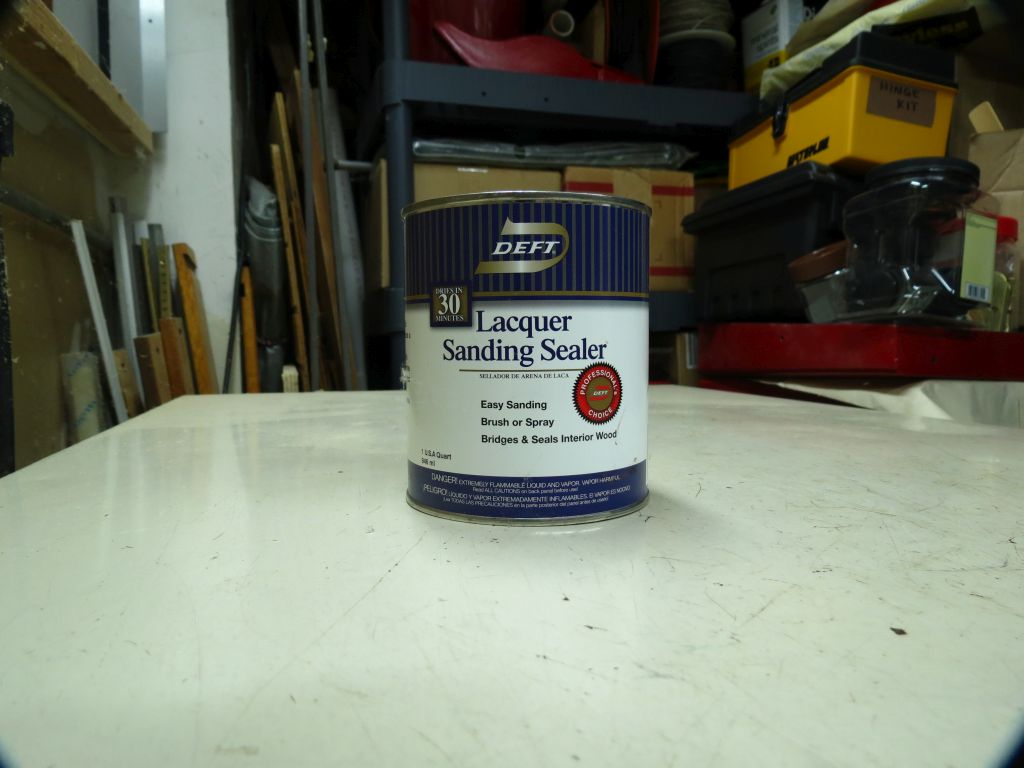
- IMG_7265sc.jpg (91.69 KiB) Viewed 6539 times
I guess I could try it as well.
Ed
Re: spray ink question
Posted: Mon Jun 15, 2015 11:14 am
by roy_okc
Ed,
That is worth a shot on a test piece. Still recommend several coats to ensure that end grain is completely stoppered up. Show us the progress.