
I have now caught up on the rest of the thread.
I then when out to the garage to check my saw. Now keep in mind I have the non-shopsmith dual bearings installed. Now with the blade tensioned it goes in the notch between bearings and strongly resists being moved out of the notch.
For resaw blades I do nothing to the back edge.
For getting a bit more of a radius on smaller blades I will take a stone to them but only enough to break the sharp edge. In the old days blades would often get a burr or slight mushrooming and in those cases more effort was needed. If the blade developed chips along the back edge it wasn't going to last much longer as that became a high stress area, a bit of material also when a long way to keeping the blade running longer.
Major improvements have been made on today's blades, things that now are a thing of the past are still passed on like we still have those old blades.... Do read what the blade manufactures tell you, they know a lot more about their blades then we do.
Ed
Noisy Band Saw Bearings
Moderator: admin
-
dusty

- Platinum Member
- Posts: 21530
- Joined: Wed Nov 22, 2006 6:52 am
- Location: Tucson (Wildcat Country), Arizona
I have Shopsmith Cool Blocks installed. Yes, it is still noisier than I think it should be. I can hear a significant change in noise level when I manually stop the Auto-Track bearing from spinning. This bandsaw has a pair of bearings at all three locations now.reible wrote:I have just listen and watch the video. The way the blade is jumping around never happens on my saw.
The sound of it when in the proper location still sounds a bit noisy, do you have guide blocks installed? If so which ones?
Ed
The blade jumping out of the groove, in the video, has been resolved by careful realignment of the Auto-Track bearing. Both bandsaws did it occasionally.
"Making Sawdust Safely"
Dusty
Sent from my Dell XPS using Firefox.
Dusty
Sent from my Dell XPS using Firefox.
-
Ed in Tampa

- Platinum Member
- Posts: 5834
- Joined: Fri Jul 21, 2006 12:45 am
- Location: North Tampa Bay area Florida
Bill are you using SS bearings or aftermarket. If aftermarket which ones?billmayo wrote:I found one of the shims/washers used with the older roller bushings worked well between the 2 bearings. I stoned the back edges of the bandsaw blade (45 deg) so that the blade rode well between the bearings but did not go into the groove or stick. If either bandsaw wheel rim is bent or warped, I had problems with tracking of the blade.
Stress testing can be great fun. I build many jigs and test setups that I played with for years using the Shopsmith equipment. I found most times, there were noises, indicators and heat telling me when I was approaching a failure. For a few years, I spent half my time testing various ideas, concepts and limits with Shopsmith equipment. I spent a lot of time determining how various bearings survived from 7,000 to 20,000 RPM with and without load so I knew which bearings I wanted to buy and use. Many times, a must cheaper bearing was better.
Ed in Tampa
Stay out of trouble!
Stay out of trouble!
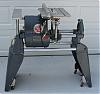
I had purchased many dozens of ABEC3 rated 627Z bearings (metal shields) for the bandsaw many years ago. I have used these bearings for many years with no reports of failure. I have very few left. Now, I cannot find a ABEC3 rated 627Z bearing.
I buy most of my bearings from http://www.usabearingsandbelts.com located in Lakeland, FL. I can pick them up if needed real quick but their shipping is vey fast. I will buy their 627Z metal shield bearings the next time I have to order this bearing.
I buy most of my bearings from http://www.usabearingsandbelts.com located in Lakeland, FL. I can pick them up if needed real quick but their shipping is vey fast. I will buy their 627Z metal shield bearings the next time I have to order this bearing.
Bill Mayo bill.mayo@verizon.net
Shopsmith owner since 73. Sell, repair and rebuild Shopsmith, Total Shop & Wood Master headstocks, SPTs, attachments, accessories and parts. US Navy 1955-1975 (FTCS/E-8)
Shopsmith owner since 73. Sell, repair and rebuild Shopsmith, Total Shop & Wood Master headstocks, SPTs, attachments, accessories and parts. US Navy 1955-1975 (FTCS/E-8)
If your shim is not too thick, less than 1/2 the thickness of the bandsaw blade. The roller bushing shim/washer is only around .005" and very flexible. Yes, I only hone at a 45 deg angle to break the sharp back edges of the blade. I found that this really helps with the smaller width blades when cutting circles and helps the blade stay between the two bearings when using a thin shim/washer between the bearings. I recommend anyone to test different shim thickness if they are interested.dusty wrote:Bill, I have some shims that have a larger ID than the bearings but a smaller OD. Can I get away with using those.
Wow, 45° on both back edges. That is almost enough to be called "sharp".
Is this what every one means when they say to hone the back edge? If so, I have not been doing that at all.
Bill Mayo bill.mayo@verizon.net
Shopsmith owner since 73. Sell, repair and rebuild Shopsmith, Total Shop & Wood Master headstocks, SPTs, attachments, accessories and parts. US Navy 1955-1975 (FTCS/E-8)
Shopsmith owner since 73. Sell, repair and rebuild Shopsmith, Total Shop & Wood Master headstocks, SPTs, attachments, accessories and parts. US Navy 1955-1975 (FTCS/E-8)
-
dusty
- Platinum Member
- Posts: 21530
- Joined: Wed Nov 22, 2006 6:52 am
- Location: Tucson (Wildcat Country), Arizona
Noisy Band Saw Bearings
I have given up on my effort to resurrect previously rejected "noisy bearings". My screening methods have been a crying shame.
I can spin the day lights out of those bearings and cannot determine which ones might be good and which ones are definitely bad.
Right now I have two band saws that are working good but have auto-track bearings that are noticeably noisy. I determine that by reaching in behind the blade and stopping the bearing from spinning.
BE CAREFUL if you are going to do this. CONCENTRATE on what you are doing.
Once again, enough about noisy bearings. Just remember, the band saw can be annoyingly loud and still work great.
I can spin the day lights out of those bearings and cannot determine which ones might be good and which ones are definitely bad.
Right now I have two band saws that are working good but have auto-track bearings that are noticeably noisy. I determine that by reaching in behind the blade and stopping the bearing from spinning.
BE CAREFUL if you are going to do this. CONCENTRATE on what you are doing.
Once again, enough about noisy bearings. Just remember, the band saw can be annoyingly loud and still work great.
"Making Sawdust Safely"
Dusty
Sent from my Dell XPS using Firefox.
Dusty
Sent from my Dell XPS using Firefox.
Soooo the moral of the story is to wear ear protection? Still have to wonder why some saws seem to be that way while others are not.dusty wrote:I have given up on my effort to resurrect previously rejected "noisy bearings". My screening methods have been a crying shame.
I can spin the day lights out of those bearings and cannot determine which ones might be good and which ones are definitely bad.
Right now I have two band saws that are working good but have auto-track bearings that are noticeably noisy. I determine that by reaching in behind the blade and stopping the bearing from spinning.
BE CAREFUL if you are going to do this. CONCENTRATE on what you are doing.
Once again, enough about noisy bearings. Just remember, the band saw can be annoyingly loud and still work great.
I did have one more question, have you checked the "squareness" of the bearings to the blade? While the adjustment range is small you still need to make sure they are not twisted.
While I haven't tested this I am now thinking that the mounting location of that bearing might just happen to occur at a natural resonant spot in the bandsaw housing.
Ed
-
dusty
- Platinum Member
- Posts: 21530
- Joined: Wed Nov 22, 2006 6:52 am
- Location: Tucson (Wildcat Country), Arizona
reible wrote:Soooo the moral of the story is to wear ear protection? Still have to wonder why some saws seem to be that way while others are not.
I did have one more question, have you checked the "squareness" of the bearings to the blade? While the adjustment range is small you still need to make sure they are not twisted.
While I haven't tested this I am now thinking that the mounting location of that bearing might just happen to occur at a natural resonant spot in the bandsaw housing.
Ed
Good thought. It would sorta explain why a bearing that is noisy in the bandsaw might not seem so in mt test rig.
All I should have to do is alter the natural resonant frequency of the bandsaw housing. I would know what to do if we were talking of electronic resonance. Mechanical resonance might be a bit different.
HEY. I thought I was done with this thread!
My first thought was a piece of two sided tape and a junk of wood attached near the bearing mount. What say you.
"Making Sawdust Safely"
Dusty
Sent from my Dell XPS using Firefox.
Dusty
Sent from my Dell XPS using Firefox.
-
dusty
- Platinum Member
- Posts: 21530
- Joined: Wed Nov 22, 2006 6:52 am
- Location: Tucson (Wildcat Country), Arizona
How do I do that? These are sealed bearings.garys wrote:I think the noise isn't a bad bearing as much as a dry bearing. I find that spraying a good synthetic lube into the noisy bearing lasts longer than replacing it with another one that will quickly dry out.
"Making Sawdust Safely"
Dusty
Sent from my Dell XPS using Firefox.
Dusty
Sent from my Dell XPS using Firefox.